Things You (Probably) Don’t Know About Christmas

I love this time of year, and I love collecting facts about the holiday.
My collection of Christmas facts started in 2000 when I started writing and producing an annual Christmas musical every year for a large church in my hometown of Seattle.  As part of the “pre-show” to keep the large crowds entertained before the show started, I would create a presentation sharing completely inconsequential but entertaining facts about this most beloved of all holidays.

Here are some of my favorites:

  • The celebration of Christ’s birth on December 25th did not become part of tradition until 320 AD, more than 300 years after His birth.

b70-9397

  • A Christmas film classic, Miracle on 34th Street, was actually released in the summer of 1947.  It won Oscars for Best Support Actor, Screenplay, and Original Story and was nominated for Best Picture.
  • Alabama was the first state to declare Christmas a legal holiday–in 1836.  At this time, most people worked on Christmas Day, including Congress.
  • George Fredrich Handel composed The Messiah in just 24 days.  He began writing on August 22, 1741 and did not eat or sleep until it was finished.

first_xmas_card

  • The first Christmas card was made in 1843 by English painter and illustrator John Calcott Horsley.
  • According to most historians, the earliest example of decorating a fir tree for Christmas took place in the small country of Latvia in the year 1510.
  • The most-loved of all carols, Stille Nacht (Silent Night), was written in 1818 by an Austrian priest named Joseph Mohr.
  • Charles Dickens’ A Christmas Carol, published a week before Christmas in 1834, was an instant best-seller and remains his most popular novel.
  • Arthur Rankin and Jules Bass created more than 17 Christmas specials, including Frosty the Snowman, Rudolph, the Red-Nosed Reindeer, The Year Without a Santa Claus, and more obscure ones like Nestor, the Long-Eared Christmas Donkey.
  • Clement C. Moore, writing a poem for his children, invented the modern idea of Santa Claus in 1823 with the publication of A Visit from St. Nicholas, now better known as The Night Before Christmas.

Nast Santa Claus

  • American political cartoonist Thomas Nast was the first artist to picture St. Nicholas, in a magazine illustration in 1870.
  • The Dutch version of St. Nicholas, Sint Klauss, was brought to America by the settlers of New Amersterdam.  He became Americanized in the early 1900’s as Santa Claus.

Sundblom-Santa-with-elves

  • The image of Santa Claus we are most familiar with today is the result of a series of ads for Coca-Cola.  Dutch-born artist Haddon Sundblom created the modern look of Santa Claus in 1931.
  • Considered by many to be the classic special, A Charlie Brown Christmas has been shown every year since 1965.
  • “The Christmas Song” was written in 1944 by Mel Tormé and Bob Wells in an attempt to cool off during a hot Los Angeles summer.
  • In 1856, President Franklin Pierce became the first President to decorate a Christmas tree in the White House.
  • Noel, Virginia, is just one of 50 towns named Noel in the United States.

Rudolph Original Ad

  • Rankin-Bass’ classic animated version of Rudolph debuted on December 6, 1964, as part of the General Electric Fantasy Hour.
  • Egg nog was first consumed in America in 1607.  Captain John Smith reportedly made the first batch at Jamestown.
  • The first live nativity scene was created by St. Francis of Assisi in 1224.
  • Felix Mendelssohn wrote the music that became the melody of “Hark! The Herald Angels Sing” for an 1840 concert celebrating the invention of the printing press.
  • The word “Christmas” entered the English language around the year 1050 as the Old English phrase “Christes masse,” meaning “festival of Christ.”
JohnsonEdward-FirstElectricTree

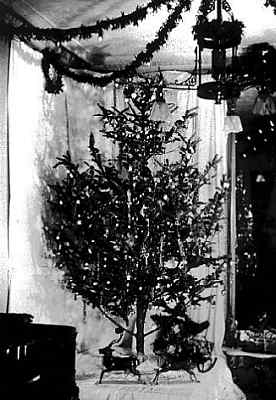
  • In 1882, one of Thomas Edison’s employees, Edward Johnson, put the first electric lights on a Christmas tree–a string of 80 lights he designed himself.
  • The first “American” Christmas carol, ‘Twas in the Moon of Wintertime (The Huron Carol), was written by a Jesuit priest named Jean de Brebuf.  He wrote the songs to help the Huron Indians understand the birth of Christ.
  • The inventor of modern color printing, American printer Lewis Prang, also created the first American Christmas card in 1874.
  • In 1851, Mark Carr hauled two sleds loaded with trees from the Catskills to the streets of New York and opened the first retail Christmas tree lot in the United States.

national-christmas-tree-e1324382676244

  • President Calvin Coolidge began the tradition of decorating a tree outside the White House in 1923.
  • Ralph Blaine and Hugh Martin wrote the song “Have Yourself a Merry Little Christmas” for the film Meet Me in St. Louis in 1944.  Its original context is one of sadness, as it is sung to comfort a little girl broken-hearted over her family’s impending move.  That’s why the song suggests she “have a merry little Christmas now.”
  • There are eleven towns named Santa Claus in the United States.
  • The original 1942 recording of “White Christmas” by Bing Crosby is the best-selling Christmas song of all time.  It has sold more than 30 million copies.
  • Russian tradition doesn’t include Santa Claus.  On January 1st, Grandfather Frost brings gifts to children.
Its-A-Wonderful-Life-Poster

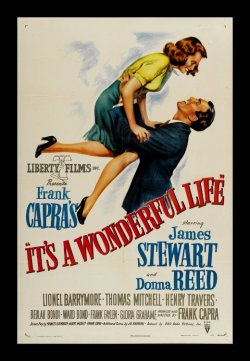
  • One of the most-loved films of all time, Frank Capra’s It’s a Wonderful Life, was released in 1946.  It was a box-office disaster when it was first released and almost ruined the career of star Jimmy Stewart.

canada stamp

  • The first Christmas postage stamp was issued in Canada in 1898.  The United States didn’t get around to making Christmas stamps until 1962.
  • The best-selling Christmas album of all time remains Kenny G’s Miracles: The Holiday Album.  It has sold nearly 9 million copies.
santa-claus-conquers-the-martians-02

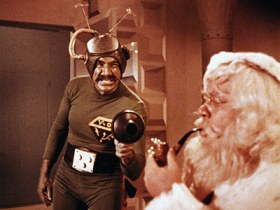
  • The season has inspired countless classic films.  It also inspired one of the worst movies ever made: Santa Claus Conquers the Martians, released in 1964.
  • Rudolph, the Red-Nosed Reindeer did not start off as a song, but as a Montgomery Ward promotional giveaway by staff copywriter Robert May.
  • Poinsettias were brought to the United States from Mexico in 1828 by the first US Ambassador to Mexico, Joel Roberts Poinsett, for whom the plant was named.

There’s a few fun facts to wow the family with when the conversation gets awkward this Christmas.  You never know when one of those moments will happen, so keep these handy and maybe you’ll turn this into one of those Christmases nobody wants to forget!
Beautiful Songs Under a Winter Moon

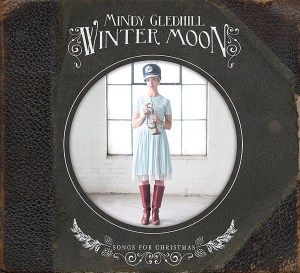
Winter Moon Album Cover

You probably haven’t heard of Mindy Gledhill.

And if you expect to hear her in the usual mix of stuff they play on the “Christmas Music Stations,” you just won’t. Her combination of melancholy, simply-sung and arranged songs, along with a uniquely stylized voice, just won’t fit in with stations that insist on playing Whitney Houston’s “Do You Hear What I Hear” at every given opportunity.

I discovered Mindy Gledhill while looking for new Christmas music last year and fell in love. Her voice, the sound, the instrumentation and arrangements, all work together to make Winter Moon one of my new favorite albums.  It’s full of original and classic songs, and it’s truly a quiet album.  The few “upbeat” songs are still kept in a quiet arrangement that keeps the album perfect for nights where it’s cold outside and you need a little music to keep you company.

Her voice would fit in the category of “twee” pop, in that it is sweet, youthful, and a bit like Leigh Nash.  But she’s not a commercial artist–and as a result, her lovingly sung and produced Christmas album, Winter Moon, just falls off the radar.

The title track, “Winter Moon,” is almost Victorian in its lyrical format (reminding me of songs like “By the light of the silvery moon,” from a bye gone era), and charms with its combination of banjo, simple percussion, and harmonies that combine into a loving celebration of young love.  There’s also a version with “puppet friends,” which may explain why I love this album so much.

More familiar songs make an appearance, including the classics “Toyland” and “White Christmas,” as well as sacred carols like “Silent Night” and “O Come All Ye Faithful.”  All of the songs are arranged in the simple, almost toy-like style.  It reminded me a lot of the score Yann Tiersen composed for the film Amelie in that it uses instruments you may not always think of to help create an aural picture of innocence and magic.

Even her take on the Beach Boys’ “Little Saint Nick” keeps that playful quietness intact, which makes a song that can get annoying pretty quickly not overstay its welcome.  The arrangement of “Patapan/O Come, O Come Emmanuel” takes the normally somber “Emmanuel” and mixes it with the traditionally “Celtic” feeling “Patapan” to give both songs a new sound.

The most beautiful song on the album is “Little Soldier,” which is a heartbreaking memory of how quickly time flies.  Watching my own children age each year as Christmas passes, I’m reminded just how fast it goes–the little baby who celebrated her first Christmas just yesterday is now 13.  As the song says, “Father Time comes creeping in. We fight back, but he will win.  If I asked one Christmas wish than it would be: ‘Soldier, could you win back time for me?'”  Gledhill’s vocal delivery is both sweet and sad, and the song is a gentle celebration of the joy and sadness this season brings.

You won’t hear Winter Moon on the radio, but it is easily one my top 10 Christmas albums of the past few years.  Beautiful, celebratory, and a little sad.  It’s a nearly perfect Christmas album in every way.  And best of all, you can buy it at Amazon.

Hallelujah

This is one of the greatest songs of the last 40 years.

It was written in 1984 by singer/songwriter Leonard Cohen, and his rendition is sad, dirge-like, and very melancholy, even with the words, “Hallelujah” repeatedly sung throughout.  Cohen’s gravelly voice and the slow tempo give the song a dark cynicism. But there is beauty to be heard, and other artists have made the song come alive.

I discovered the song as a result of the movie Shrek, which included a version by John Cale in the film.  On the soundtrack album, however, it was artist Rufus Wainwright whose version was featured.  It was my first exposure to a truly breathtaking and heartfelt song.

The word “Hallelujah” means “to sing in joyous praise, to boast in God.”  Literally, it says, “Praise God, you people.”

Although Cohen may have meant it sarcastically, the fact that it resonates so beautifully is testimony to the power of the word, and the act of praising God in the midst of even the most difficult times of life.  The song makes reference to David and Samson, both of whom made mistakes and screwed up.  Sometimes, as Coehn says, our praise doesn’t come from happiness or joy, but “cold and broken hallelujah.”  Sometimes we praise God because we are so broken we have nothing else we can possibly say.

So, hallelujah.  Whatever your place, whatever your moment.  Whether cold and broken or filled with joy, whether out of the darkest places of your soul or out of gratitude, hallelujah.

It’s a beautiful, sad, and haunting song.  And sometimes it speaks right to the heart.

Hallelujah.

(Here’s the most famous version, by the late Jeff Buckley.)

Thanksgiving: Day 4

I cannot imagine my life without music.

God has been gracious to fill my life and world with music since I was a child.  My grandfather was a gifted pianist, trumpeteer, and singer.  My mother was a great choir director and accompanist, and I learned to appreciate many types of music sitting in front of the record player in my childhood home.

I honestly love so many types of music that it’s somewhat of an obsession with me.  When I bought my first CD player with money from graduating from high school, I began to spend a large part of my income on music.  I have thousands of cd’s in my closet now.

They don’t get played with much anymore, since now I have iTunes and several iPods, all filled with lots of different types of music.  Christmas, bluegrass, alternative, country, rock and roll, oldies, electronica, swing, jazz–pretty much every style of music has a home in my collection of 38,300 songs–or 93 days’ worth of music.

Yep, I love music.  And I’m so thankful God created it, gave me the ability to create it, and the spirit to appreciate so many different kinds.

Here are a few of my favorite songs or pieces of music.

Astronauts by The Cranes (Alternative)

Pop’s Hoedown by Billy Hill and the Hillbillies (Bluegrass)

Unpack Your Adjectives by Blossom Dearie (Children’s)

Mercy Said No by Greg Long (Christian)

My Sweetheart’s Like Venus by The Cambridge Singers (Classical Choral)

Prelude to “Holberg Suite” by The Academy of St. Martin-in-the-Fields (Classical)

El Paso by Marty Robbins (Country Western)

There’s a few.  I’m thankful for so much more, and am grateful for a God that has gifted so many people to create so many styles and sounds for me to enjoy.

Thanksgiving: Day 3

Image

Faithfulness.

I’m grateful for faithfulness.

According to Webster, faithfulness is

true to one’s word, promises, vows, etc.

steady in allegiance or affection; loyal; constant: faithful friends.

reliable, trusted, or believed.

I am grateful for the faithfulness of my wife.  Through thick and thin over 14 years of marriage, she has proved to be all of those things: true to her word, promise and vow.  She is steady in her allegiance and affection to me, loyal to our marriage.  She is the constant in a world of ups and downs, and there is no more “faithful friend” than she.

She is always reliable.  She is always trustworthy.  She can always be believed.

In another way, I’m thankful for the faithfulness of my heavenly Father.  He also is trustworthy.  He always fulfills His promises.  He is always reliable and steadfast.  His Word is true and can always be believed.  Through ups and downs, through trials and triumphs, He is always there.

There’s a reason a song about Him is called, “Great is Thy Faithfulness.”

I am grateful today for faithfulness.

Thanksgiving: Day 2

https://i0.wp.com/www.oacas.org/images/glass-of-water.png

It’s a good thing to do, to stop and think of what you’re thankful for.

Today as I ponder what I am thankful for, I take a drink out of the tumbler of water right in front of me.  And I realize that’s it.  That’s what I’m grateful for today.

It may seem like a crazy thing when there are so many huge things to thank God for (wife, children, home, job, family, etc.), but I need to be honest: I’ve never been as thankful for water as I’ve grown to be this year.

I’ve made a concentrated effort to change a lot of my habits this year.

I’m exercising more regularly, eating better, and drinking less Diet Coke.

And water has been part of that refreshing, “feel better” me.  My wife has been a huge encouragement to me in drinking at least twice as much water as soda, and it’s made a huge difference.  So today, I’m grateful for water–something God blessed me with a long time ago that I’ve never appreciated as much until this year.

(With a special shout out to Robyn for her encouragement.)

Thanksgiving: Day 1

https://i0.wp.com/1.bp.blogspot.com/-Wihuj9Jb2W0/T2tQVLmpLCI/AAAAAAAACZY/T_TfotYJ6RY/s1600/Grace-Tree.jpg

The holidays are upon us.  With the end of Halloween, we are in full “season’s greetings” mode.  This is my favorite time of the year, and it’s easy to rush through it all.

I am going to endeavor to write one thing I am grateful for every day until Thanksgiving.  There is so much to be thankful for, but it’s easy to miss it and just think of the things that trouble you, worry you.  But at the beginning of the year, I realized that 90% of the things I worried about last year didn’t happen.  So I think about what I am happy about, what I am grateful for, and realize I am truly blessed.

On this first day of November, I am grateful for grace.

I am a broken and wounded man.  I screw up a lot.  I am prideful, selfish, and frequently irritable.

I don’t deserve any of what I have in this life, but anything I do have is mine because of grace.

The grace of salvation which comes through my faith in Jesus Christ.  His precious blood, shed for me on the cross, removes the stain of sin and guilt that separated me from my heavenly Father.  There is now no condemnation for me through Christ Jesus.  I have not only eternal life, but life everlasting, which is happening now, today.  Because of the grace of God, freely given because of my Savior’s sacrifice, I have hope, I have peace, I have tomorrow.

I cannot imagine what my life would be without my salvation.

But I also have been given grace by my wife, who has shown me love and forgiveness in spite of frequently bad choices, stuck with me through hard times.  The fact that we are in our 15th year of marriage is not a testimony to my awesomeness, but the grace she has given so many times over so many years.

Grace is given to me by my employers, by my friends, employees, family.  Grace is given to me by strangers I have only met once.

When we live in a grace-filled world, we live in a place where we model forgiveness undeserved and unwarranted, but always given when met with a broken and contrite heart.

As I look forward to the next month and a half of celebrations, I begin by realizing all that I have and all that I am and all I will be is because of what I am most thankful for:

Amazing grace.

When a Bad Guy Tries to Be Good

https://i0.wp.com/www.film3sixtymagazine.com/wp-content/uploads/2012/09/Wreck-It-Ralph-690x1024.jpg

Walt Disney Animation Studios’ new film Wreck-It-Ralph is easily their best film in awhile, and probably the best animated film of the year.  It’s funny, witty, full of adventure and heart.  It’s a tale of a bad guy who yearns to be good.

https://i0.wp.com/geeksarewired.com/wp-content/uploads/2012/10/wreckitralphbanner6969.jpg

Well, maybe not good.  For 30 years, since the day his game was plugged in at the arcade, Ralph has been the bad guy.  Every time someone plays the game and wins, the hero gets a medal.  He gets glory and honor.  And pie.  And after 30 years, Ralph wishes for his piece of the pie.  And the glory and the honor.  He thinks what he needs is a medal, a chance to prove that even a bad guy can be a hero.

This sets the adventure of Wreck-It-Ralph on its course, and its a wonderland of video game references that kids (and their parents who played Pac-Man and Q*Bert back in the day) will thoroughly enjoy.  One of the brilliant conceits of the film is that after closing, the characters are free to leave their games and interact with each other.  In Game Central Station, they can cross over from one game to the next.  Here, viewers who watch closely will see obvious cameos from Sonic the Hedgehog and other easily recognizable game heroes, but they’ll also catch quick random references to old favorites.  Even Pong manages to make an appearance.

But Ralph doesn’t rely on pop-culture references for its humor or success.  The story is engaging because the characters are fully realized, dimensional heroes.  Ralph (voiced winningly by John C. Reilly) is a great hero, even though he doesn’t realize it.  When he leaves his game, his nemesis, the kind and affable Fix-It-Felix, Jr. (voiced by Jack McBrayer, who doesn’t stray to far from his familiar role as Kenneth on 30 Rock) goes looking for him.  Without Ralph or Felix, the game appears to be broken–and if the plug is pulled, the game’s characters become homeless, forced to beg on the streets.

https://i0.wp.com/www.aceshowbiz.com/images/still/wreck-it-ralph-image01.jpg

Ralph’s quest for a medal takes him to contemporary Hero’s Duty, a game much in the mold of Halo, full of big armored men and villainous hordes of bugs.  Here he meets the tough as nails Sgt. Calhoun, a woman who “was programmed with the most tragic backstory in video game history.”  As played by Jane Lynch (channeling her regular character on Glee), she’s a tough cookie who doesn’t appreciate the havoc Ralph brings to her game.

Eventually the characters find themselves in the super sweet racer Sugar Rush, where Ralph meets Venelope VonSchweetz, who is played by Sarah Silverman (in easily her best role ever, and the only time I’ve ever actually enjoyed her performance).  A glitch in the game, she desires to be a racer and forms a pact with Ralph to beat the game, win him back his medal, and earn her place in the game’s hierarchy of characters.

https://i0.wp.com/www.filmofilia.com/wp-content/uploads/2012/06/wreck-it-ralph-03.jpg

It’s a pretty unusual and original story, far different from anything else from Disney recently.  It’s hip and contemporary without resorting to the cheapness of most DreamWorks’ products (I’m looking at you Madagascar 32, or whatever number they’re on right now), and it’s got the deep character development of most Pixar films.  Ralph and Venelope are so well created that you forget they are video game characters, let alone animated.  When the film’s big character crisis comes, you’ve grown to care so much for the pair that it’s a pretty powerful moment.

Like most of my favorite stories, it’s one where the main character sets out to discover who he is supposed to be.  Ralph thinks he can only be “good” if he’s a hero, but what he discovers is that he already has everything he needs to be a hero.  When he sets out to save Venelope in the film’s epic climax, he quotes the “Bad Guy Creed” he said with his fellow bad guys at the beginning.  This time, however, he says it in realization that who he is has no bearing on who he can be.

https://i0.wp.com/crazycoolcrafty.com/wp-content/uploads/2012/09/Wreck-It-Ralph.jpg

Wreck-It-Ralph is the best video game movie ever, and it has enough inside jokes and quotes from other games that anyone who has ever held a joystick or a controller will find lots of familiar and fun territory.  But it is also the rare movie that teenage gamers will enjoy as much as elementary age girls–and a cross-generational hit that is the best animated film of the year.

As a bonus, the short subject Paperman accompanies Ralph, and it’s easily as good as the main attraction.  Helmed by animator John Kahrs in his directorial debut, Paperman was created in black-and-white using “a groundbreaking technique that seamlessly merges computer-generated and hand-drawn animation.”

https://duanesm.com/wp-content/uploads/2012/10/967a2-paperman_still_1.jpg

It’s a wordless film that heralds a breakthrough in the future of animation.  It’s seriously that good, that amazing.  It’s almost as groundbreaking as Steamboat Willie (first sound cartoon), Flowers and Trees (first Technicolor cartoon), Snow White and the Seven Dwarfs (first animated feature), or Toy Story (first computer-animated film).  Combining traditional character animation with computer animation will open up whole new worlds to the company whose name is synonymous with the art form.

Paperman delighted the audience I was with tonight and cannot wait to see what Kahrs and Disney will do next.

A Beautifully “Odd Life”

Image

Parenting isn’t easy.  Even when your kids are “yours,” it’s not an easy task.

Imagine if your child sprang up from your garden, full grown.  It would be even harder.

Walt Disney Pictures’ new film The Odd Life of Timothy Green is a beautifully-filmed and well-acted reflection on what it means–and what it takes–to be a parent, and ultimately, what makes a family.  Ask anyone who has kids, and they will tell you it’s a lot more work than you expect, and you will only make new mistakes as you go along the journey.

In the film, a childless couple (played by Jennifer Garner and Joel Edgerton, in two very engaging performances), is given the news that there is literally nothing else they can do to have a child of their own.  In one last night of wishful thinking, before they close the book on that part of their lives, they write down all the things they want their child to be: a good heart, that he will rock, that she will score the winning goal, that he will love and be loved.  They put these wishes in a box and bury it in the garden.

That night, Timothy appears, covered in mud, claiming to be their child.  Oh, and he has leaves growing out of his ankles.

Every one of the things in their list is personified in this boy, and each trait affects the other characters in the film in a positive way.  Each leaf on his leg represents one of those traits–and every time one of those traits manifests itself (a sense of humor like Uncle Bub, for example), a leaf falls.  Timothy is clearly a seasonal soul, and he realizes that time is of the essence.

Timothy Green is directed by Peter Hedges (What’s Eating Gilbert Grape and Dan in Real Life), who avoids those overly sugary or saccharine moments that affect most family dramas, especially ones where someone shows up to affect everyone’s life for the good.  It helps that the film gives you a reason to care about the characters, especially in the opening scenes which set up the Green’s story.  The sentiment builds naturally, leaving the film’s climactic scene–even though you can sense it coming–to be quite touching and real.  It’s a genuine film that really does like its characters, and engages the audience in liking them as well.

Like the great family movies Walt Disney used to create, The Odd Life of Timothy Green, is a film that both adults and children will like–and parents will especially find the film satisfying on many levels.  My own children (ages 6, 11, and 13) all liked Timothy’s character, and CJ Adams plays him with a wide-eyed, friendly innocence.  But as a parent, I connected with the film on a deeper level as Cindy and Jim Green struggle with being thrust into parenthood without any preparation–which happens to every parent–and struggle with how many mistakes they make dealing with bullies, first love, being different, and all the rest of the things every kid must face.

The story, by Ahmet Zappa, with a script by Peter Hedges, is uniformly excellent.  From the opening framing device of Jim and Cindy telling their story to an official at the adoption agency, to the broadening of the story to include the couple’s struggles with work and family (absentee fathers and over-performing sisters), the dialogue rings true.  An especially good scene is when trouble at work affects the family dinner, eventually causing an impromptu picnic in the living room–leading to a new vision for the town’s primary economic activity: pencil making.

Both Garner and Edgerton deliver excellent performances, moving from sorrow to jubilation with endearing realism.  Both actors bring a lot of depth to the couple, and their genuine joy they portray in the discovery of what they are learning as parents is heartwarming.  Dianne Wiest is wonderful as a cranky member of the pencil-making dynasty, and M. Emmet Walsh is once again reliably both crotchety and smiley as Uncle Bub.  The real star is CJ Adams, who is only making his second film appearance (after Dan in Real Life).  He is a cute and likable kid, and although his role is only there to affect those around him for good, he brings a sweetness that makes you root (no pun intended) for Timothy from his first appearance, all the way to the inevitable climax.

The score by Geof Zanelli is delightfully magical, with a good dose of country folksiness, only adding to the beauty of the Georgia landscape, where the film was shot.  The film is full of color and makes the most of the late summer, early fall south’s abundance of beautiful trees.  The rest of the supporting cast does a great job as well, but it’s really Garner, Edgerton, and Adams’ film–and they help make this a perfect family film to end the summer.

The Odd Life of Timothy Green is a beautiful celebration of parenthood and discovering what it takes to be a family.