Christmas Music of the Day: The Animals’ Christmas

I’m a huge fan of Christmas music.  It’s one of my favorite genres, ever since I was a child.  I grew up listening to a collection from Reader’s Digest, a couple artists whose albums always came out the day after Thanksgiving, and we sang carols together every Christmas Eve.

You'll Be Hearing About This One Later.

In college, I would blast my music from my room in Horton Hall, annoying the girls across the roof, but earning myself the title of Biola’s Kris Kringle and Horton’s Holiday Elf.  I’m sure part of it was related to my stature, but I also know that nobody played their Christmas music more often, and with more appreciation, than me.

And the years I spent at Overlake creating The Living Christmas Tree musicals only deepened my appreciation.  From 1999 to 2005, I began listening to music for the upcoming show in June.  I would pour over new music offerings, look back at old albums, and choose which songs would be featured in our shows.


Believe: Living Christmas Tree 2005

I no longer start listening to Christmas music in June, but once the weather begins to turn, typically in October, I pull out some of the less traditional albums, or less-“Christmasy” sounding artists, and put them into the iTunes rotation.  Once  November rolls around, the music gets a bit more familiar, but it’s not until Thanksgiving Dinner is over that the really nostalgic music of my Christmas childhood is put back into service.

In the years since I bought my first Christmas album (a cassette tape of Mannheim Steamroller’s Christmas), my collection has grown to include 655 albums consisting of 7,165 songs.  Every day between now and Christmas, I plan on suggesting some great albums, some obscure albums, some you may a find a bit weird.  My hope is that your appreciation of this genre will grow, that your collection will grow, and that you’ll enjoy getting into the spirit of “The Most Wonderful Time of the Year.”

So grab your cocoa, imagine it’s snowing, you’re sitting by the fire.  Here’s the first album, and I guarantee you, it’s probably not quite what you’re expecting.

The Animals’ Christmas by Jimmy Webb
Performed by Art Gartfunkel, Amy Grant, & The London Symphony Orchestra
Released in 1986 on Columbia Records

Jimmy Webb, a prolific singer-songwriter (“Wichita Lineman,” “Up, Up, and Away,” “MacArthur Park,” and hundreds more), branched into an area of composition that had fallen out of favor shortly after the death of Handel, the oratorio.  An oratorio is basically an unstaged opera, usually dealing with religious themes.  (Handel’s Messiah is probably the best-known example.)  Webb chose as his theme the Birth of Christ.

But thematically, the story of Christ’s birth is told not from the point of view of the human protagonists, but from that of the animals that hide in the corners of the story.  Webb’s song cycle covers from the Annunciation (when Mary finds out she will give birth to Jesus) to the Holy Family’s escape to Egypt.  And along the way, an amazing cast of characters tells their view of the story: an owl, a cricket, a frog, the Wise Men’s camels, the Innkeeper’s cat, and more.  It’s an enchanting, classically-inspired work.

Sung beautifully by Art Garfunkel and by Amy Grant (who, in 1986, was just beginning to branch out of the Christian music scene), with a boy choir and the London Symphony Orchestra, each song is unique and different in style.  But if you come expecting traditional Christmas music, you will be disappointed.  Only one traditional carol is present, albeit with a new tune, and the words of an old carol are delightfully recreated in of the album’s best tracks, “Words from an Old Spanish Carol.”

Like any theme album, it is not easy to listen to without listening to all of the songs in order.  They flow and segue into each other quite frequently, and many of them wouldn’t make sense out of context of the album.  But what songs!  “A Simple Little Tune” is an upbeat, fiddle-based song about a cricket calming Mary’s troubled mind after her visit from the angel, sung mostly by boy choir.  “Incredible Phat” tells the story of the Innkeeper’s cat, who is actually the one who led Mary and Joseph to the stable.  Almost a mini-opera in itself, the song goes from a haunting refrain about the “coldest night of the year” to a humorous description of the many inhabitants of the inn.  “The Friendly Beasts” is the only traditional song, but Webb has composed a beautiful new tune for the song, which tells each of the gifts the animals gave to the Christ child.

The afore-mentioned “Words from an Old Spanish Carol” is almost a round, describing all the animals coming to visit Jesus in the manger; the Arabian-inspired “Song of the Camels” sounds like a caravan; “The Frog,” is a beautiful song about a frog singing the first lullaby to the Baby Jesus.  It’s beautifully sung and performed.  The “hardest” song to listen to is actually one called “Herod,” which tells of Herod’s hatred for the baby, the murder of the innocents in Bethlehem, and repeats earlier refrains in a minor, sad, and somewhat cruel counterpoint.

You may not be able to sing along with it the may you would with a Perry Como or Bing Crosby album, but The Animals’ Christmas is one that you can safely listen to long before the season begins.  Listeners who want more from their Christmas music than “Jingle Bells” and “Silent Night” would be wise to consider this amazing, under heard, and sadly, out of print album.

Listen to the album and download tracks here: The Animals’ Christmas on Amazon
Kicking the Cable Habit

Cable is expensive.  It may lure you with special deals and  the promise of HD wonderfulness, but it’s a huge racket.  You can enjoy hundreds of channels without paying more than $9.00 a month.  And it’s all legal.

Here’s how our family kicked the cable habit and ended up saving ourselves more than $1300 a year.  Here’s what you’ll need:

1.  Netflix.
For the lowest price of just $8.95, you get 1 DVD to watch at a time, plus unlimited streaming of everything available from Netflix.  You can watch this over your computer, via your iPod Touch or iPhone, and via every major game console.  In addition, streaming over your Xbox 360, if your speed is good enough, is frequently available in HD.

2. Xbox 360
We have had an Xbox 360 since it was introduced.  Besides being the best gaming console out there, it’s also a powerhouse of a media center.  Whether you use a PC (via Media Center) or a Mac (via programs like Connect360), you can stream all your digital media directly through your Xbox over your home network.  Music, videos, pictures, etc.  Also, with an Xbox Live subscription, you can stream Netflix directly through your Xbox 360 as well.

3. Mac (or PC)
We connect the Mac Mini to our HDTV via the digital output connection to an HDMI cable.  With resolutions up to the highest available, the picture is perfect.  The Mac connects to our home network (nothing fancy, just Qwest High Speed DSL, bundled with our home phone), so anything we can watch on the net is available to watch directly on our TV.

4. Local Antenna
You don’t need the big wire monstrosities of yesteryear, but you will need an antenna of some sort to pick up your local stations, all of which broadcast in HD, and most of which have multiple channels available.  Our local stations have at least two (network, plus classic tv, sports, etc.) and there are several stations that have four or five additional channels.

That’s the big stuff.  You’ll need to make sure you have the appropriate cables.  I’m going to assume that you have internet service.  (Again, you don’t need Comcast.  We use Qwest DSL high speed and it works great with all the streaming, gaming, etc., we can possibly use.)

You can kick the cable habit.  Save yourselves thousands of dollars a year, and have on demand television from practically every network. (Even the pay networks have select shows on demand.)  And that doesn’t even include what’s available on sites like Hulu.  You may give up a few things, but even those are available to purchase or rent via iTunes or Zune.

It takes a little work, but it’s definitely worth it, and we honestly haven’t missed out on much.

A Dream is a Wish Your Heart Makes

I can honestly say that my wedding was like the end of Walt Disney’s Cinderella.

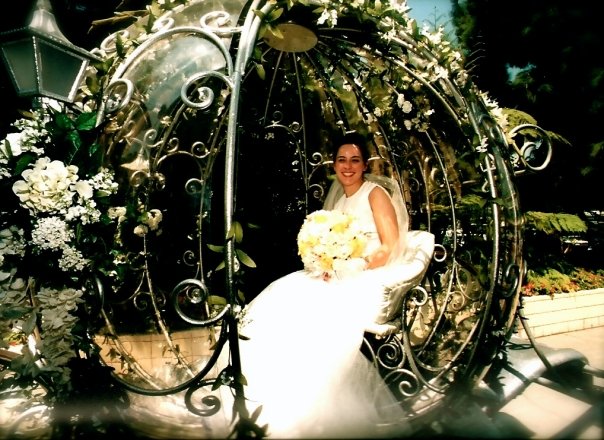
Okay, there were no talking mice, and I did not have to go around the world with a shoe looking for the girl whose foot would fit inside.  But I did leave my wedding in a pumpkin-shaped crystal coach with white horses, a footman, and a crowd of people around the Disneyland Hotel taking pictures of us, all the while hearing “A Dream is a Wish Your Heart Makes” playing around us.

“If you keep on believing, the dream that you wish can come true.”

Those are the words Cinderella sings at the beginning of her movie.  I sincerely believed them, because I was certain God had not created me to be alone.  I was certain that a wonderful, warm, witty, beautiful, vivacious and amazing woman was out there, looking for me–just like I was looking for her.

It took awhile to find her.  Like Cinderella’s prince, I had to search the kingdom to find the girl who was the right “fit.”  Girls I had dated previously and fallen in love with, well–they weren’t “right” for me.  But it turned out that Robyn was.

When I’d almost given up on the search, she was there.  She was there at The Disney Store, looking beautiful in spite of the turquoise blue sweater and khaki shorts she had to wear to work each day.  She was there with an infectious life, a beautiful smile, and eyes that twinkled as we sang along with “A Whole New World” from Aladdin while stocking the store.

We’ve been married now for 12 years.  It’s not always easy–the Disney movies don’t always show that part–but it’s been an adventure like no other.  Full of laughter and tears, full of forgiveness and fun.  It’s been 12 years of hard work, raising kids, growing a family, finding out who we are and who God created us to be.

But it’s true.  A dream is a wish your heart makes.  And 12 years ago, at Disneyland, my wish came true.  My Disney princess didn’t disappear when the movie ended.  My Disney princess became my best friend, my greatest love, and my wife.

My Disney Princess

Happy Anniversary, my love.

Driving at the Top of the World

I’ve driven great heights before.  This week, I’d already driven the Going-to-the-Sun Road in Glacier National Park.  It’s a national architectural and engineering landmark.  It takes you from the valley floor up amazing switchbacks cut right into the cliff walls.  All the way to over 6,000 feet.  That’s pretty high.

Going-to-6,000-Feet

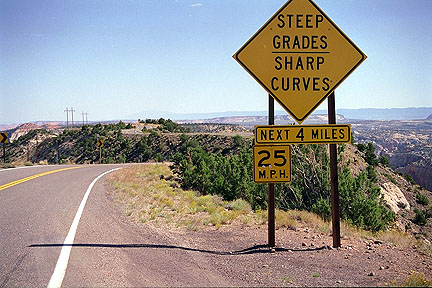
I’ve driven Utah State Highway 12, which goes up to the top of Boulder Mountain outside of Bryce Canyon National Park.  It’s known as a Scenic Byway in Utah, because it is absolutely beautiful.  Trouble with this road is that is goes to a height of over 9,000 feet.  And once you get to the top, the only thing there is the road.  We drove this road in 2006 on the way from Bryce Canyon to Capitol Reef National Park.  This is what you see when you get to the top.

Not a Good Thing at 9,000 Feet

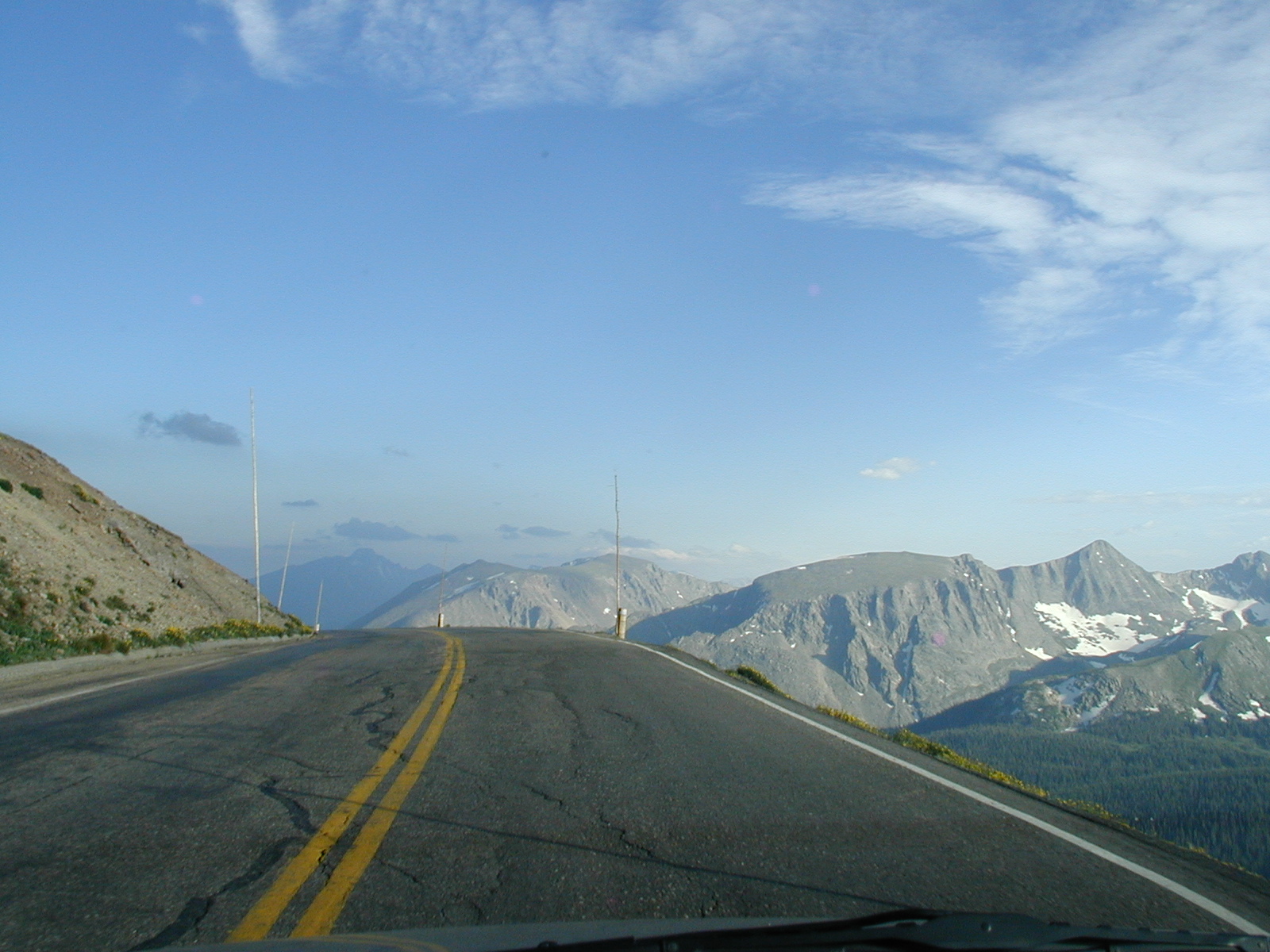
So I’ve driven at great heights before.  But this week, I drove at the top of the world, across the backbone of America, in Rocky Mountain National Park.  I was told by my mom that I’d been there before, but clearly it was at a time in my life where natural wonders did not awe me the way they do now.  The road across the top of the world is called Trail Ridge Road.  And unlike the precarious cliff walls of Glacier or the horrific drop offs of Highway 12, Trail Ridge Road is nice and easy going–until you suddenly find yourself at the top of the world.

It’s the highest continuous highway in the United States, and eventually it reaches an elevation of over 12,000 feet.  When we drove the road, it was a warm 85 degrees at the Beaver Meadow Visitor Center.  By the time we reached the alpine tundra at the top of Fall River Pass, the temperature had dropped to 35 degrees, the wind whipped around us, and we realized just how high we actually were.  From the warm montane region to the sub-alpine to the alpine, we experienced every kind of mountain climate possible.

Driving at the Top of the World

It’s beautiful up there.

And it’s really high.  12,000 feet above sea level. And we loved every moment of it, driving slowly, soaking it all in.  We were driving at the top of the world.  Across the backbone of the United States, across the Continental Divide (which is actually lower than the highest point of the road).  Past snow banks, elk, and more.

Oh, and did I mention it’s really really high up there?

(And did you see the big sticks in the picture?  Those are there to help people know where they are when the snow takes over and finally start clearing it.  Which can take them up to 55 days to do.)

An Oasis in the Middle of Nowhere

Imagine having left everything you ever knew and venturing across the American West in the late 1800’s.

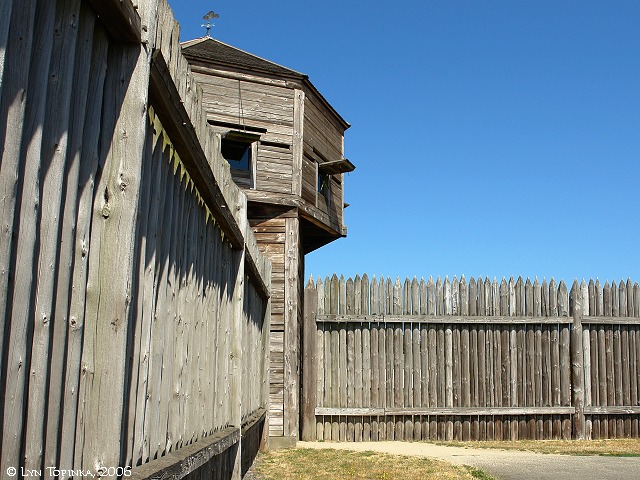
To the north, the Indian Wars are still in full swing.  The memory of what happened at Little Bighorn is still fresh.  To the south, unrest between Texas and Mexico continues unabated.  You’ve followed the Oregon Trail.  Or perhaps the California or Mormon Trail.  And you hear that you are soon to arrive at Ft. Laramie.  You’ve seen the frontier forts–you know what you’re headed to: a log-walled military outpost.

But you finally see it–and everything you expect has been proven wrong.

What You Might Expect to See
What You Actually See

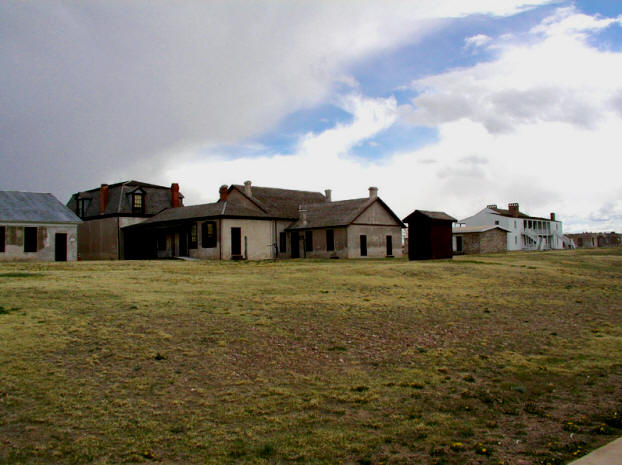
Ft. Laramie started out as a fur trading outpost, then a military post.  But it was never walled, and it was one of the few forts in the West where soldiers, settlers, trappers, traders, and Native Americans worked and lived together in a peaceful existence.  And although it is right in the middle of exactly nowhere, it’s well worth the trip.

It was a key stop on all the major routes going West.  The Pony Express and the Transcontinental Telegraph both had posts here.  The people who lived here kept life a little more like what they had experienced at home in the East.  Homes, instead of just barracks, picket fences, flowers, and more.  Yes, there were soldiers–entire companies of the US Cavalry–but there was so much more.

And when you visit, especially in the summer, you’ll get a chance to experience living history.  We met Private Jones, a newcomer to the US Cavalry, newly enlisted.  He told us so much about what it was like to be a soldier, what it meant to live in the West at the time.  He told us how the soldiers took baths, how they spent their free time, and what their beds were like.

We met a laundress named Sarah, who had come West with the Army, under contract for five years.  She lived in a tent near the garden, and her job was to do laundry.  All day.  All the time.  If she was lucky, she might marry a soldier and actually get a real home to live in.  If she was unlucky, she might catch diptheria or some other disease.

A lady named Mary told us about what it was like to live in one of the houses.  Her crinoline-lined dress and bustle looked uncomfortably hot on the day we visited–it was at least 100 degrees with very little wind–but she showed us the breezeway in the home that had once belonged to the second-in-command, and it suddenly felt delightfully cool.  Air-conditioning of the old West.

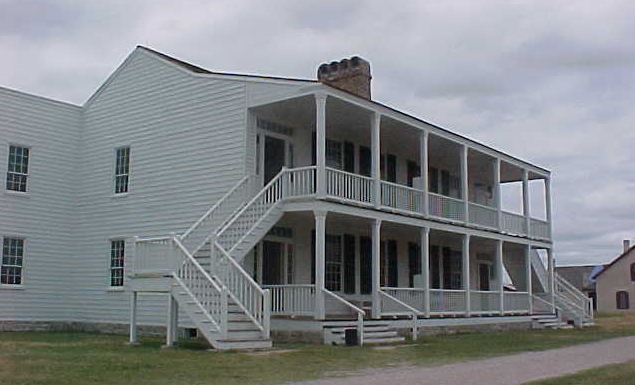
It’s been lovingly restored by the National Park Service, which took possession of the site in 1940.  After it was abandoned as a military establishment in the 1890’s, only 10 of the original 70 buildings remained.  Many of the buildings were in extreme states of disrepair.  Old Bedlam, the original commanding officer’s home, was barely standing.

What It Looked Like in 1939

Today, thanks to the work of the National Park Service, it has been restored to what it looked like at the height of its influence in the 1870’s.  It is a stately, beautiful home, filled with original furniture and artifacts from the era, including some from the original occupants.  It’s quite lovely and amazing when you realize just how it looked and how badly it had fallen apart.

Old Bedlam Today

We might have raced through the our time at Ft. Laramie, had it not been for the fact that our children love doing the Junior Ranger programs available at so many National Parks.  They require you to spend time in the Park, to explore it, to get to know it.  Ft. Laramie was no different, and thanks to the Junior Ranger program, we were there for nearly 3 hours.

It was time well spent.  Ft. Laramie was a huge part of the American frontier–but when the frontier was gone, so was the fort.  But now, it’s there again.  Ready to be discovered in an out of the way corner of Wyoming.  Where you and your family can experience what those settlers must have experienced: an oasis in the middle of nowhere.

Battlefields

It was at least 30 years ago when I last visited Last Stand Hill.

It hasn’t changed that much.

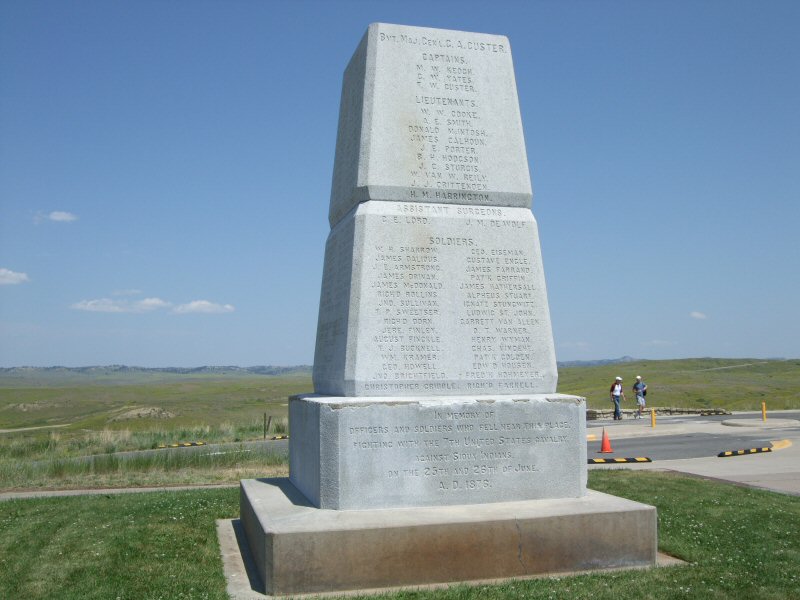
It is still extremely hot.  It’s still a tall hill in a series of hills overlooking a fairly insignificant river.  It still has a memorial on top.

But it was not the same.

Monument Atop Last Stand Hill

It wasn’t the same because I have changed.  America has changed.  And history has been much kinder to all the participants of the events that happened at the Battle of the Little Bighorn, an amazing victory for the Plains Indians and a stunning defeat for the US 7th Cavalry.

In the years since I was last at Little Bighorn National Monument (originally known as Custer Battlefield National Monument and changed by a law signed by President George HW Bush in 1991), historians have done a lot to correct what had been written about those who fought that day.

Stephen Ambrose, one of America’s greatest historians, has written an amazing book about two of the most significant leaders.  Custer & Crazy Horse is a powerful book doing a lot to give Crazy Horse a lot more of the responsibility for the success of the battle (downplaying some of the role given over the years to Sitting Bull), and showing that George Armstrong Custer was not an egotistical alcoholic who stupidly rode into his death.

Interestingly, the park ranger who told a riveting account of the battle that day, did the same.

He was a Native American, and his told his story in an easygoing and relaxed way.  We sat facing Last Stand Hill, where Custer fell on that fateful day in 1876.  As he spoke, he showed us where the 7,000 Sioux, Arapaho, Crow, and other Indians made camp on the banks of the Little Bighorn River.  He pointed to the distant mountains, where Custer and his woefully unprepared men first sighted them and where they quickly moved into position, hoping to end the fight quickly.

What he said, and how he said it, was so powerful that it actually moved me to tears.  What a horrific day in history.  People being forced to fight because of broken promises and the lure of gold in their sacred Black Hills.  An army called into force them to a reservation with not enough men, not enough intelligence, and bad directions–not from Custer himself, but from his direct superiors.  It was just a disaster waiting to happen.  And it did.

All Over the Battlefield

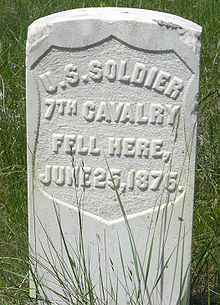
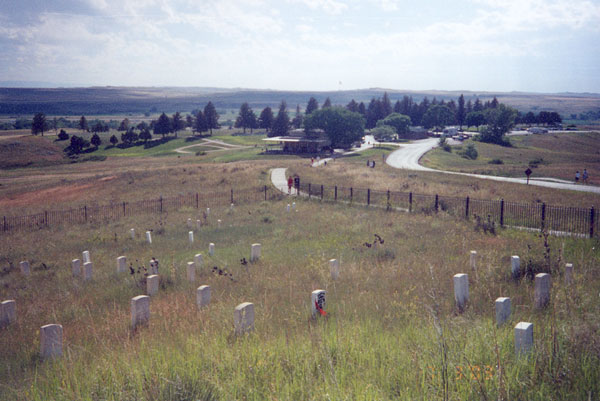
There are markers all over the battlefield marking where soldiers fell that fateful day.  It’s sad, actually, to see them.  They are mostly scattered, evidence that the soldiers were running for their lives.  In small pockets, especially at Last Stand Hill, there are groups where the men of the 7th Cavalry fought desperately to stay alive.

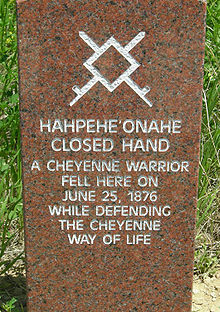
Not Enough of These

Sadly, there are only a few of the red stone markers, showing where the Warriors (what the Ranger referred to the Native Americans who fought at Little Bighorn called them, and aptly fitting, I thought) fell.  According to our Ranger, this is because many of their families still don’t want to recognize their part in Little Bighorn.  As he spoke of it, reluctantly, there are still battles being fought at Little Bighorn.  Battles between families, battles between Indian nations, battles between people who should have learned from the events of so many years ago.

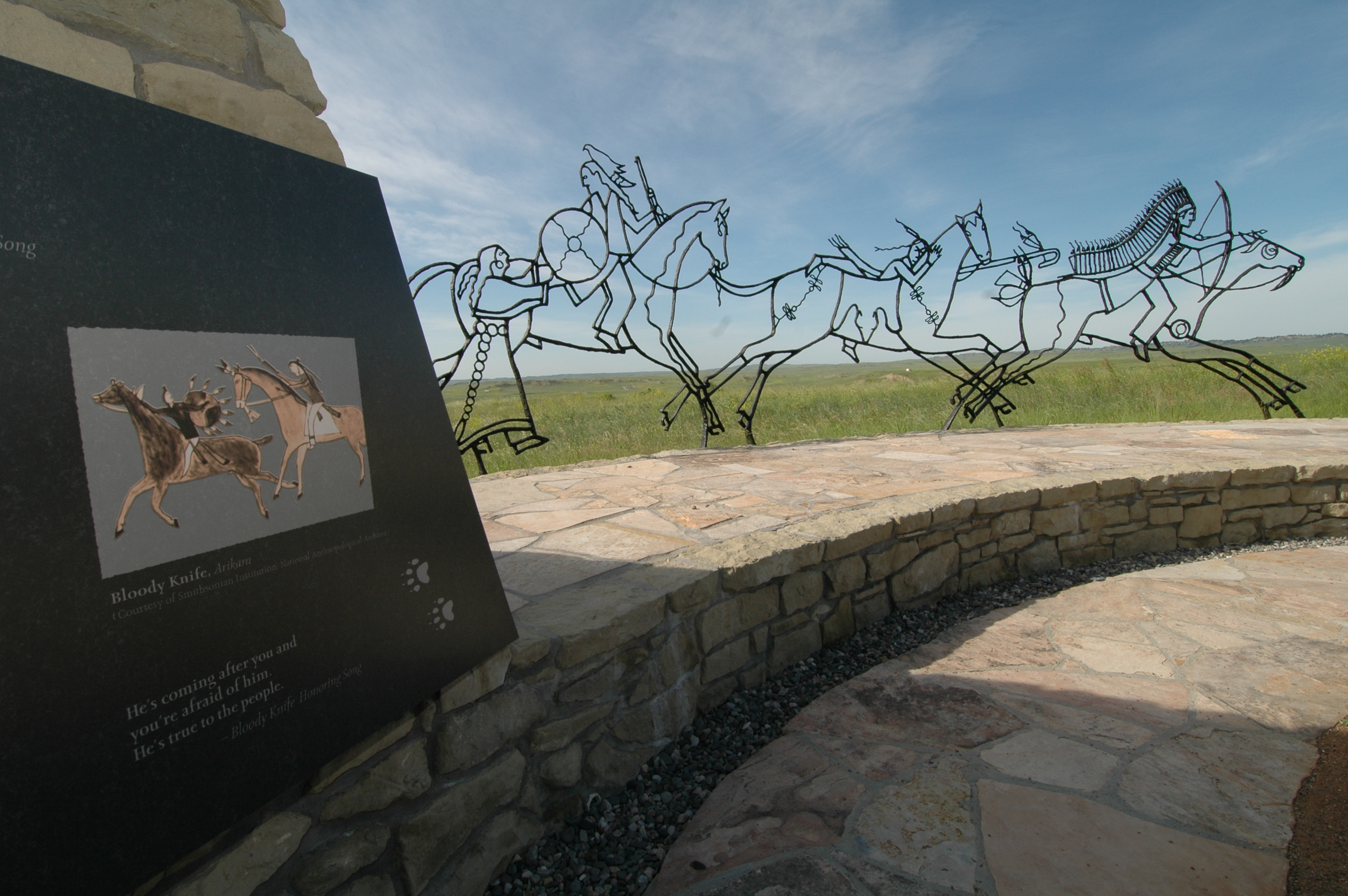
Something else has changed at Little Bighorn since I was there so many years ago.  Now, it is clear that it’s no longer a memorial to the soldiers who died there.  It’s now a memorial to all who died in a horrible battle over whose way of life was “right.”  Slightly below the memorial on Last Stand Hill is a new memorial.  Carved into the earth, it’s a memorial to the many warriors who also died that day.  Some of their names are listed, others are still lost to history.

A Poignant Reminder

On the silent hills around Little Bighorn, two memorials help us remember what happened.  And as Ranger William said, “I’m an Indian.  But this isn’t ‘the Indians’ side of the story.’  This is all our story.”  If we can all look at the stories that way, it could very well help fulfill what Two Moons, who fought with the Cheyenne to destroy the 7th Cavalry in June 1876 said:

Forty Years ago I fought Custer till all were dead. I was then the enemy of the Whitemen. Now I am the friend and brother, living in peace together under the flag of our country.

From Last Stand Hill

If you happen to make it to the southeastern corner of Montana, visit the memorial.  Hear the stories, and be reminded of the tragedy that comes when we forget that God created us to live in peace.

Glaciers, Waterfalls, & Wonders

I didn’t think I could be that amazed by Glacier National Park.

It’s high.  It has glaciers.  It has a famous road.

But I was unprepared.

I can’t begin to describe it in words.

Going-to-the-Sun Road, which is nothing short of the most beautiful road I’ve ever driven on, is a marvel.  As the sun broke through the clouds of the various peaks, as we began climbing from the valley floor, the light danced on the cliffs, sparkling through the waterfalls–even now, trying to describe it the way I saw it sounds like the bad writing of a 9th grader struggling with too many adjectives.

Like a Song for My Soul

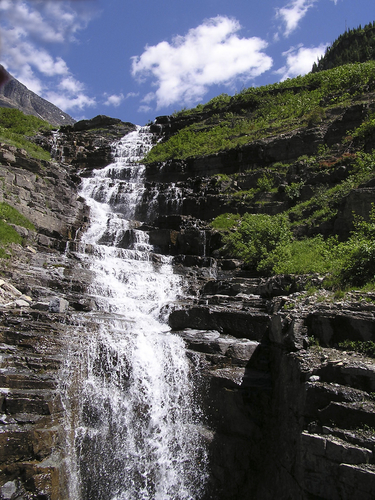
The road is right on the cliffs.  As we drove, Robyn reached out and touched the cliff walls.  We pulled over frequently, stopping to gaze in wonder at waterfalls.  We saw rivers with water so blue they looked fake.  Waterfalls so thunderous, waterfalls so misty, they took my breath away.  Whenever I thought we’d topped it, another one appeared around the bend.

A fawn ran alongside our van as we drove up the mountainside.  It licked Autumn’s hand.  It ate an apple from Robyn’s hand.  (Technically not okay in a National Park, but hey, we were 4,000 feet in the air on the side of a cliff standing next to a beautiful fawn.  We had to do it.)  It ran alongside the van again.

Every waterfall was like a whisper from God directly to my soul, reminding me of His love for me in creating such a wonderful world.  Robyn was almost giddy from the beauty, from the cliffs.  It was like Glacier spoke to the deepest part of our souls and reminded us who we are and Who created us to enjoy such beauty.

We recently watched The National Parks: America’s Best Idea. Each National Park had a champion, someone who felt the land called and spoke to them in its own way.  John Muir had Yosemite.  For us, I think Glacier is that Park.  I could drive up and down the Going-to-the-Sun Road every day for the rest of my life and discover something new.  I want to return, to explore the curves and cliffs, to hear the thunder of the water, and watch the animals live so free at such heights.

I want to live at such heights.  Perhaps, in the New Heaven and New Earth that my Heavenly Father is creating, I will.

On the Road Again

I love road trips.

I love the great American idea of getting in a car and driving across the country, seeing things you can’t see at home, experiencing places you only read about in history books or see in documentaries you stream via Netflix.

I grew up taking road trips, thanks to my missionary parents.  Every summer from my 1st grade year until my freshman year in High School, my parents and my brother and sister and I loaded into whatever vehicle we had at the moment (usually something given to us by the mission board) and traveled from Seattle to Indianapolis, and then from there everywhere else.  By the time I graduated from high school, I had driven (okay, mostly ridden) through the lower 48.

I’d seen Yellowstone.  Devil’s Tower.  Plymouth.  Washington, DC.  Trenton.  Lexington and Concord.  Niagara Falls.  You name it, we’d been there.  You can read about our country all you want–but when you start seeing it, living it, experiencing it, it does something to you.

So this is a value I grew up with, and something I am glad to pass along to my children.

People think we’re crazy.  Six people in a minivan, driving more than 4,000 miles across the American West.  But if you don’t drive that far, you’ll never see it.  You can’t fly to most of the most amazing and beautiful National Parks.  And like the Pixar film Cars so aptly celebrated, if you don’t get off the highways and onto the old two-lane roads, you miss the small towns and amazing people that make America great.

So tonight, I write this from a hotel in Missoula, Montana.  Growing up, it was always the first leg of our summer road trip.  Thanks to the amazing cooking and hospitality of John and Lydia Hirning, we looked forward to arriving in Missoula.  Tonight, there was no great German cook waiting to feed my family.  We made do with Cracker Barrel.  (YUM.)  But we looked forward to arriving in Missoula tonight, probably more than I did 30 years ago.

Perhaps it was nostalgia, perhaps it was the horrific amount of road work between Spokane and here that slowed traffic to a crawl, stuck behind slow-moving trucks over steep mountain passes.  I don’t know.  But I am so glad to be on the road again.

Greetings from Montana

Tomorrow we experience the first National Park of our 2010 Road Trip: Glacier, which celebrates its 100th anniversary this year.  Going-to-the-Sun Road beckons!

PS: If you have not yet watched The National Parks: America’s Best Idea by Ken Burns, you have missed out an amazing documentary highlighting the wonder and history of our National Parks.  It’s been nominated for nearly a dozen Emmy Awards, and it’s available now for instant streaming via Netflix.  Check it out.

That Home Belongs to You

Dog or Superdog?

Watched Disney’s Bolt with the family not long ago.  I’ve seen it before, although I do feel a little guilty about never having seen it in the theatre.  It’s a great little film, full of wonderful voice acting, fantastic animation, and an engaging journey of discovery.

But what I love about Bolt most of all is the fact that it speaks to a deeper longing we all have.  A longing for home.

Bolt is a dog.  He has lived all his life believing he is a superdog.  It’s the role he plays on a television show, where he costars with his owner, a little girl named Penny.  She chose him when he was a puppy and has loved him ever since.  Sometimes Penny wishes she could just have a normal life with Bolt, that he could live in more than just a television studio.  But those around her disagree.  Bolt’s performances won’t be believable if he doesn’t actually believe he is a superdog.

Who wouldn't love to have a dog like this?

Through a series of circumstances, Bolt ends up far from home, away from the studio.  His first inclination is to believe Penny is still in danger, that he must do his part as a superdog to save her.  But eventually Bolt comes to the realization that he’s not super.  He’s just a dog.  The identity he has always believed was his–really isn’t his at all.

Everyone needs help to find home.

He was surrounded by people who wanted him to be something he wasn’t.  So Bolt doesn’t have friendships, he doesn’t trust anyone.  A streetwise and cynical cat named Mittens eventually helps Bolt come to the understanding that he is just a dog.  But she also recognizes that until Bolt realizes who he is, he will never be able to complete the journey toward home.

This is a constant theme with me, and one I share with many Disney characters. Almost every single one of the great Disney characters have an “I want” moment, where they tell the audience through song or exposition exactly what they want out of life.  Ariel wants to be part of that world, Aladdin wants to be more than just a street rat, Hercules wants to go the distance–you get the idea.  Every character has a big want.  Just like me.

Part of That World

I want to know that my life matters.  I want to know that I am becoming everything I’m supposed to be.  I want to know that I have a place to belong–a place to call home.  My desires and dreams, and yours, too, when you think about it, aren’t much different from an animated dog.  A dog who thought he was one thing and got lost.  And finally found home when he realized who he was.

Bolt’s journey is painful.  It’s tough to realize you’re not as amazing as you think you are.  It’s hard when what you’ve always believed about yourself is stripped away in an instant.

But, like Bolt, you have someone in your life who sees the value of who you really are.  At first, Mittens sees Bolt as her ticket to a better life–a cute dog can accomplish a lot more than a mangy cat, after all.  But when Bolt becomes fully dog, Mittens sees him as family.

Has a lot in common with God.

God sees us the same way.  Oh, not as a ticket to a better life, but as family.  He sees you and me and says, “Stop being what you think you should be and be what I created you to be.”  If He’s given you a talent or an ability, it’s there for a reason.  It’s there because it’s wrapped up in what He created you to be.

And like Bolt, when you finally have become who you are meant to be, and not what others intended you to be, you’ll discover you have a home.  “There is no home like the one you’ve got–’cause that home belongs to you,” says the song that plays over the wonderful travel montage in the film.  And it’s true.  Want to know where home is?  It’s where you are with the ones–and the One–who value you for who you are.

Another great song about home says this: “He’s calling you home.  He’s leading you home.  So enter the love, feel the embrace–your heart has a place to call home.”

Together. That's Home.

Bolt found his home.  Will you find yours?

She Smiled

The Girl With the Smile

It was her smile that did it to me.

I’d known her for over a year.  We worked for the same company, although we rarely worked together.  My schedule had me working mornings while she worked evenings.  I had only met her once, when she had first started, and I hadn’t been all that impressed.

Maybe it’s because at the time I wasn’t really looking, and neither was she.  We were just two people working in the same place–never at the same time–and it probably would have stayed that way.

But then we ended up going out with a bunch of mutual friends.  She was just coming to work when I saw her and asked her to join us.  “You should come,” I said.  “We’re going to Red Robin after the store closes.”

She smiled.

That was the beginning of it all.  That smile.  It was amazing.  It came from her heart, made her eyes dance, and turned her whole face into some sort of radiant light.  I’d never seen a smile like it.

“Okay, sounds like fun,” she said.  “I’ll see you there.”

That night we met up with other co-workers.  I wore shorts and a green baseball cap I’d purchased from the Gap.  She teased me and said I looked like I was barely 20 years old.  She also called my hat a “Baby Gap” hat.

But she smiled.  She smiled a lot that night.

I remember thinking that smile was amazing.  The more I looked at her, the more I realized just how beautiful she was.  She had beautiful hair, gorgeous eyes.  But that smile.  It was her smile that made the rest of her face shine.

I knew I wanted to be around that smile some more.  I was a little shy–she was beautiful, after all, and I was a bit uncertain about myself.  Girls like her didn’t usually fall for guys like me.  I was bookish, short, somewhat nerdy.  But that smile intoxicated me.

The next day, we happened to work together.  “A bunch of people are going out again tonight,” I said to her during her lunch break.

“Are you going?” she asked.

“If you are,” I answered.

And she smiled again.

I still feel the same way about her smile.