Pixar Animation Studios’ new film Brave is both a grand return to form and an exciting new avenue of storytelling from one of the greatest studios in the history of film-making.
After the commercial success of Cars 2, which I found to be the worst of any of their 12 films (in spite of its zippy storyline and always beautiful visuals), I was hoping for a return to what Pixar does better than anyone else: tell amazingly original stories which are filled with heartfelt emotion, speaking to the deepest part of its audiences.
Brave does not disappoint.
I will be honest–it’s the first Pixar film where I did not anticipate what would happen, even knowing the film’s big twist. Nor did I anticipate the emotional reaction the film’s final arc would spark in me or the loved ones I saw it with last night.
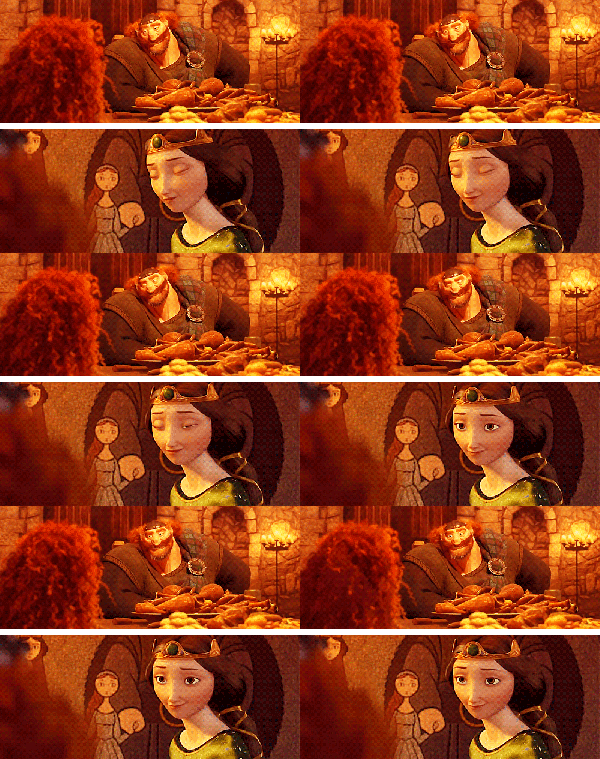
If you’ve seen the trailers, you know what the basic story is: Merida, a Scottish princess with flaming red hair and a way with a bow, doesn’t want to follow her mother’s wishes and marry the available suitors who have arrived at her castle to fight for her hand.
What transpires because of Merida’s headstrong rebellion is brought to life through a beautiful tapestry (literal and figurative) of family emotions and dynamics full of thrilling adventure and lighthearted comedy. Ultimately, the story is about the bond between a mother and her daughter, and the final moments of the film will make any woman remember those moments in the mother-daughter relationship that have slipped into the past.
It’s a sumptuously animated film, like any Pixar creation. Every shot is beautiful, bringing to life the beauty of Scotland like they brought to the world of cars or toys or balloons. From ancient stones to gorgeous sunswept cliffs, castles to witch’s cottages, the film is filled with beautiful visuals that highlight the wonders of the filmmakers’ art. And Merida’s hair in itself (which they spent two years in figuring out how to animate) is a beautiful creation, a testimony to the sheer art of the digital animation.
Voice acted with perfection by Kelly McDonald (Merida), Emma Thompson (Queen Elinor), and Billy Connolly (King Fergus), the three main characters are a reminder of the art of family dynamics Pixar first showcased in The Incredibles. Every person in the family has their own foibles and troubles, but they feel deep affection and love for each other.
They respect each other, even, which is a rare thing to see in film families these days. Even the teenage rebellion which drives the story is not born out of dislike of her parents, but out of the frustration of identity and dynasty that every teen–even those who love their parents–feels. The genuine feelings that the parents feel for their offspring, and each other, is a wonderful thing to see in a contemporary film. It’s quite a refreshing change from family humor that comes from snark and sarcasm.
The design of the film is beautiful, crafted in such a way to highlight some truly innovative character design and color choices throughout are spot on. It’s a genuinely lovely film to look at.
The film’s score, by composer Patrick Doyle, is full of Scottishness, something he understands well, being a Scot himself. Whether it’s in the main theme or the pounding drums ofthe music highlighting the games, it’s easily one of the composer’s best works. Songs by Julie Fowlis, which speak to the emotions Merida feels as she “let[s] my hair flow in the wind as I ride through the glen firing arrows into the sunset,” and as she deals with the consequences of her desire to change her fate, are pleasantly Celtic in their feeling. The end credits song, “Learn Me Right,” by band Mumford & Sons and performed by Birdy, is a beautiful and moving piece and–like Doyle’s score–should be remembered by the Academy come Oscar time.
Here’s a sample of the theme, a track called “Merida’s Home.”
An exciting change is Pixar’s desire to break out of a contemporary setting in its story. Unlike their last 12 films, Brave doesn’t have a contemporary setting, aiming for a more mystical, old-fashioned story style. There is no reference to the present (although the ubiquitous Pizza Planet truck from the original Toy Story does make its 13th appearance), and the tone of the film is much like Up in that it doesn’t shy away from a more mature feel. Much like Dreamworks’ How to Train Your Dragon and Walt Disney Animation Studios’ Tangled, the film shows that CGI-based animation doesn’t have to have a contemporary setting to be a success.
Ultimately, though, what makes Brave a triumph is the heart of the story. Merida’s relationship with her mother is what the film is all about. There is no prince, no love story, not even an ending where Merida gets to choose which of her suitors she wants. The film is about the bonds of family and the powerful love which transcends tradition and dynasty. When tested, there are no stronger ties. This is something Merida and Elinor both learn, and something the audience reacts strongly to.
The original title of the film was The Bear and the Bow. The significance of both in Merida’s life are played out beautifully in Brave , showing that although the tapestry of our lives may be woven by other hands, it is how we respond to what “fate” throws at us that ultimately determines our destiny.
The final moments of the film are where all the threads of the story, the tapestry that the Pixar artists have carefully woven, come together. This is the “return to form,” where the gift Pixar has always had for telling stories that have heart really shines.
And when Merida throws her arms around Elinor and cries, “I just want my mother back,” every person who has ever fought or argued with their parents will understand. In my own family, where my wife lost her mother less than two years ago, Merida’s cry and longing was especially poignant. Anyone who has lost a parent understands what Merida finally realizes in this moment.
In the end, the battles and disagreements aren’t what matters. It isn’t the traditions or trappings. What matters is the love that weaves our lives into a beautiful tapestry and the bonds that hold us together.
It’s almost Father’s Day, but don’t worry. I’m not going to use my blog to give you advice on how to be a great father.
As a dad, I’m all too aware of my shortcomings. I know where I stink at fatherhood.
I know that I have absolutely no experience with raising a teenage daughter. Or how to invest into my pre-teen son to ensure he doesn’t go through the same crap I went through. I hope that what I learn with my oldest two I can apply to my youngest two, but I’m pretty sure that it won’t work–they are all just too different from each other.
I can’t offer advice to other fathers beyond what small experiences I have had. Your kids aren’t like my kids. Your family isn’t like my family. What works in my home probably won’t work in yours. So there isn’t a lot I can offer in this post on fatherhood, except to point out what I have learned from one dad.
He was a dad who liked spending time with his daughters. Having children hadn’t been easy for he and his wife. He was prosperous, famous, and seemed to understand kids pretty well, based on the nature of his successes. But even in the midst of all his success, he enjoyed what he called his “Daddy Days.” These were days of the month set aside for him to just be with his kids.
They would go to the park, he would buy cotton candy and ice cream, and then he would sit on a bench and watch them play. The stuff at the park wasn’t created for them to do together, it was strictly for the kids, and parents were expected to sit and watch. They would go on the merry-go-round as he sat there holding the treats.
And he hated it.
This wasn’t the way he wanted to spend his time with his kids. And they really didn’t like the fact that the time he had set aside for them was spent with him just watching. He thought there should be something better. Some place where parents and kids could go together and have fun together. Where they could laugh about the same things, remember the same experiences, and be together.
So he put together a plan, pulled in a few of the experts in his organization, and set out to create something that didn’t exist: a place where “age relives fond memories of the past, and youth may savor the challenge and promise of the future.” But most importantly, it was a place they could go together.
He bet his entire future and every bit of money in his personal fortune–and the fortune of his company–around it. People told him he was crazy. He couldn’t get anyone to invest in it. He cashed in his life insurance policy to help pay off the cost of constructing it.
What began as his musings as a father wanting to spend time with his kids eventually became the Happiest Place on Earth: Disneyland.
You may think of Walt Disney as just a beloved American icon.
I like to think of him as a dad who got at least one thing right: spending time with his kids, being with them, doing things together, was worth more than all he had ever earned or created or done before. And although his own children were grown by the time Disneyland opened in 1955, what he created–what he nearly lost it all to create–still serves as an inspiration to every father today.
Being together with your kids is one of the greatest legacies you can give them.
As he said, “We believed in our idea: a family park where parents and children could have fun–together.” He believed in it so much that he nearly lost everything to create it. How much do you believe in it?
I rarely see films more than once in the theatre any more.
When I was young and could spend money on just myself, it was easy. I love movies, and I love seeing them on the big screen. In 1988, for example, I saw Robert Zemeckis’ amazing movie “Who Framed Roger Rabbit” no less than 13 times. (I admit that seems a bit weird, now.) But these days, with kids and finances tight, if we get to a movie at all, it’s once and only once.
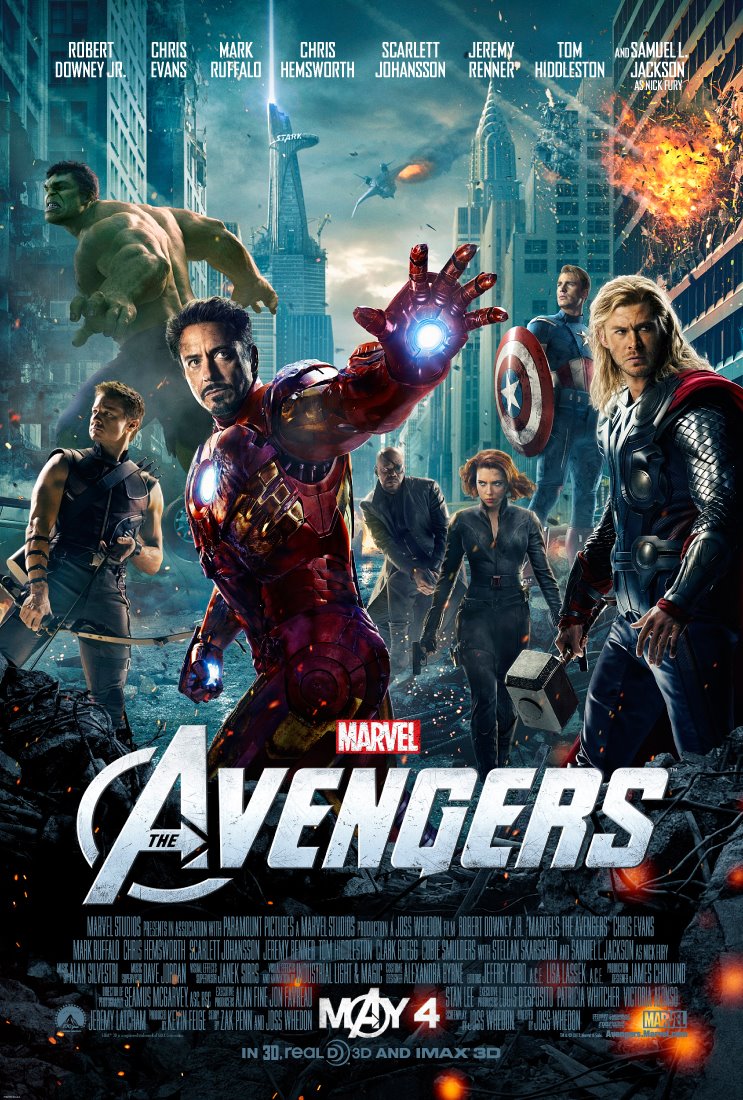
I have made a huge exception to that this year. I’ve seen Marvel’s The Avengers twice in the first week it opened–and I plan on going again soon. I can’t wait to sit back in my theatre seat and watch the adventures of Captain America, Iron Man, Thor, Hawkeye, Black Widow, and Hulk again. I want to see those moments that took me by surprise the first time again, I want to relish the interplay between heroes, and to see the highly underrated Clark Gregg’s Agent Coulson one more time.
I’m not a comic book collector or geek. (I will admit to having every issue of the original incarnation of Power Pack in mint condition. I will also admit that I was a huge fan of X-Men during the Chris Claremont years leading into the infamous Mutant Massacre of the late 1980’s.) But I have never collected Thor comic books, or Captain America, and frankly, was not a huge fan of Iron Man, who seemed like kind of a jerk the few times he showed up in those Marvel titles I did read.
So why am I such a huge fan ofThe Avengers?
It’s a simple word that I think explains why the film has broken box office records around the world, taking everyone in the “industry” by surprise. And it’s a word–a feeling–an emotion–that is strongly lacking in our world at the moment.
Hope.
It’s not an easy commodity to find today. Global finances are in crisis, with the Greece’s current economic disaster capturing the news. An election year in the United States filled with disillusioned people who wonder what path the great Republic will take. Personal and professional uncertainty as joblessness rises, gas prices spike, and even groceries cost more than they used to.
The Avengers has plenty of bad stuff going on, too. It’s not like it takes place in a perfect, Metropolis world. One of the hallmarks of the Marvel Universe is that all of its costumed heroes live in and inhabit the real world. All the craziness of superpowers and supervillains takes place in the same world you and I live in. Part of Stan Lee’s brilliance with the creation of these characters is that he placed them in the middle of real world problems–not in a fictionalized version of some big city (yes, I’m looking at you, Gotham).
I won’t give away the plot here, because it really doesn’t need to make a lot of sense. Yes, it may operate in a “real world” universe, but it deals with other-worldly power sources, superbeings, and a flying aircraft carrier. And no, it may not make a lot of sense in a literal way. But it resonates in a way that I am certain the new Batman film will not because its central characters are all about hope.
Tony Stark/Iron Man shows the hope that each of us have in that our past does not need to dictate our future. Although Stark’s original legacy was one of weapons of warfare, he used his knowledge and ability to become a superhero. No longer being just “about himself,” Stark brings hope to people around him by defending them. Because of this change in his own life, he is also able to help others who may have lost hope, to discover it for themselves.
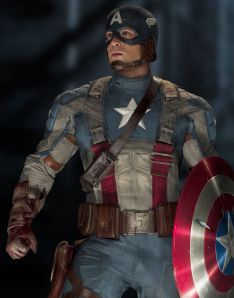
In Steve Rogers/Captain America we can see the hopefulness of someone who refuses to give up, who sees every opportunity as a moment to lead others, and holds those around him to a higher standard than they may even hold themselves. He never forgets what the scientist who helped him become Captain America reminded him: “You are a good man.” Although he himself has lost everything he held dear, he stands up and fights, leading new allies to understand that they are more than what they may have allowed themselves to become.
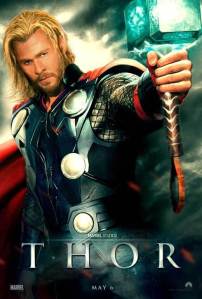
Thor shows us the hope we can have in others, never losing belief that even the most lost among us can still be redeemed. It is his own brother who has twice caused world-wrecking havoc (across several dimensions)–and who has betrayed his trust time and again. But Thor’s love for his brother, his hope that there is still good in him, shows hope for a better future for everyone–a desire for not just peace, but reconciliation and friendship.
From Bruce Banner/The Hulk we learn what happens when hope is lost. When people doubt us, when people lose their hope in us, we feel hopeless as well. Banner’s transformation into the Hulk seems to be a hopeless thing–until Tony Stark speaks into him and reminds him that the “monster” that is the Hulk is not something he needs to run from and be ashamed of. When people believe in us, when they offer us hope, we can see that even the dark valleys of our lives have purpose.
Those are the big four of The Avengers. I believe both Hawkeye and Black Widow also give the audiences glimpses of hope–neither of them are “super” heroes in the truest sense of the word, but both are willing to risk everything for the hope of a better tomorrow. They have been through scarring, difficult trials, and they have each offered each other hope–that they can be saved, that they are “more than what they have become”–and it transforms them.
Hope is a transformative thing. People who have no hope are lost, blind, aimless. They have nothing to believe in, to fight for, to stand up for. Without hope, there is no reason to get out of bed in the morning, really. When we have hope, we can see our current situation and say, “No, this is not what was intended for me. This is not what I was created for.” We look at the circumstances of our lives not as accidents of fate, but as moments that lead us further down the path to our ultimate destination.
The villain of the film, Loki, cannot see past the imperfections. He can’t see anything but the brokenness, the humanity, of “earth’s mightiest heroes.” This is made clear in one of the most quoted dialogue moments of the film:
Loki: What have I to fear?
Tony Stark: The Avengers. It’s what we call ourselves, sort of like a team. “Earth’s Mightiest Heroes” type thing.
Loki: Yes, I’ve met them.
Tony Stark: Yeah, it takes us a while to get any traction, I’ll give you that one. But let’s do a head count here: your brother the demi-god; a super soldier, a living legend who kind of lives up to the legend; a man with breath-taking anger management issues; a couple of master assassins, and YOU, big fella, you’ve managed to piss off every single one of them.
Loki: That was the plan.
Tony Stark: Not a great plan. When they come, and they WILL, they’ll come for you.
Loki: I have an army.
Tony Stark: We have a Hulk.
Loki: I thought the beast had wandered off…
Tony Stark: You’re missing the point! There’s no throne, there is no version of this where you come out on top. Maybe your army comes and maybe it’s too much for us but it’s all on you. Because if we can’t protect the Earth, you can be damned well sure we’ll avenge it!
Stark’s last line to Loki is something that only someone with hope can say. Hope isn’t about who has power now. Hope isn’t about how circumstances look right now. Hope is always about tomorrow. It’s always about the fact that this moment is not where you will end.
He realizes that yes, circumstances are against them. Odds are not stacked in their favor, but in spite of that, they will fight. And not out of a hopelessness, either. “Well, you’re going to win anyway, but we’ll die fighting the good fight.” Stark’s reply is that yes, they may go down for the count, but they will get back up and win in the end.
That is hope. That is why the line is popular, and why it is so thrilling to hear. Audiences already have enough leaders who are saying the best days are behind us. We’re already experiencing emptiness in our souls and in our pocketbooks. The last thing we want to hear is someone saying, “Well, we’ll do out best, but we may lose.” What we need to hear is someone who says, “You may lose, you may face horrific losses, but you will come back and you will win.”
There is no hope in the Batman franchise. Batman doesn’t fight because he believes in a better tomorrow. Don’t get me wrong. I loved Batman Begins. I even loved Tim Burton’s Batman Returns, with Michelle Pfeiffer and Danny DeVito. But these movies are not about hope. No matter what the incarnation of Batman, his very being–the very reason for his existence–is not about hope for tomorrow. It’s about the bleakness of today and the fact that sometimes–often times, according to its universe–you may become the very thing that you are most fighting. That is not hopefulness. That is nihilism. That is emptiness.
The Avengers ends with audiences cheering because the heroes, although scattered, promise to come back and stand strong again when tomorrow is threatened. At the end of The Dark Knight, Batman runs off into the night, alone, after confronting an evil that is very much like the tortured complications of his own soul. Compare the final lines of The Dark Knight:
Because he’s the hero Gotham deserves, but not the one it needs right now…and so we’ll hunt him, because he can take it. Because he’s not a hero. He’s a silent guardian, a watchful protector…a dark knight.”
with the final lines from The Avengers:
Agent Maria Hill: Sir, how does it work now? They’ve gone their separate ways, some pretty extremely far. We get into a situation like this again, what happens then?
Nick Fury: They’ll come back.
Agent Maria Hill: Are you really sure about that?
Nick Fury: I am.
Agent Maria Hill: Why?
Nick Fury: Because we’ll need them to.
The difference is clear.
The Avengers will come back because they offer hope. They represent hope. This what true heroes bring: hope that no matter what troubles and problems we face, we are not alone–it’s not for nothing. The Avengers inhabit a different world than Batman. Yes, they may have dark places in their past–but none of the characters remain there–all of them will unite to stand as a light to a better tomorrow. Hope isn’t self-centered–it’s always about the other. It’s always about someone else. When The Avengers fight together for someone else–earth itself–they find their greatest good.
Batman can never call himself a hero–his actions are always based out of revenge, out of the darkness within him, never as a path to a better tomorrow, never as a light in a dark world. Batman can’t offer that hope or promise because he himself is lost. He doesn’t see a better tomorrow, he doesn’t see himself as much different from the very villains he is fighting against. He can’t even live in the light, defended by officers of good, because his actions and motivations are uncertain, unclear to the very ones he is defending.
This makes The Avengers sound much more philosophical than writer/director Joss Wheadon, as awesome as he is, intended, I’m sure. Yes, it’s a comic book movie with great special effects and battles and jokes and several moments of sheer enjoyment. Performances are enjoyable all around, and the music by Alan Silvestri is heroic and anthemic and reminds me a bit of a cross between the trumpets of John Williams and the heavy percussion of Hans Zimmer. This track, which plays under Nick Fury’s final speech as the team goes its separate ways, is a great example:
Even the end credit song by Seattle rockers Soundgarden, is a song about hope. I’ve never been a fan of the band or their sound as grunge wasn’t my thing. But the lyrics to the song–even at their most bleak–are filled with promise of new light, the hope of tomorrow:
What if all you understand
Could fit into the center of your hand?
Then you found it wasn’t you
Who held the sum of everything you knew?
We’re in sync but not alone.
You hold on, and they’re gone.
Like the sun we will live to rise
Like the sun we will live and die,
And then ignite again.
Like the sun we will live to rise.
That’s hopefulness. We will are not alone. We may fall, but we will rise. And we will blaze with light. When you realize, as the song says, “You aren’t the sum of everything you know,” you can have–you can bring–hope. This is a most-fitting summary of The Avengers.
But The Avengers succeeds, and has been a success, not because it is just a well-made movie. None of the characters are heroes that audiences have been clamoring for. But the film works and is wonderful because of the humanity of its characters, and the hope they embrace–the hope they represent. That even the darkest moments are only pathways to something better. That even the ones we work with who may bug us and annoy us have something they can bring to the table. That even when it seems ridiculous and useless to fight, we will fight and we will persevere. Because–and this is the key–there is always hope.
It’s not just a statement. As Nick Fury says, “It’s a promise.”
And it’s definitely one where the basic plot is known to everyone: baby princess is born with milky complexion, jet black hair, bright red lips. Mom dies, father remarries, evil queen outlives the dad, and the girl, who is now in her teens, is taken out to the forest to be killed. Meets seven little men, eventually beats the queen, and lives happily ever after.
So how do you make a new version of this classic tale? Especially when there is one version (Walt Disney’s 1937 masterpiece Snow White and the Seven Dwarfs) which has become the mainstream version?
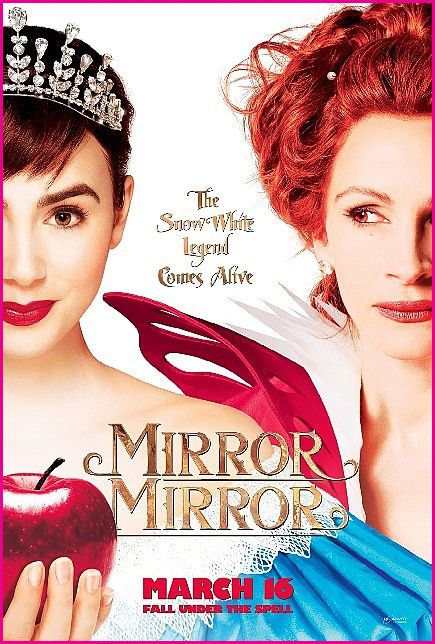
The new film Mirror, Mirror does it with charm, grace, beauty, and lots of humor. A thoroughly charming version of the classic story, it is definitely star-studded (Julia Roberts as the Evil Queen is the headliner, while Nathan Lane does his usual–but funny–shtick as a loyal sidekick) and full of great costumes, but it is also quite funny. And thoroughly, completely charming.
It’s a sweet version of the tale, with genuinely nice characters. It doesn’t go for an ironic take, nor does it subvert the story in order to be hip. Yes, it throws in a few modern words to keep things fresh, but the language doesn’t get much worse than “jerk” or “twit,” and the big kiss between the prince and princess is treated as something to be treated with genuine tenderness and respect.
The plot has been outlined above, and it doesn’t deviate much from the basics. But how it treats those basics, especially in a day and age when even family films are full of “ironic observations” and cheap contemporary gags (for perfect examples, watch 99% of the films from Dreamworks Animation, especially the dreadfully unfunny Madagascar series, which is sadly getting a third sequel), is what makes the film a delightful surprise.
I wasn’t expecting much going in to our special advance screening last night. More of a night out with the family where it wouldn’t cost us an arm and two legs to take our family of six to the movies. But by the end of the film, I was surprised at how much I found myself smiling. I was completely, utterly, and totally charmed.
The characters are nice (well, except for the Evil Queen, but that should be understood). Snow White is sweet, loving, kind, and eventually kind of a kick-butt character who doesn’t wait around for the prince to save her. But this isn’t treated as some kind of heavy-handed thing–there is no moral lesson to be found there, no rejection of the prince she loves just to prove “women don’t need a man.” She is a character coming to the realization that she is more than what she has become–a favorite theme of mine. When she realizeswho she is, it’s then and only then can she genuinely be the woman the prince needs by his side. Newcomer Lily Collins is great as the main character–quite lovely and full of grace. (But, and this is nitpicking, I desperately wanted her eyebrows to get the royal beauty treatment.)
Julia Roberts is quite good in a villainous role and it is good to see her acting again. It takes time for audiences adjusting to the Pretty Woman being a bad guy, but she is both funny and nasty when the film calls for it. She does flash that winning smile–sadly, it’s when he wicked plans come to fruition–and her interactions with Nathan Lane and the rest of the castle staff are quite enjoyable.
Armie Hammer also turns in a nice (and I mean that in the best sense of the word) performance as Prince Alcot, who meets Snow White in the woods, falls in love, but then becomes the object of the Queen’s desires. He shows a comedic side not evidenced in his last major role (The Social Network ) and throws himself into the physical side of the humor as well when a love potion used by the Queen has some unfortunate side effects.
The rest of the supporting cast all shines in their roles, and the seven dwarfs manage to get distinct personalities different from their Disney counterparts. The lovestruck Half-Pint (Mark Povinelli) has many great lines, and Grimm (Danny Woodburn, Seinfeld‘ s Mickey–good to see again) and always reliable for a funny aside. A surprise appearance by the always reliable Sean Bean at the end of the film seemed “just about right.”
The costuming by Eiko Ishioka is stellar, the music by Alan Menken is appropriately Disney-esque, and the special effects never threaten to overwhelm the story–which is usually the case in these types of films.
It’s a completely charming film in every way. Highly, highly recommended.
There’s a song that I really can’t seem to get out of my head right now.
Here it is.
I’ve liked the song for awhile, and it really caught my attention when it started showing up in Disneyland commercials. Like this one:
The verses of the song aren’t particularly deep. They speak of a band who is quickly travelling around the world, they have hit the big time, and they are not really certain how they have arrived at this point in their lives.
But the chorus, with it’s soaring background vocals, whistling, and upbeat drums, are what make the song successful. It’s why Disney uses it in its commercials, and its why it’s on my “regular” playlist.
This could really be a good life. It could really be a good life–good, good life.
It can really be a good life. The choices I make, the way I reflect on all that happens around me and to me–it’s what determines whether my life is good or bad. As the song goes on, it says,
Hopelessly,
I feel like there might be something that I’ll miss.
Hopelessly,
I feel like the window closes oh so quick.
Hopelessly,
I’m taking a mental picture of you now,
‘Cause hopelessly,
the hope is we have so much to feel good about.
When you think about your life, right now, there may be somethings that aren’t exactly great. The lyricist remembers this: sometimes there’s airplanes you can’t jump out, sometimes there’s bull—- that don’t work now. Yes, life isn’t exactly sunshine, lollipops and rainbows.
But, tell me–what there is to complain about?
Compare your life right now to practically anyone else in the world, and you can find a reason to sing that your life is a good one. If you have a job, or are able to run and jump, if you can read or have a bed to sleep in, if you had a hot meal or took a shower–these are all things to feel good about.
My life has had hard times. But it’s also been incredibly blessed and rich. Sure, I was unemployed. Yes, we’ve faced awful debt, and the money hasn’t always been there. But I also have a great career, an amazing wife and four fantastic children. We’ve travelled around the United States. We live in a nice and comfortable house. We’ve been to Disneyland, creating those memories the commercial puts so well, with our kids more than most people who live 1800 miles away.
My point is this: perspective is everything. When your happiness, joy, and contentment are placed in the right perspective, everybody can say that their life is a good one.
Paul wrote it this way in Philippians 4:12-13:
I have learned the secret of being content in any and every situation, whether well fed or hungry, whether living in plenty or in want. I can do all this through him who gives me strength.
When the source of your happiness isn’t the stuff you have–or don’t have–when you realize it’s in the memories you create, the moments you share, the fact that God has given you the ability to enjoy it all and the strength to endure those “airplane you can’t jump out” moments, you can look at your life differently.
You can also sing, with abandon, “This is a good, good life.”
It’s a phrase I used with my oldest daughter the other day. She had just told her brother that his breath smelled like a stinky old bathtub. He then yelled at her and called her mean. She couldn’t understand why he yelled at her.
I said, “The words you use determine the response you receive.”
It’s a little cold in phraseology, and I’m going to keep working on it. But the principle is huge.
How do you want people to respond to you? Then think about the words you use.
Call someone a jerk, and they’re going to respond in kind.
Tell someone they’re beautiful, and their response may be an embarrassed thank you.
Use mean, hateful words–and that’s the response you’ll get back.
The Bible makes clear that the way we use words has a huge impact on our lives and relationships with others. As a father, as a children’s pastor, as a husband, I realize–the things I choose to say, and the tone in which I say them, will determine how those around me react.
So the next time you’re wondering why that person totally blew up at you, think of what you said. And remember, the words you use will determine the response you receive.
The garage door opened and she watched as her husband walked through the living room carrying a ladder. She stopped him, calling out, “Honey—uhm—what are you doing?”
He paused. “Taking down the holiday cheer.”
“Oh good,” she smiled. “It’s January 11, after all.”
He didn’t smile. “We’ve been getting some complaints from the Homeowners’ Association about the twinkle lights still twinkling. The rules says we can leave them up until the end of the month. But someone’s being a big complainer.”
“Really?” she asked.
He nodded, clearly irritated. “Yep. And I guess one of the neighbors complained because our “Jesus Is the Reason for the Season” neon sign was still shining brightly in his daughter’s bedroom.”
“But it’s only once a year,” she said. “You’re taking it down.”
He set the ladder down, warming up. “I know! That’s what I said. ‘Jerry,’ I said, ‘if I can’t show off my Jesus at Christmas and well into New Year, then I might as well give up being an American.’
“I’m not sure if that’s exactly—” she began, but he cut her off.
“And he said, ‘What’s so American about an obnoxious sign?'” continued her husband.
Gently, she said, “That’s kind of my question.” Her voice trailed off.
He rubbed his hand together and paced a bit as he talked. “Hey, people died to give me the right to put out our giant nativity scene.”
“Really? That’s what all those wars were about? I must have missed that in history class.” Her tone was gently sarcastic.
He didn’t hear it. He quoted, “’We hold these truths to be self-evident. All men are created equal and are endowed by their creator with certain unalienable rights, and among these are life, liberty, and the pursuit of Christmas lights.’ Right there in the Constitution.”
She chuckled at him. “Honey, maybe you should just calm down.”
But he was too irritated. Continuing, he stormed, “Why should I be the one to calm down? Everyone is always telling us we can’t say Merry Christmas we have to say Happy Holidays whatever that means. I want people to know that Jesus is the Reason for the Season, so I’m gonna play my Christmas music nice and loud for the whole neighborhood to hear. These people need to know the truth!”
She knew his heart was in the right place and did her best to speak to that. “Well, maybe you went a little overboard this year. Is there a nicer way to do it?”
“Nicer? What’s nicer than a giant blown-up Grinch smiling and saying, ‘WHO loves the WHO’S? JESUS!'”
“But the neighbors do have a point, honey,” she said quietly. “And it is January.”
He agreed. “I know! Ted Murphy put up his lights and didn’t even bother making sure there was a manger scene. Whatever happened to ‘This little light of mine, I’m gonna let it shine?'”
She smiled, patting him on the arm. “Honey, your light shines so bright that Jerry’s daughter can’t sleep at night. Isn’t that what you said?”
He was on a roll, though. “Won’t let Satan blow it out! I’m gonna let it shine!”
She stopped him. “They’re Christmas lights, sweetheart. Maybe next year we should just tone it down a bit.”
“Tone it down? If we tone it down, how will the neighbors hear about Jesus? We gotta go bigger this year. In fact, I’m thinking of adding a giant sleigh for Santa next December. And Santa’s sleigh will have a giant Jesus fish and a bumper sticker that says, Merry CHRISTmas. That’ll show people the truth!”
She started laughing. “This may seem crazy, but what if we actually maybe told our neighbors about Jesus all year long?”
This was something new–and it took him by surprise. “What? All year? But—but—what about the inflatable Baby Jesus I just bought at the After Christmas sale?”
“I just think that maybe we lose sight of the fact that Jesus didn’t come just at Christmas,” she said.
“They don’t make Easter lights, honey,” he said seriously.
She sighed with relief. “I know. Thank goodness! But—and I’m just wondering here—but doesn’t Emmanuel mean ‘God with us?'”
He sat down on the ottoman. “Yeah, I guess so.”
“And God with us doesn’t mean, God with us only at Christmastime or God might be with us. Or God will be with us. It means “God IS with us.” Right now. At Christmas. At New Year. At Easter–and all year long.”
He looked up at her. “So, what are you saying? We should put up the Emmanuel sign on July 4th? Sounds good. And we can do fireworks! Great idea!”
She sat down next to him. “Honey, I think maybe we should show Emmanuel—Jesus—all year long. Not in a decoration, or a big neon sign, but in our lives. In the way we treat each other as a family—the way we treat our neighbors and friends.”
He half-grinned, getting it. “So not just “Jesus is the Reason for the Season,” but Jesus is the reason for everything?”
She squeezed his hand tightly. “I know you love your Christmas lights and decorations, but maybe the light we’re supposed to shine brightest is the one that shows Him best.”
He stood up to go. “So tone it down this year. Got it.” He started out the door. She turned to head upstairs when his voice called out.
“Uhm, honey, there’s just one problem!”
Pausing on the stairs, she answered, “What’s that?”
“I think I may need to get some help getting the giant angel choir off the roof.”
She laughed. “Why?”
“Without help we’re gonna have a bunch of fallen angels.”
Inspired by my brother’s recent blogpost, and as a lover of creating lists for people to read and argue about (as evidenced by my popular posts on TV show theme songs, film scores, etc.), I submit for your approval a list of tens for 2011.
10 Books I Read Last Year 1. The Bible (NLT) 2. Finishing the Hat by Stephen Sondheim
3. Alexander Hamilton by Ron Chernow
4. My Lucky Life In and Out of Show Business by Dick Van Dyke
5. World War Z: An Oral History of the Zombie War by Max Brooks
6. The Suspicions of Mr. Whicher by Kate Summerscale
7. God’s Story, Your Story by Max Lucado
8. Be Our Guest by The Disney Institute
9. The Lord of the Rings by J.R.R. Tolkien
10. Leading With Questions by Michael Marquardt
10 Movies I Watched Last Year
1. Hugo
2. The Muppets
3. Captain America
4. Steamboat Bill, Jr. 5. The Adventures of Tintin: The Secret of the Unicorn 6. Thor 7. The Lord of the Rings 8. Cars 2 9. Pirates of the Caribbean: On Stranger Tides 10. Gnomeo & Juliet
10 Albums I Listened To Last Year 1. At Welding Bridge — Beady Belle
2. Piece by Piece — Katie Melua
3. Heirloom Music — The Wronglers with Jimmie Dale Gilmore
4. Until I Met You — Melissa Morgan
5. Mr. Saturday Night — Julian Velard
6. A Thousand True Stories — Silje Nergaard
7. Deleted Scenes from the Cutting Room Floor — Caro Emerald
8. West Side Story — André Previn & His Pals
9. Pretending to See the Future: A Tribute to O.M.D. — Various
10. The Green Album (A Celebration of The Muppets) — Various
10 Things Heard A Lot Around Our House Last Year 1. “We’re saving money for Disneyland.”
2. “Audrey, can you [insert request here]?”
3. “Why do we have to have all these kids?”
4. “Did you hear that?!?!”
5. “Elphie!”
6. “My tummy hurts.”
7. “Where’s the charger?”
8. “You aren’t hungry.”
9. “Can I have some Christmas milk?” (August asking for egg nog.)
10. “What’s for dinner?”
Looking forward to what these lists will look like next year.
I’d imagine the whole world was one big machine. Machines never come with any extra parts, you know. They always come with the exact amount they need. So I figured if the entire world was one big machine, I couldn’t be an extra part. I had to be here for some reason. And that means you have to be here for some reason, too.
Hugo is the best film of 2011.
At its heart, Hugo is the story of an orphaned boy who lives in the railroad station in Paris. He minds the extensive clockworks in the building after his uncle, who actually does the job, disappears. The boy, Hugo Cabret, has in his possession one unique item: an automaton that his clockmaker father had once tried to restore. More than anything, Hugo wants to put it back together and get it working again.
But there is more to this story. And that’s where Hugo’s wonder takes it from children’s story to Best Picture of the Year.
It’s a heartwarming, old-fashioned story about finding love by giving love. It’s about finding purpose in life by restoring purpose to another. It’s a breathtaking visual spectacle, full of delightful flights of imagination, large and small: a view of Paris from a railroad clock tower, drawings that come alive, an adorable little clockwork mouse.
Hugo is also clearly a personal film, a film about making films that addresses director Martin Scorsese’s obsession with the history of cinema and echoes psychological themes found throughout his work, but without the gangsters, guns, and swear words.
It is without question a work by a major film artist and craftsman, made partly in tribute to another one. Hugo was adapted from Brian Selznick’s Caldecott Medal-winning children’s book, “The Invention of Hugo Cabret,” by screenwriter John Logan. The story mirrors what Scorsese has shared about his own life: lonely boy, lover of technology, obsessed with films; a forgotten filmmaker and his lost masterpieces,. It is also an appreciation and celebration of the early days of cinema. From the earliest films of the creators of the movie camera, the Lumière brothers, to masters like Buster Keaton, Charlie Chaplin, Harold Lloyd and Georges Méliès–all of whose films make appearances in this story that is ostensibly about an orphan boy and his automaton.
Scorsese and his usual team of technical and design collaborators (particularly cinematographer Robert Richardson and production designer Dante Ferretti) create a gorgeous storybook vision of Paris, circa 1930, and moves us through it with fluid cinematic ease. Scorsese’s use of 3-D isn’t a stunt or a value-added effect–it’s a storytelling tool, a method of infusing the tale with humor, humanity and often breathtaking depth. From the opening tracking shot, which plunges from the Parisian sky along the railroad platforms and finally to the station clock, behind which 12-year-old Hugo is hidden, the vision at work in this film is unmistakable.
Many fans of the film appreciate its call for film preservation and a celebration of the early visionaries of cinema (which I do appreciate as well as a lover of films in a day when film is rarely art and as disposable as the heels which Georges Méliès’ films were melted down to form). However, my appreciation of Hugo is not just in the excellence of its performances (does Ben Kingsley ever give a “bad” performance?), the beauty of its craftsmanship (Howard Shore’s score is beautiful and full of life), or the fact that this is truly what Scorsese should win an Oscar for.
It’s for the quote I started this post with. Hugo speaks to the very heart of what I believe all great stories should speak to: answering the question of identity. Who are you? Why are you here? Because this question is the essential one–the eternal one–the one that is at humanity’s very core.
All of us have a part in the mechanics of creation. We are created specifically to fit that part. There are no extra pieces, no accidents. Everyone has a purpose, and when we drift away from that purpose or forget it or have yet to discover it, we find ourselves asking that eternal question: why am I here?
Hugo discovers his purpose. He helps another discover his. And in doing so, he helps the world rediscover something it had forgotten. As Georges Méliès says, “Come, dream with me.” Martin Scorsese’s Hugo is a story of dreams, adventure, and purpose. It is a celebration of the power of film making–and a celebration of what it means to be uniquely human.
Each of us are here for a reason. Scorsese, the master of the dark gangster drama, celebrates that in a “children’s” story that is my personal favorite film of the last year.
“Who of you by worrying can add a single hour to your life?” — Jesus.
I realized a few nights ago that I am a worrier.
I may not come across like one. I’m a generally positive person, I have a lot of joy, and I find much pleasure in simple things. But I worry far more than I need to.
I figure out of the 525,600 minutes i had allotted to me in 2011, I spent at least 50,000 of them worrying.
And here’s the sad thing: 99.9% of what I worried about never happened. Every bill was paid. We took vacations. We traveled the country. Our lights stayed on. Our mortgage was paid. We had birthday parties and Christmas presents.
So I’m done. Worry isn’t godly. Worry isn’t a spiritual gift. It’s a soul-sucking piece of nasty that the enemy uses to keep us from truly appreciating all of God’s blessings and providence in our lives.
Jesus said that nobody adds any time to their lives by worrying. Nothing is accomplished by it. No good comes of it.
So this next year will be the year where I fully embrace God’s grace and live my life “worry-free.” The way that God intended me to live. Resting on the promises of Christ, my Savior.









 Duane S. Montague