The Greatest Creation Makes the Gravest Choice

Yesterday, I began telling the whole story of Easter.  Not the part where Jesus is alive and everyone shouts “Hallelujah!”  The story of Easter begins long before, with a promise.  But before we get to the promise, we start at the beginning.  Because this story, which I call The Story of Love, begins at the very beginning.

Part Two: “Where Are You, Adam?”

The story says that God created the pinnacle of His creation, humanity.  The greatest of all His creations, He walked with them and talked with them in the garden.  They knew Him personally, and answered His call as they laughed with Him and learned from Him.

At this point in the story, we might be tempted to jump up and applaud. “Incredible!” “Unbelievable!”  “It doesn’t get any better than this!”  But the ovation would be early, because the story the Creator is writing has so much more to come.  God’s greatest creation is yet to come. In the midst of all this beauty–at the height of this deep love between Creator and created–something unthinkable happens.

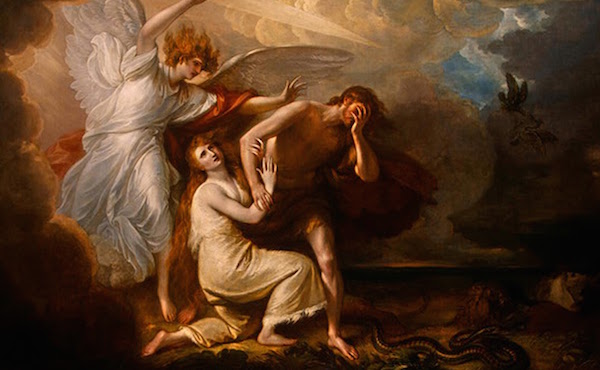
Disguised as a snake, the devil gives Adam and Eve a massive ego boost by telling them they can be every bit as wonderful and intelligent and amazing as their Creator.  With a bit of cleverness and charm, he encourages them to do the only thing God has ever specifically asked them not to do.

“Where are you, Adam?” asks God.  “Where are you, Eve?”

They can’t answer.  They are hiding, ashamed, fearful and worried.  The guilt of what they have done is overwhelming.  A new thing now lives in this once-perfect world.  A horrible, killing, destroying thing called sin appeared in the first bite of a forbidden piece of fruit.

What may seem a small and tiny thing is the opening salvo in a war of rebellion.  The cost of that bite is separation from God, removal from the garden, and death.  One tiny act.  But it sets in motion the erratic and dramatic courtship between God and man.

Two bites of a single piece of fruit.  Disobedience to God’s one command.  And yet, on the very day that sin enters the world, God does something amazing.  He makes a promise.  He vows to the broken Adam and Eve that this is not the end.  All is not lost.  He will restore the relationship.  He will heal the killing wound.  The Creator promises His creation that He will send someone who will mend what has been broken and their relationship with Him will be restored!

“When?” they ask.  And His answer is, “Not yet.”

They wait.  Their children wait.  And the terrible cycle of history begins.  Because of that single act of rebellion, creation is severed from the Creator.  And while it waits for the one who will make things right to appear, humanity succumbs to the worst of itself and the end result?  Bondage, slavery, and death. Though the characters and scenes change, the scenario repeats itself endlessly.

The story of love shows how God, the Creator, pursues His creation.  He reaches out consistently, He saves constantly, and reminds cautiously.  His desire for restoration is a constant dance with the created ones, who come close and spin away in a repeated cycle of repentance and rebellion.  As God woos the ones He loves, they are contrite one moment–and spurn His love the next.

God establishes a relationship with a man named Abraham.  He promises that Abraham will become the father of a great nation, and that the promised one will come from his descendants.  Abraham grows old and weary and asks, “When?”  And God says, “Not yet.”

Years later, his descendants are in captivity.  Slaves in Egypt.  An entire people in bondage, and they cry out to God: “When will you deliver us?”

And that question will be answered next.
It’s Not “The Easter Story”

The story of Easter is usually told incorrectly by most Christians.

We start the story with Palm Sunday and a triumphal entry and Hosannas, then jump to Jesus on a cross, end with His resurrection, and then invite everyone to make a decision for Him. In the space of 30 minutes or so, we present Jesus as God Himself, explain that He “died for our sins,” and then say to people: “Don’t you want Him to save you, too?”

In doing so, we reduce the greatest story of all time, covering thousands of years of history, involving the greatest pursuit and deepest passion of all time, to a mere 72 hours one weekend in AD 30. That’s not to say it’s not the most important weekend in history—but in my years of telling this story, I’ve come to realize something that changed the way I tell it:

It’s a disservice to the truth of Easter when we remove the context from His coming. When we focus only on the events of the Passion Week, we don’t usually explain that what led to all of this wasn’t just God showing up in human form to die on a cross. No, what led to all of this was a promise.

Not just any promise, but the oldest promise in history. And that is where the story of passion, betrayal, jealousy, anger, captivity, escape, life, and death actually begins. It’s not the Easter Story. It’s actually what I call The Story of Love. And it doesn’t begin with Jesus. This Easter week, I’d like to take time each day to tell you that incredible story.

Part One: In the Beginning

The story of love begins before the beginning. Before there was sun and moon and stars, God looked out at the expanse of nothingness and declared, “Let there be light.” A shockwave of a moment, a supernova of brilliance, and all that is and was came to be.

“In the beginning God created the heavens and the earth.” That’s how the story begins, and it’s important. “God created.” Creating something is entirely different from building it. Creation is not the same as “development” or “put together.” It implies something deeper and far more beautiful, because creation involves the heart–not just the hands.

In the act of creating the heavens and the earth, God revealed something about Himself. He shows us that He loves to enjoy creating things, and He must have enjoyed every moment! Just look at a giraffe or marvel at a platypus. Look at the shining stars in the black sky or the purple-orange hues of a sunset shining over snow-capped mountain peaks. Revel in the blue-green dance of the aurora borealis. His creativity continues to inspire and the song sung by the heavens on that first day continues to sound in the joyful rhythm of creation.

But He wasn’t done. He saved His greatest act of creation for something unique and wonderful and special, unlike anything else in all the wonders of the universe.

He made a man and a woman.

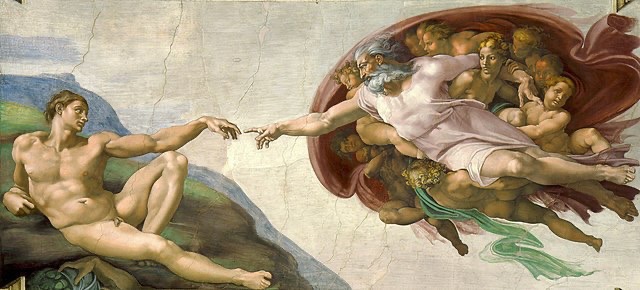
As the grand finale to his concert of creativity, He took a clump of clay and ended up with humanity. And out of all the beautiful and wonderful and crazy and amazing things created that day, only this species bears the stamp, “In His Image.”

And that is where “the Easter Story” actually begins.

3 Things Every Dad Should Do

What’s interesting in the lead up to the big moment of parenthood is that you learn all about how to have a baby.  You learn how to breathe, what happens at the hospital, all the options for pain management. How to have a baby is a big deal, sure.

But nobody tells you how to be a parent.  Maybe because the process for giving birth is much more straightforward. It’s a series of events that are pretty predictable after thousands of years of human existence. But parenting? Honestly, it’s anything goes.  We all agree on the basics of having a baby, but how to ensure that baby turns into a good human adult? Opinions vary.

23 years ago, Robyn and I became parents. And we have done everything we can possibly do to ensure our oldest child–and the three that followed–are turning out okay. But it’s a struggle every single day, even as they get older and you realize that your roles and responsibilities change through the years. The tactics that worked with a two year old are not as effective on that same girl as a 16 year old. The troubles your 13 year old faces are much different than the ones your “adult” kids have, and yet you still have a responsibility to them. After all, you made them. It’s your fault they are here.

I was thinking about this as I talked to a younger dad I work with this week. He said, “You’ve been a parent forever,” which I took to mean I have experience, and not that I’m old, “what do you think are the big things I should do as a dad? How can I not screw up my kids?”

That’s the big goal, right? I honestly just hope that everything we’ve done as parents didn’t screw my kids up. I will find out someday when they hit therapy and tell me, “Hey, Daddy, we need to talk.”

So, based on my limited experience over 23 years, four kids, and a lot of incredible partnership from my wife, here are three things I think every dad should do to ensure he doesn’t screw up his kids.

  1. EMBRACE EVERY MOMENT AND CREATE EVERY MEMORY. We have eschewed a lot of the nicer things in life in the pursuit of creating moments and memories with our kids. We will drop what is “important” for the sake of the moment. Sure, a school report has to get done, but why not go enjoy Free Slurpee Day?  Why buy the expensive furniture (that you have to yell at them to keep clean) when you could use that money to go on a road trip, stay in a hotel, and eat at a restaurant with swings in Durango, Colorado?  Your kids are only going to be with you for a little while. Go do all the things you can, take all the pictures you can.  Your bank account may not be full, but your heart will be–and they will place an importance on making memories with their own kids someday.  That’s a legacy you want to give them, because it shows them they matter more than your stuff and more than your money.
  2. HAVE HARD CONVERSATIONS. This is not always easy. When you see your kids making unwise choices, step up and say so. Don’t expect them to be perfect, give them room to fail. But when they make choices that will hurt them in the future, remember: you are the parent. You aren’t there to be their pal. I’ve had to talk to my kids about sex, porn, drugs, drinking. I’ve had to confront them on bad attitudes and disrespect. I’ve had to talk about responsibility and initiative, confront them on plagiarism and cheating. And be honest–if you’ve screwed up in some of these ways, let them know and explain why you aren’t going to let them fail in the same ways.  Create a place where honesty is rewarded and truth (even when it’s difficult) shines.
  3. RESPECT AND HONOR THEIR MOTHER.  This is certainly true for married couples raising their kids, but it’s also true if you’re divorced or separated.  You and your children’s mother may not agree all the time. You will fight and you will have moments where you don’t like each other. But when you model respect and honor, you teach your daughters to expect to be treated that way, and you teach your sons to treat other women that way.  I wish I was perfect at this, and I know Robyn does, too. But I try hard to disagree with honor and avoid hurtful or disrespectful words or actions to my wife because I value the relationships my kids will have with their spouses someday. As a Christian, I take to heart Paul’s admonition that as a husband, I need to love my wife as Christ loved the church–which means giving myself up for her. Honoring and respecting her is a gift I give not only to the woman I love, but to the kids who love her as well.

After 23 years of fatherhood, is that all?  No.  You’ll notice I didn’t say here are the ONLY three things you should do as a dad.  And these may not even be the top three, just the three that came to mind this week.  I’m sure we could write a book about the things we’ve learned about parenting four incredibly unique and different children (and maybe we will).

But in the meantime, try these things out with your kids. Be the kind of dad your children need you to be. Try these three things today and see what a difference they make in your family.

Embrace every moment. Don’t be afraid to confront. Show as much honor as possible.

Think Pollyanna

I’ve been thinking a lot about my outlook recently. (No, not my email program, although I do spend a lot of time there.)

I’ve been thinking about the way I view things in life.

I try to be a positive person, generally believing (or at least attempting to believe) the best about people and my circumstances. But once in a while, when something goes south–personally or professionally–I can withdraw into my thoughts and start thinking darker, less positive thoughts.  Slights that normally would mean nothing can become wounds. Words that might regularly not bother me start to hurt pretty bad. And when I spend too much time in this place, losing my sense of happiness and joy, I spiral further into negativity.  Soon, every blessing is forgotten, every good thing is gone, and I see only the hurt, the wound, the injustice.

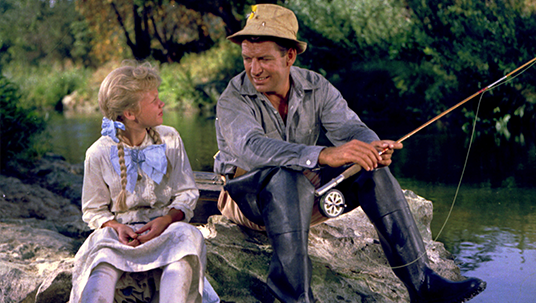
This year, I’m attempting to do less of that thinking and spending a lot more time being glad. The old book (and great Disney film) Pollyanna was about an orphan girl who played what she called “The Glad Game” every day.  No matter what circumstance she found herself in, she tried to find something to be glad about in it.  In doing so, she ended up changing the lives of an entire town of crabby, dour people who were so busy focusing on the negative things in life they had lost their joy.

There’s a great song by Johny Mercer that says, “Accentuate the positive! Eliminate the negative! Latch on to the affirmative and don’t mess with Mr. Inbetween.”  This is a good and healthy mantra for any of us.  Put your focus on the good. Cut the negative talk and thoughts. Affirm what is good and right in your life and your outlook will definitely change.

If a classic book and film and song don’t convince you, perhaps the writer of most of the New Testament can.  In Philippians 4:8, Paul says,

Fix your thoughts on what is true, and honorable, and right, and pure, and lovely, and admirable. Think about things that are excellent and worthy of praise.

What is interesting about this concept–focusing our hearts and minds on the good, the right, the beautiful, the admirable–is that not only will it change our outlook, it has the potential to fundamentally alter the lives of those around us as well.  Our coworkers, our friends, our families–their thoughts and hearts will also be uplifted as well.  Imagine a world where fewer people focused on what is wrong and focused so much more on what is beautifully, wonderfully right in our world.  It would be a different, better place.

So whether you play the Glad Game or Accentuate the Positive or just want to be more biblical, join me in focusing on what is positive. I’m going to think more like Pollyanna this year and find something to be glad about, I’m going to spread joy up to the maximum and bring gloom down to the minimum, and think about things that are worthy of praise.

Or, in one more example, from the musical version of Charlie and the Chocolate Factory, I’m going to “Think Positive!”  Let’s do it together and change the world.

Following Mary’s Lead Into the New Year

As the Christmas season ends, I like to look at Mary’s perspective. Her life has been turned upside down in the last year. She went from being a young girl excited about marriage to encountering angels, facing expulsion or even worse, death. The government has caused her world to turn upside down, there is political strife everywhere, and the last thing she wants to hear anymore about is taxes.

Far from home, she looks at Joseph. He’s been amazing through all of this, by the way. If you read between the lines, you can see that this young couple still haven’t consumated their marriage (“A virgin shall conceive and give birth to a son” says the old prophecy). He’s been visited by angels, too. And he still shakes his head in amazement at the shepherds who just left.

There is so much to reflect on, so much to think about as she holds the baby, the One the angel said would save His people from their sins. They’ve named Him Jesus, just like the angel told them. Thinking about what the shepherds said–“An angel told us the Savior was born in Bethlehem!”–and the fact that they rushed out shouting about it to everyone they encountered, she’s wondering about it all.

But the Bible make clear that Mary didn’t freak out. She didn’t start to worry or fret because the next phase of their lives wasn’t clear. They didn’t know what would come next, but Mary just stopped. The Bible says that “Mary pondered all these things.” When was the last time you pondered anything?

To ponder means to “think about (something) carefully, especially before making a decision or reaching a conclusion.” She didn’t jump to conclusions about what it all might mean, she paused, stopped, and carefully reviewed everything that had happened. And then she “kept all these things in her heart and thought about them often.” (Luke 2:19, NLT)

As you look to the future, perhaps pausing and pondering what has happened would be good.

Whether your year was amazing or awful, whether you look forward to the next year or have a bit of trepidation, I get it. You don’t know what is coming next. Neither do I. But I encourage you to take heart. Maybe, in the next 24 hours, before the New Year begins, find time to stop and pause and think. (Contemplate. Consider. Review. Reflect on. Mull over. Meditate on. Muse on. Deliberate about. Dwell on. Ruminate on.)

You get it. Just take some time to follow Mary’s lead, in the moments before the next year begins, think about all of the things that went right, all that could have gone better, and all the places that Emmanuel can speak into in the coming phase of life. Mary didn’t know it, but confirmation about everything God had promised was coming, from people she’d never expect.

Your confirmation will come, too. It may come in an unexpected way, from an unexpected source. So don’t worry or fear or fret or stress out. In the quiet before it all begins again, pause and ponder and rest. You don’t know what’s coming next, but He does.

And He will be there.

Good News In the Starbucks Queue

I can hear a Christmas carol playing while I stand in line here at the Starbucks in Denver Airport. I think I’m the only person listening to the words, which are full of Good News. Whether it’s sung by Bing Crosby or Perry Como, by Bob Seeger or Elvis Presley, the music of the season is everywhere. It’s the one time of year when the message of the Gospel is played everywhere–radio stations, grocery stores, and in airports. “Born is the King of Israel!” sings Nat King Cole.

The line is long and the people are bleary-eyed this morning. They are on their phones, heads bent down in the universal position of digital distraction. A couple is reading the newspaper, talking to each other, arguing over something political. A guy is texting his pals, while a woman just complained about her horrible experience at TSA. They are drinking coffee, picking up mobile orders, and everyone is either in a hurry or completely preoccupied with the world we live in to notice the message being sung: “Son of God, love’s pure light” is lost in the frustration of a wrong order and a misspelled name.

It’s not much different than it was when Jesus was born. Nobody noticed, nobody heard, and nobody paid attention. If the heavenly hosts hadn’t shown up to celebrate, even the shepherds would have stayed in the fields. Imagine, the moment when eternity stepped into humanity, and the only witnesses were a dazed young man and an exhausted young woman.

My fellow travelers are missing the words Bing Crosby is singing about the light that shines in the dark streets of our everyday lives. They aren’t hearing the good news that was spoken for them so long ago. They have their red cups and holiday drinks, but they’ve missed out on something even better. They may make their flight, but the words of peace on earth, goodwill to all humanity–given to us freely because we have favor in the heart of the Creator–is drowned out by boarding announcements. As the people hurried through the streets of Bethlehem, missing the life-changing event happening right in front of them, so we miss it today.

My prayer for you today is that you will have time to notice. In the middle of your hurried, busy day, no matter what good or bad thing you face, that you will find a moment to listen and hear what God is longing to say to you, right where you are today.

I hope you can discover a place to pause, and hear the message of hope, the promise of personal peace, the announcement of joy that came to us the night that Christ was born. The announcement was not a one-time thing, intended only for shepherds watching their flocks by night. That stunning moment in time, when heaven touched earth and angels and men rejoiced, is for us, too! The good news of great joy? It was meant for you.

May the familiar words of the story, the refrains of the carols, cause you to pause–to listen–and hear Good News: “Joy to the world! The LORD has come–for YOU!”


Why One Line in This Christmas Song May Be the Greatest Ever Written

Unexpected news? A bill you didn’t see coming? Health issues for someone you love? Relationships strained?

I get it. It’s hard any time of the year, but worse at Christmas. Looking at my friends’ profiles, it’s easy to see that I’m not alone in thinking the peaceful season is fraught with pain and worry and stress.

“He knows our need, to our weakness no stranger.”

These words from O Holy Night have always resonated with me. This is, in essence, what the Incarnation is all about: He became one of us.

He had parents who stressed out over finances. He had friends with health concerns. He grew up amidst political turmoil and religious strife. Yes, Jesus was fully God–but He was fully human, too.

Which means He knows exactly what you’re facing right now. Intimately, deeply, and personally. He knows the weakness of doubt and worry and fear, because He lived and loved and walked in a world filled with it.

But it also means that you can trust Him. You can lean into Him, cry out to Him, rail at Him, and rest in Him. He doesn’t keep you at arm’s length. The Incarnation shows that He longs to be close, to draw you near.

Where He will remind you, gently, “I am here, beloved. Calm your heart. As I was near to the Father, I am near to you. Rest in my heavenly peace.”

The Messiness of Christmas

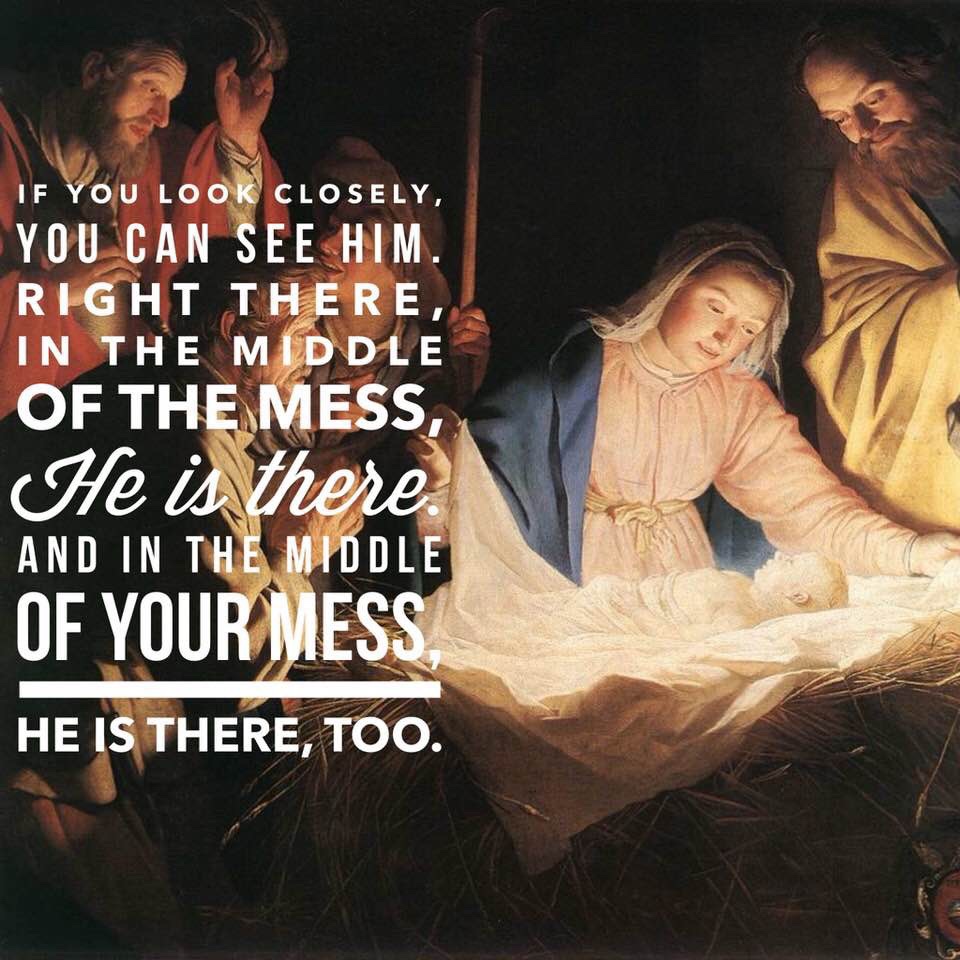
We often forget how awfully terrible the birth of Jesus was. When we look at our nativity scenes, with cheerful people adoringly staring at a smiling happy baby in a manger, we forget the mess:

The mess of politics that drove the young couple from their home nearly 100 miles away to an overcrowded town at the whim of tax policy.

The mess of a barn filled with animals, their offspring, and the stench of urine and dung, and the lack of a clean, hygienic place to lay down.

The mess of a birth, with the pain and worry about the baby’s health, the blood and the fluids, and nothing but straw and hay to sop it up.

The mess of a mother, exhausted, a father, dazed, both wondering if the baby they are holding, His red face contorted with tears, is truly what they believe Him to be.

The mess of a manger for a bed, with sheep pushing His swaddled body out of the way with their noses as they eat their dinner, angered by the little one’s intrusion.

The mess of strangers, smelling even more like the worst parts of sheep, arriving and jostling for a view of the newborn, while the young couple looks on with confusion and maybe a little bit of fear.

Christmas, at its heart, is messy. Before we cleaned it up for cards and carols, it was rooted in the mess. It was dirty and smelly. It was crowded and uncomfortable. It’s main characters weren’t saints, but a scared man and woman grappling with the fact that there, in the middle of the mess, was God. That’s what Christmas is really all about, after all: messy people in a messy world desperately needing someone to love them and save them right where they are, in the middle of the mess.

Wherever you are at today, Christmas is for you. Your life doesn’t need to be cleaned up and picture perfect. You don’t have to put on a smile or pretend like the world around you doesn’t stink, that your life isn’t freaking you out a bit. Like Mary and Joseph, you may be nervous or scared or worried or confused. That’s ok, my friend!

In the middle of their mess, He was there. In the middle of your mess, He is there, too. Sometimes we just need to look.

It Doesn’t Start With the Manger

The story of Christmas doesn’t begin in Bethlehem. It begins at the beginning of time when two people willfully disobey God’s one command, shattering the relationship between the Creator and His creation.

The very day that sin enters the world, God promises that a Savior, the Messiah, will come… someday. Abraham, Jacob, Ruth, David, all the prophets—they ask, “When?” And God’s only answer is “Someday.”

Then God stops speaking. He is silent and His people wonder when that promised day will come. For 400 years they wonder: “When?”

Someday finally comes when an angel appears to a young woman, delivering words from God, whose voice hasn’t been heard in generations, telling her that “When” is now. And all of heaven pauses to hear her response.

“May it be to me just as you have said,” says Mary. The promise of a relationship with God comes to fruition, and what was fractured at time’s beginning is forever healed.

This is the Christmas story: the Creator loved His creation so much that He went to the greatest length possible to have a relationship with people like you and me.

But it’s no longer “someday.” It’s now. Because He is here.