I Really Don’t Care How You Feel About Santa Claus

As a former children’s pastor, I had many interesting conversations with parents about the difficult conversations they’ve had with their children.  A lot of parents seem to have huge concerns and issues with Disney and Harry Potter.  They worry about certain television shows and video games.  But what really surprises me is the number of Christian parents who freak out over Santa Claus.  Yes, the jolly man in the red suit who brings presents to kids at Christmas is as big a deal for some parents as the Ten Commandments.  Other parents look at the story of Sant and enjoy it for its history and charm.
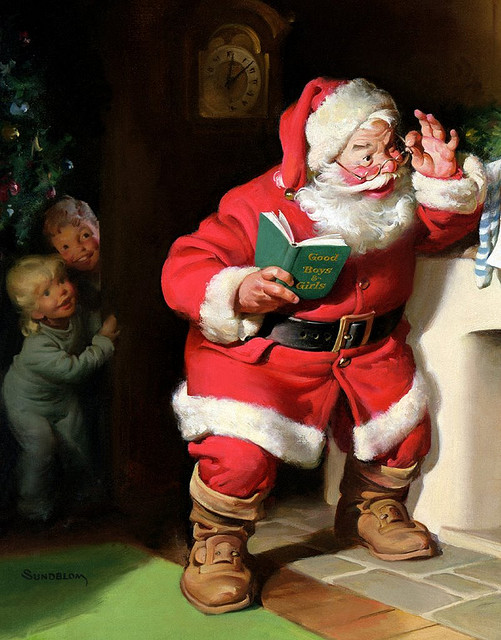
Parents who like Santa say, “He’s a harmless childhood memory!”  The parents who don’t find him that say things like, “You’re lying to children if you tell them to believe in Santa!”

I’ve heard, “He’s just something fun to help kids get into the spirit of giving!”  And, “He keeps kids from believing in Jesus, the true reason for the season!”

When I look at Santa Claus, I think this:

I really don’t care how you feel about him.”

That may be controversial.  After all, I was a children’s pastor and in ministry for 20 years.  My whole job was to help families connect with God, and more importantly, to His Son, Jesus—and to help them develop a personal relationship with Him and grow in their faith.  As an author of a book on Christmas, I realized this year that part of my job continues to be to help people focus on what matters most this time of year: the incredible wonder of the Incarnation.

But still, the social media posts, opinions and even casual conversations reveal that people consider this as important as their families political views or whether they eat turkey or ham at Thanksgiving.  There is a major “anti-Santa” faction in the church and there’s a group of “pro-Santa” people, and they are arguing over which take is correct.  Here’s the thing, everyone: it doesn’t really matter if your family is “pro-Santa” or “anti-Santa.”  (And it doesn’t matter whether you love Disney or hate it, whether you think Harry Potter is a cute book or you think it’s a doorway to going Wiccan.)

Parents: what matters is what you are focusing on with your kids.

Someone I really respect in kids and family ministry, Reggie Joiner, says this in his book Think Orange:

“I recall a number of times during my life as a leader in the church in which I would look around…and realize we had drifted.  What are we doing fighting with these people?  Why am I so anxious about things that don’t really worry God?  I have a hard time imagining Him getting worked up about too many of those things.  I sincerely doubt God is in heaven saying frantically, ‘Oh no! J. K. Rowling is writing another one of those books!’ or ‘Calling all angels: Disney is letting those people into their park.  I need you to rally some Christians to boycott.’”

I would venture to say God feels the same way about Santa Claus.

Joiner concludes with this: “I can imagine God saying to us, ‘What are you doing?  Why are you focused on that other stuff?  Bring the light back over here where it belongs.  Show them who I AM.”

A lot of parents don’t want to think about how to help their kids develop hearts of service.  They don’t try to figure out how to help their kids have a quiet time, or how to take what they learn on Sunday and apply it to the every day, messy world they live in.  And at Christmastime, it’s amazing to me how many parents don’t take time to pause and think about just how incredible that night in Bethlehem was and what it means for them and their families.

No, a lot of Christian parents want to share an opinion and take a position about something our Christian life shoul never be about: what books to read or not to read, what movies to see or not to see, where to go or not go on vacation, what games to play or not play—whether we should or should not encourage kids to believe in Santa.

Because you see, if you really want to get down to it, none of what we do at Christmas really matters.

The Christmas tree.
Singing carols.
Candlelight Christmas Eve services.
Giving gifts.
Lights.
Mistletoe, holly, egg nog lattes, and red cups at Starbucks.
Big dinners.
Yummy treats.
Chestnuts roasting, winter wonderlands, little drummer boys.
Saying “Merry Christmas” instead of “Happy Holidays.”

You see, all of it, like the tradition of Santa Claus, has the danger of distracting us from what we are actually supposed to be doing: shining light into a lost world that so desperately needs the hope only Emmanuel, the God who is with us, can offer.

Anything else is just opinion and personal preference, like whether your family opens presents on Christmas Eve or Christmas Day.  It’s not wrong to believe in Santa.  And it’s not right to not believe. What is wrong is when you look at the trappings of the season—whatever they may look like for your family—and think that it really matters.

Because it doesn’t.

What do we think about at Christmas?

“That sales clerk said ‘Happy Holidays’ to me.”
“Those parents lie to their kids about Santa.”
“That church isn’t having services on Christmas Day!”
“Those parents told their kids there isn’t a Santa Claus!”

What should we be thinking about at Christmas?
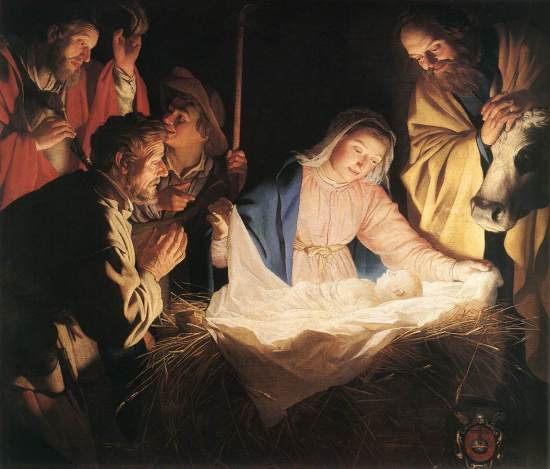
The fact that the tiny Baby, the Incarnate God, knew you before you were born. He walked with Moses.  He gave David courage.  He conversed with Abraham.  He wrestled with Jacob. He spoke the words and the planets sprang into existence.  He waved His hands and mountains and oceans and rivers came to be.  And yet, He gave ALL of that up to clothe Himself in humanity–wrapping Himself in our fragile, frail form.  To be with us.

He did it because His love for you was so great that He could do nothing less.

This is what matters to God.

So, truth is, it really doesn’t matter how you feel about Santa.  Or Harry Potter.  Or even Disney, for that matter.

What matters is whether or not your kids—and your family—are sharing what what matters most to a world that so desperately needs the hope and peace only He can offer.  To the family member who drives you crazy.  To the single mother who wonders where dinner is coming from. To the clerk at the store who has been instructed to say that thing that offends you.

They may not say it out loud, but all of them are crying out, like Charlie Brown, “Can’t somebody show me what Christmas is really all about?”  Our job is to be Linus, who walks onto the dark stage and says what we should all be saying this Christmas. “Lights, please.”

December 1st: The Andy Williams Christmas Album

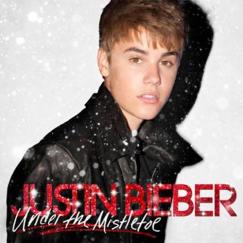
I listened to the local Christmas music station for about 30 minutes today. Spaced apart by about 2 hours, I was annoyed by all the commercials and the way the DJ’s referred to themselves with holiday nicknames.  I was also bugged that in the 30 minutes I listened, I heard two of the same songs: Michael Buble’s “I’ll Be Home for Christmas” and Justin Bieber’s “Mistletoe.”

Bublé’s take on the 1940’s classic was nice.  It wasn’t remarkable, but it was well-sung and the arrangement was full of lush strings.  I guarantee that it will still be listened to 20 years from now.  It just sounds like a classic Christmas album.

I wish I could like Bieber’s song, but unlike “I’ll Be Home for Christmas,” it will not stand the test of time and be sung 40 years later.  The “imma be under the mistletoe” line dates the song to the current year–and it’s one of those phrases that makes lovers of fine lyrics cringe.

To create a new Christmas song isn’t easy.  To create a Christmas album that represents the time period in which it was created yet doesn’t sound dated is next to impossible.  But there is one album that stands head and shoulders above the rest as a shining example of a classic sound, fully exemplary of its time, yet strangely timeless.

This is what Christmas sounds like.

In my house, you know it’s Christmas when Andy’s bright smile shines from the corner of that bright red cover.

The album works because of the power of its arrangements, sheer amount of fun, a great reverence for the season, and of course, Andy’s voice.  It’s clearly an album from the early 1960’s, but the arrangements of Williams’ songs, by such legends as Johnny Mandel, George Wyle, Robert Mersey, and Marty Paitch, are so full of fun and joy that the songs themselves have become as synonymous with the season as trees and presents.

Like many albums of the era, created in the day when one had to flip a record over to hear both sides, one half is secular and the other is full of traditional carols.  The songs range from the standards “Whiite Christmas” and “The Christmas Song” to the pop jazz power of “Kay Thompson’s Jingle Bells,” which was written by Kay Thompson, the author of the Eloise books.

But the standout is George Wyle’s “It’s the Most Wonderful Time of the Year.”  It’s rare to write a song that becomes a standard–most of our contemporary standard Christmas songs range from the World War II era–but Wyle, who wrote the arrangements for Andy’s TV show, created a song that has become a  true classic.

Lyrically powerful and blessed with a wonderful melody, it’s Johnny Mandel’s arrangement, with the big blasting horns and great background vocals, that have made Andy’s version the standard.  In fact, the American Society of Composers and Performers certified his recording of the song as the #4 most-played Christmas recording of 2010, surpassing even Bing’s “White Christmas.”  For a song recorded in 1963, that’s quite the staying power–and a true testimony to the power of creating a new Christmas song–without making it sound dated.

Add in the album’s starting song, a medley of “Happy Holiday” and “The Holiday Season,” and his classic sing-along version of “The 12 Days” reinvented as “A Song and a Christmas Tree” (and featuring a guest bass performance by Thurl Ravenscroft, no stranger to Christmas as the singer of “You’re a Mean One, Mr. Grinch”), and you’ve got 15 minutes of sheer holiday perfection.

The second half of the album, where Andy sings his versions of songs like “Away in a Manger” and “Silent Night” suffers in comparison to the first half, which is just amazing.  But I must say that his version of “The First Noel” is one of my favorites, and nobody sings “Sweet Little Jesus Boy” with more tenderness and heart.  Andy’s voice truly shines on these quiet songs.

Put down Bieber’s “Misteltoe,” and pick up a true classic.  Get The Andy Williams Christmas Album and you’ll soon discover why it is “The Most Wonderful Time of the Year.”

For your listening pleasure, here’s Andy’s version of “Happy Holiday/The Holiday Season.”  It’s pure Christmas joy.

And here’s Andy on “The First Noel,” a personal favorite.

Christmas Music 2011

Walk into your local Target and you’ll see an endcap full of Christmas music.  There’s a few collections made just for Target, usually a young newer artist who puts out an EP exclusive, and there will be some collection CD’s re-releasing the same 24 versions of the same 24 songs that have been on nearly every other Christmas compilation since they were first created. There’s the seasonal chestnuts that manage to show themselves every year–Christmas classics (although the “classics” are getting newer and newer each season) that everybody almost already owns.

This is what Target considers a “classic.”

And there’s the new Christmas CD from a handful of artists who are doing their best to jump on Bing Crosby’s “White Christmas” money-making bandwagon.  If you create a good Christmas album, it will sell forever, and you can live off the residuals for the rest of your life.  (There’s a reason Chip Davis of Mannheim Steamroller keeps releasing variations of the same album every year.)  This year, you can find new albums by Carole King, Michael Bublé, and every young girl’s favorite, Justin Bieber.

As much as I love Christmas music, I still can’t bring myself to buy it.

You want a bit more variety so you listen to your local “Christmas music” station.  The trouble is, radio appeals to the lowest common denominator, so you’ll get more variety at first–but quickly you’ll discover that the same songs get played over and over again.  Here in Seattle, you can listen to KCMS the weeks before Christmas and be guaranteed to hear Boney M’s version of “Mary’s Boy Child/O My Lord” at least three times a day.  It’s a fun song, but how many other versions of “Mary’s Boy Child,” by much better artists, deserve to be heard?

If you’ve heard their “Mary’s Boy Child,” you’ve heard it all.

You can go the Pandora route, which gives you even greater variety and the ability to “like” what plays, which means you’re going to hear more stuff that fits your style.  But even then, it tends to be stuff that is more popular, more readily available, and certainly more recent–which means you’re going to miss out on a bunch of great music.

This holiday season, I will endeavor to share one Christmas album that you probably haven’t heard before.  Some of them are free from folks who like to share out of print records, and I’m grateful for them–they’ve certainly been a huge part of my success in creating an iTunes playlist of nearly 9,000 Christmas songs.  Some you can pick up on Amazon or iTunes.

There’s a lot of great Christmas music out there.  And we have exactly 25 days to enjoy it.  To kick it off, here’s one of my favorite tracks by The J’s With Jamie: “I Saw Mommy Kissing Santa Claus.”


Thank You, Steve.

The first time I saw that Steve Jobs had died was on my iPhone.

On my MacBook, I quickly searched for more information and received a phone call shortly after (again on my iPhone) from a friend who works for Microsoft.  Both of us were in a state of shock.

My wife texted me–from her iPhone–and asked me to come upstairs.  The news had just broken on the local TV stations.  On the Mac Mini in our bedroom, Steve’s face looked out from the Apple homepage.  My son came in to see what the commotion was, briefly distracted from playing a game on his iPod Touch.

I went to work tonight and listened to music on my iPod Classic, and had rehearsal with the kids worship team, running the music and video via ProPresenter on a Mac.  We ran lights from our Windows computer.  In the kids’ lobby, pictures and videos streamed to the televisions via Apple TV.  I went to my office to check on something and saw our church’s Creative Director working on a video using his Mac and Final Cut.

I came home and almost tripped on my son’s Woody doll on the floor and put away the Wall*E Xbox game.  I glanced at The Art of Pixar Shorts book on the coffee table and picked up the Apple TV remote and put it away.

This is why Steve Jobs’ death has such an impact on our world.  There are just so many places where his creativity and vision have impacted the way we use and share information.  His creative vision gave the world devices that fundamentally changed the way people use music, phones, televisions.  His belief in the potential of others ensured that a small division of Lucasfilm would become one of the best film studios of all time, giving the world amazing characters and stories kids and their parents would fall in love with.

Like Walt Disney before him, he was a multi-faceted genius.  He bugged people and could be a jerk of an employer.  He was generous to a fault and always pushed for innovation, even when it gave him bad press or caused financial disaster.  Like Walt, who changed the way people looked at cartoons and amusement parks and turned them into money-making powerhouses, Steve changed the way people looked at their music collections and their phones and turned them into money-making powerhouses.

What Eric Sevarid said on the CBS News the night Walt Disney died seems appropriate when said also about Steve Jobs.  As you read, just replace Walt’s name with Steve’s:

It would take more time than anybody has around the daily news shops to think of the right thing to say about Disney.

He was an original. Not just an American original, but an original. Period.  He was a happy accident, one of the happiest this century has experienced. And judging by the way it’s behaving, in spite of all Disney tried to tell it about laughter, love, children, puppies, and sunrises, the century hardly deserved him. He probably did more to heal – or at least soothe – troubled human spirits than all the psychiatrists in the world. There can’t be many adults in the allegedly civilized parts of the globe who did not inhabit Disney’s mind and imagination for at least for a few hours and feel better for the visitation.

“It may be true, as somebody said, that while there is no highbrow in a lowbrow, there is some lowbrow in every highbrow. But what Disney seemed to know was that while there is very little grown-up in every child, there is a lot of child in every grown-up. To a child, this weary world is brand-new, gift wrapped. Disney tried to keep it that way for adults.

“By the conventional wisdom, mighty mice, flying elephants, Snow White and Happy, Grumpy, Sneezy and Doc – all these were fantasy, escapism from reality.  It’s a question of whether they are any less real, any more fantastic than intercontinental missiles, poisoned air, defoliated forests, and scrap iron on the moon. This is the age of fantasy, however you look at it, but Disney’s fantasy wasn’t lethal.

People are saying we will never see his like again.”

Thank you, Steve.  Rest in Peace.

Faith Without Machine Guns is Dead

I was privileged to go to a sneak preview of the film, Machine Gun Preacher, which opens here in Seattle tomorrow.

I knew some of the story–a violent drug dealer finds Jesus and becomes a champion for children in Sudan, building orphanages and killing people along the way.

But I was unprepared for the power of this story.  It’s pretty gut-wrenching stuff, with many moments of tears over the horror the people–especially the children–of Sudan and northern Uganda have experienced over the past 30 years.  I was amazed at how little I actually knew of what was happening there, and a little saddened that the plight and terror these people have faced barely make the news here in the United States.

But the story is not just the story of the horrors in Africa.  It’s also the story of Sam Childers, a violent, drug-dealing criminal who finds Jesus after years of prayer by his mother, wife, and daughter.  The encounter with Christ changes his life, and he goes from violent loser to successful businessman–who still struggles against the violence and profanity of his previous life.

Challenged by the words of a missionary to Sudan, he decides to travel there and see what he can do.  This is the bulk of the film as Sam struggles to fulfill a newly-found purpose against the hopelessness and violence of a war-ravaged country.  It’s shocking, horrific stuff.  And I’ll be honest, the theater we were in last night was full of people crying, reacting emotionally to the images on screen.

Sam’s struggles with his faith, with putting his belief into action, while also choosing to arm himself and fight back against the terrorists who prey on the helpless.  This is controversial, I suppose, but as Sam Childers said last night (yes, I was honored to meet him after the screening), “When the only choice is to watch people die or pick up a gun, what would you do?”

Gerard Butler gives a great performance in a film that is full of stellar performances.  Michelle Monaghan is a strong presence as his wife, and Souleymane Sy Savane is a standout as the Ugandan Dane, who fights alongside Sam and ultimately becomes his friend.

But the most powerful thing about the film is the story of the Sudanese children, whose lives and families have been torn apart by the civil war there.  Sam’s story is a bridge device to help those of us in the West see first-hand the violence and terror that these people live with every day.  It is less a film and more a call to action, to do something, to get involved and help save as many people as possible.

Having met and listened to Sam Childers talk to a theatre full of people here in Seattle, unashamedly standing boldly for his faith, proclaiming Christ to the crowd who came to see a Gerard Butler action film, I’m sure of two things: Jesus saved this man from a hellish life.  And Jesus also helped him see a world beyond his own that we should be seeing, too.

As a Christian and a pastor–and someone who is passionate about film’s ability to connect people to God–I hear complaints frequently about how nobody makes movies that show Christians or Jesus in a good light.  I also see how Christians rally around a mediocre film like Fireproof because it is made by Christians and tells people about Jesus.

Machine Gun Preacher is not a family-friendly, “Christian” film.  You will not feel good about the main character much of the time, and the things you see in the film may very well mess you up.  It is violent, full of bad language, and has quite a few shocking moments.  It fully deserves its “R” rating.

But it is also a true story about the power of Christ’s redemptive love and grace.  You will see how God can awaken in even the most messed up and vile person a greater, eternal purpose.  You will see how Sam Childers lives out what James 2:17 says, “So you see, faith by itself isn’t enough. Unless it produces good deeds, it is dead and useless.”

It doesn’t gloss over the fact that Sam’s marriage suffered because of his passion for these children.  It doesn’t hide the fact that even Christians who love Jesus can swear and use bad language and fight to stay true to the Light that is within them.

That, to me, is a lot more powerful than a film that presents that once Jesus gets in your life, everything is perfect.  That your marriage will be saved, that you’ll never use bad language, or ever struggle again.  A film made mostly by non-Chrisitians is probably one of the best “Christian” films I have ever seen in my life.

Why?

Because it shows clearly what God’s love can do.  And what it should do, when we let it get hold of our lives.  It wakes you up to the reality of that saving grace, to the power of standing against evil, to not hiding our eyes to the horrors that children are facing–being killed for, even as I write (and you read) these words.

And you may feel moved enough, messed up enough, to actually do something with your faith, too.

The Most Important Thing

I have a lot of stuff to do.

I have posters to create, marketing campaigns to develop.  I have worship music to choose, videos to create, lessons to plan and volunteers to encourage.  I have a host of people and kids and families who count on me.  I have a lot of stuff to do.

So I’ll admit, I was somewhat annoyed earlier today when the friendly receptionist at our church came into my office and asked if someone “could talk with you.”  I had a lot of stuff to do.  And I really don’t like talking to people.

The other pastors were busy or on the phone.  So it fell to me.  Sighing, I said, “Please send him back. I’ll talk to him.”

A few minutes later, she ushered in a nice looking gentlemen.  He wanted to talk to a pastor or somebody, he said.  He proceeded to tell me his story.  Good job, great career, loving wife, two kids, new home.  Finances sound.  Relationships solid.  But his eyes looked sad, and his voice defeated.

“I just want to be happy again,” he said.

On his way to the park during a week off so he could clear his head and figure out why he was so unhappy in spite of all the good things going on around him, he drove by our church.  And felt like he should come in.

“I worry about everything,” he said.

As he talked, I suddenly realized that I really didn’t have that much to do.  Because here, right in front of me, was exactly what I was called to do, created to do.  To tell another person about the goodness of Jesus.

We talked about many things.  The fact that our heavenly Father cares for the birds of the air–why wouldn’t He care more for us?  That “who of you by worrying can add a single hour to your life?”  That happiness is temporary and comes and goes, but joy comes from a relationship with the God who created us and loves us.

He said, “I like what you said about having faith.  That really speaks to me.  I think I want that.”

And a few minutes later, we embraced and hugged, laughing and smiling together.  Because while we were once strangers, we were now brothers, saved by the same Jesus who came to give us “life–and life abundantly.”

I had a lot of stuff to do.

But nothing was more important than the most important thing.

A Few More Favorite Film Scores (In No Particular Order)

My last post on film scores was quite enjoyable, and the responses were very interesting.  Some people sure feel passionate about their movie music (including me)!

I have such a love for film scores that I’ve decided to make it an ongoing series, with favorites discussed and presented.  All the scores I’ll present here will be ones you may or may not have heard before–but none of them will be rated as better than another.  Just enjoy what you hear, and share what you like, too.  The more the merrier!

On to the music:

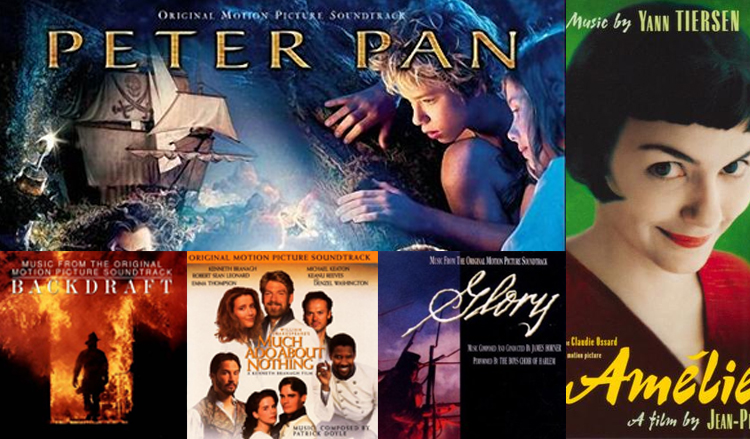
Glory by James Horner

One of my favorite film scores by a composer who frequently steals from himself.  This is Horner at his best, inspired by a moving and powerful historical account of the first black regiment to serve in the Civil War, and their preparations for war, leading to their sad deaths at Fort Wagner.  It’s not a happy film, and it rightly earned Denzel Washington his first Oscar.  But Horner’s score was truly my favorite work in 1989.  As much as I love Alan Menken, I was quite disappointed when his score for The Little Mermaid beat Horner’s far superior music.

Here’s Preparations for Battle.  This nicely summarizes all the main themes of this powerful score.

Amélie by Yann Tierrsen

Using toy pianos, music boxes, and other unusual instruments, composer Tierrsen brings the magical fantasy of this French film to life in a delightful way.  Sounding both French (lots of hand accordian) and playful, each piece in the score is delightful, much like the title character, played by the wonderful Audrey Tatou.  If you haven’t seen the film, you should.  (One minor nude scene–it’s a French foreign film, after all–but you can skip it and enjoy the beauty and wonder of this Oscar-winning film).  The movie itself was one of my top films of the 2000’s.

This is the “Valse D’Amélie” in its orchestral version.

Backdraft by Hans Zimmer

It’s all here. Long bass passages, pounding rhythmic drums, choral voices, strong themes.  This “early” score by the increasingly-influential Zimmer is easily one of his best.  Written for the Ron Howard firefighter film, Zimmer’s score is a great combination of character pieces (“The Arsonist’s Waltz), family themes (“Brothers”), and a soaring, inspiring “main” theme.  Everything he would use in later scores for Jerry Bruckheimer films is here, and it’s easy to see why his studio has been the go-to source for summer blockbusters.

Here’s the final theme, heard over the last scene of the film and the end credits.

Much Ado About Nothing by Patrick Doyle

Like Spielberg and Williams, the Kenneth Branagh-Patrick Doyle partnership has created many memorable film scores, including this year’s Thor.  My favorite scores by Doyle are the ones created for Branagh’s Shakespeare adaptations, and my favorite of them all is the sunny and beautiful Much Ado.  Even with the miscasting of Keanu Reeves, the film shines in the Tuscan sun.  And the many themes and songs created by Doyle only help to heighten the romance and tension of this wonderful film.  I love the songs written for the film, adapted beautifully from Shakespeare’s original text: “Pardon, Goddess of the Night,” sung at Hero’s funeral service, and “Sigh No More, Ladies,” which serves as counterpoint to the burgeoning romance between Benedick and Beatrice.

Here’s “Pardon, Goddess of the Night.”  The final singer is Doyle himself.

Peter Pan by James Newton Howard

One of the most underrated of contemporary film composers, Howard is also one of the most versatile.  His music has been used in everything from horror to drama to comedy and fantasy.  His score for the equally-underrated live action adaptation of Peter Pan, featuring the wonderful James Isaacs as Captain Hook (Harry Potter fans would recognize him as Lucius Malfoy), is top-notch, and almost as good as John Williams’ score for the inferior Hook. (Love the music, but the movie is a tad bloated and overacted.)

Here’s the amazing piece “I Do Believe in Fairies,” which comes at a pivotal point in the story.  The piece is so good that Disney co-opted it for their 50th Anniversary of Disneyland commercials.  It’s that rare piece of music that continues to give me goosebumps.

So there you go.  Five more amazing scores for you to check out.  More on the way.  After all, I have 466 different albums of film music to share.  See you next time.

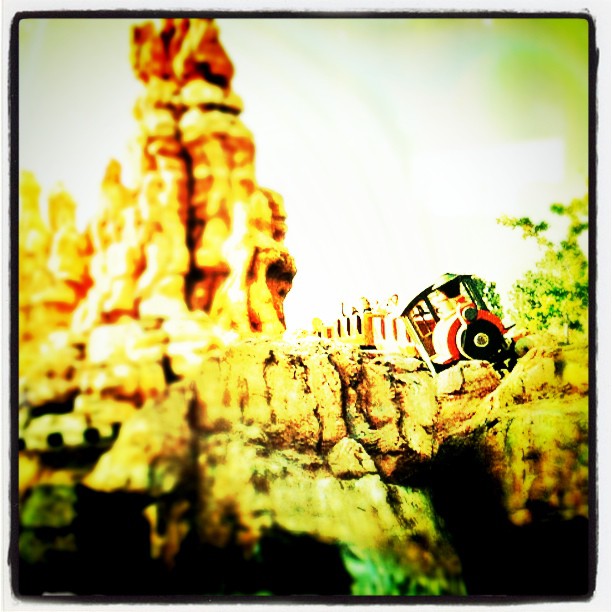
Big Thunder Mountain Railroad


It’s one of the greatest themed coasters ever, and I’ve ridden it at least 300 times. I can tell you exactly when the goat will “baa-aa-aah” at you from the top of the hill, how to sit in the back car and keep that lap bar from making you sit too tight.

I can also quote the entire original safety spiel, and gladly point out that the steampowered hand car in the queue is one of the ones used in the film “Hot Lead and Cold Feet.” You’ll also notice that the town of Big Thunder was originally part of Rainbow Ridge, and that remnants of the old Rainbow Caverns Mine Ride are hidden throughout the Tony Baxter-designed attraction.

But I have to be honest, my favorite memory of this attraction is listening to my grandmother laugh her way through the whole thing. I’ve gone on it with her for years–in college and as an adult–and honestly, as much as I had riding this wonderful attraction with my college buddies, with my own kids and my wife, nothing is better than Big Thunder with grandma.

Here’s the original song “The Legend of Thunder Mountain,” which helps explain the backstory to the attraction. Happy Birthday to a true Disney original. Glad it opened on this day in 1979.

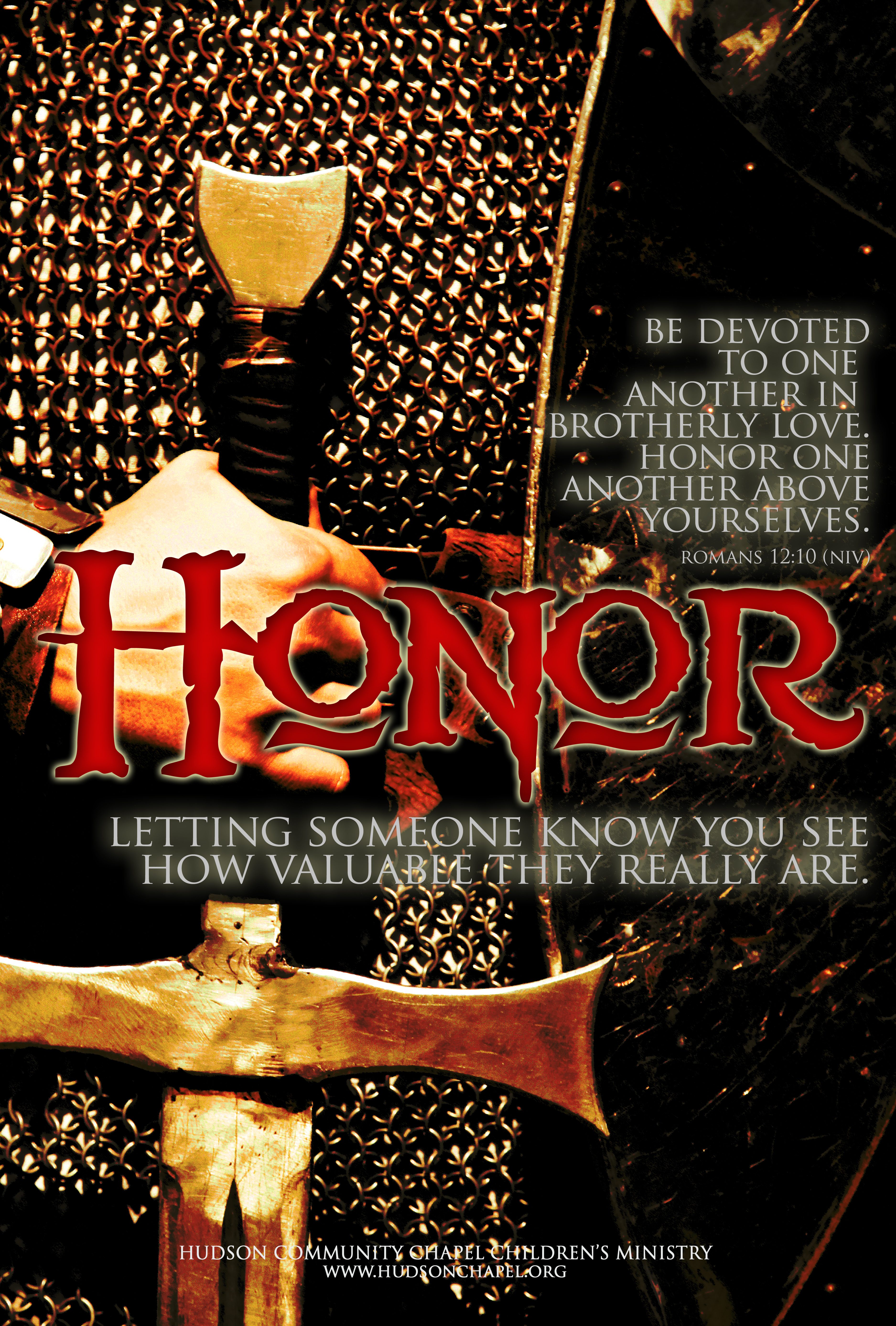
The Honor Chart

It’s easily one of the best parenting ideas we’ve ever had.

It came about because we were trying to figure out ways for the kids to talk nicely to each other, to help each other–to not argue with us, to find ways to show respect.

Everyone wants their kids to act this way, but it’s not always easy.  How to reinforce the positive behavior while mitigating the negative?  We came up with the idea of an “honor chart.”

The idea comes from the Biblical virtue of Honor: Letting Someone Know You See How Valuable They Really Are.  The Apostle Paul writes about this Romans 12:3:” Do not think of yourself more highly than you ought…”

You see, even at a young age, we think we deserve more than we should, and it shows in the way we talk to others and how we treat others. So in our house, we developed the honor chart.  It has everybody’s name on it–even Mommy and Daddy’s–and we measure two things: honor and dishonor.

The baseline is the way you should treat people.  You should be respectful, you shouldn’t argue when asked to do something, you shouldn’t yell at your spouse.  Go above and beyond–offer to share a toy, help someone without being asked, for example–and you get an “honor mark.”  Fall below the baseline–by acting snippy or argumentative, not doing what you’re asked the first time–and you get a “dishonor mark.”

The goal is five honor marks a day.  If you get five, you get an extra 1/2 hour of game time or an extra show on the Apple TV.  It takes work to get to five.  If you get five honor marks Monday-Friday, then you get a special treat on Saturday.  Frozen yogurt or a small toy from Target.  Nothing big, but a tangible way of saying, “Thank you for treating others in the family with honor this week!”

The flipside is five dishonor marks–you lose either your game time or your 1/2 hour of tv.  This can happen on days when the kids have been cooped up in the house too long or when everyone is just crabby, but it rarely happens more than twice a week.  Kids really dislike losing their tv or game time.

You can earn more than five of each.  10 honor marks or 10 dishonor marks–well, you get the idea.

What’s cool is that it teaches kids in a tangible way that treating others with respect and kindness, showing others how important they are, is something that makes family life, school life–face it, just plain life–that much easier.

Will this work for you?  Maybe–maybe not.  I do encourage you to find ways to help everyone in your family practice this most important–and sadly lacking–Biblical virtue, and “Honor one another above yourselves.”

Completely Subjective Ranking of 10 Best Film Scores of All Time

I love music. I love making lists. I love listening to film scores. In fact, I have 466 film score albums in my iTunes library.  So here, I’m combining two of my favorite things: lists and film scores. It’s not easy narrowing 466 to ten, but here’s my attempt: my list of the top 10 film scores, at least in my opinion.  Right now.  (Subject to change.)

10.  Up by Michael Giacchino

It won Giacchino a well-deserved Oscar for Best Original Score, after being passed over for his amazing score on The Incredibles.  It’s a waltz-influenced work with a main theme that works as a piano solo, triumphant brass, or jazz-flavored lilt.  Easily one of the best scores from one of the best films of the last several years.  Giacchino is at home with nearly every genre, having started in video games (the Medal of Honor series) and scored for television (Lost) as well.  His scores for Pixar’s Up, The Incredibles, and Ratatouille, are all standouts.

Here is his suite “Married Life,” which captures the first 10 minutes of the film and deservedly won him the Oscar and Grammy Award.

9. The Last of the Mohicans by Trevor Jones & Randy Edelman

The rare score composed by two separate composers, Mohicans is a powerful collection of themes that have been widely copied since its first release.  Shamefully ignored by the Academy at awards time, it was easily the best score of its year of release (1992–the nominees that year were Aladdin, Chaplin, Basic Instinct, A River Runs Through It, and Howards End–only Alan Menken’s score for Aladdin is even remotely close in quality).  Combining slow moving chords with jig-like violins, the music is both haunting and strangely moving.

Here is the piece (called “Promentory”) which accompanies the final confrontation between the heroes and villains of the story and brings all the main themes together beautifully.

8.  The Untouchables  by Ennio Morricone

One of the greatest film composers of all time, Morricone ranks with John Williams, John Barry, Jerry Goldsmith, and a few others as true masters of the art form.  He has composed scores for many well-known films, but one of his scores I like best is the one he composed for Brian DePalma’s 1987 gangster film, The Untouchables, which also helped earn Sean Connery an Oscar for Best Supporting Actor.  It’s full of memorable themes (the triumphant brass of “Victorious” to the bass-driven tense strings of “Waiting at the Border” to the wah-wah brass of “Al Capone”), but my favorite is the theme called “Four Friends,” which also serves as the main “death” theme.  It should have won the Oscar in 1987, but at least it was nominated.
Here’s the string and flute-based theme, “Four Friends.”  Try not to picture Charles Martin Smith or Sean Connery shot up and dying.

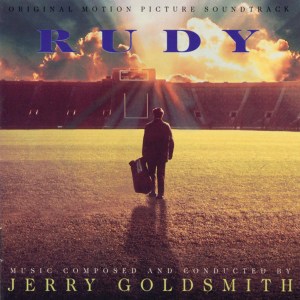
7. Rudy by Jerry Goldsmith

Like Morricone, Goldsmith is one of the true masters of the film score.  Sadly, when many scores have become cut and paste affairs (the entire Hans Zimmer score factory, and I like most of Zimmer’s work), composers like Jerry Goldsmith are becoming few and far between.  His gift with theme and melody served him in practically every genre, even scoring for theme parks (his score for Disney’s Soaring Over California attraction is one of his greatest works).  He won the Oscar for his music for The Omen, but I think his finest works are the animated Mulan (for which he was also Oscar-nominated) and Rudy, the story of an unlikely football hero.

Here is the nearly instantly-recognizable theme from Rudy, although most people can’t exactly place it.  It’s one of those “I know it but I’m not sure why” themes, used in many film trailers.  It’s simply perfect.

6. The Adventures of Robin Hood by Erich Wolgang Korngold

A classical composer who moved from his native Austria-Hungary, he was more active in the classical world than in the world of film when he was brought to America to compose the score for the 1938 Errol Flynn classic.  His influence on film scores is still evident today in that he brought the operatic styling of the letmotif, where each character has their own theme–a practice John Williams brought back to film scoring with his iconic 1977 score for Star Wars.  He was the first composer to win the Best Original Score Oscar, and his music was listed at number 11 in the American Film Institute’s ranking of the best film scores of all time.

Here is “Robin and Marian” from The Adventures of Robin Hood.  Its influence on Williams’ themes in the Star Wars trilogy is obvious.

5. Citizen Kane by Bernard Hermann

Kane is the most highly regarded film of all time for many reasons, mostly because of its advanced in the areas of cinematography, storytelling, art direction, and pretty much every other area of film.  But its score, by the great Bernard Hermann, is equally impressive.  It’s full of great themes, from its opening slow-moving bass string theme (as the camera gets ever closer to Kane’s lit bedroom window in Xanadu) to its gaudy showbiz number lauding “Charlie Kane.”  It’s a classic piece of 1940’s film that deserves to be heard even more often.  It’s that good–and was nominated for Best Dramatic Score in 1941.

This is a theme highlighting the takeover and rise of Kane’s newspaper empire, and one of the “jauntier” of Hermann’s themes for the film

4. Schindler’s List by John Williams

826306

The perfect marriage of filmmaker and composer, the Steven Spielberg/John Williams collaboration is the longest in the history of film and has brought about some of the most memorable combination of music and imagery in history.  Since 1975’s Jaws, his music has rightfully earned a place in the hearts and imaginations of filmgoers.  His accomplishments are many, but it is his 1993 score for Spielberg’s black and white masterpiece about the Holocaust, Schindler’s List, that stands out as one of his greatest.  Haunting, sad, melancholy, and fitting to its subject matter, it is beautifully composed (by Williams) and beautifully played by violin master Itzhak Perlman.  Nearly every piece is a mini masterpiece, and it deservedly won the Oscar for Best Original Score that year.

Here is the main theme.  It is perfect.

3.  The Natural by Randy Newman

Randy Newman is an Oscar winner most readily identified with the Toy Story films, but when he composed the music for the Robert Redford baseball myth The Natural, he was better known as a writer of highly ironic and sarcastic pop songs.  The score for The Natural is a practically perfect work, full of big dramatic moments (copied like crazy in sports films ever since), wonderful period-inspired jazz, and quiet lyric pieces.  It’s easily one of Newman’s greatest scores and was nominated for Best Original Score in 1984.
Here is the opening piece, which introduces the characters, settings, and themes of the film, including the oft-copied six note “triumph” brass theme.

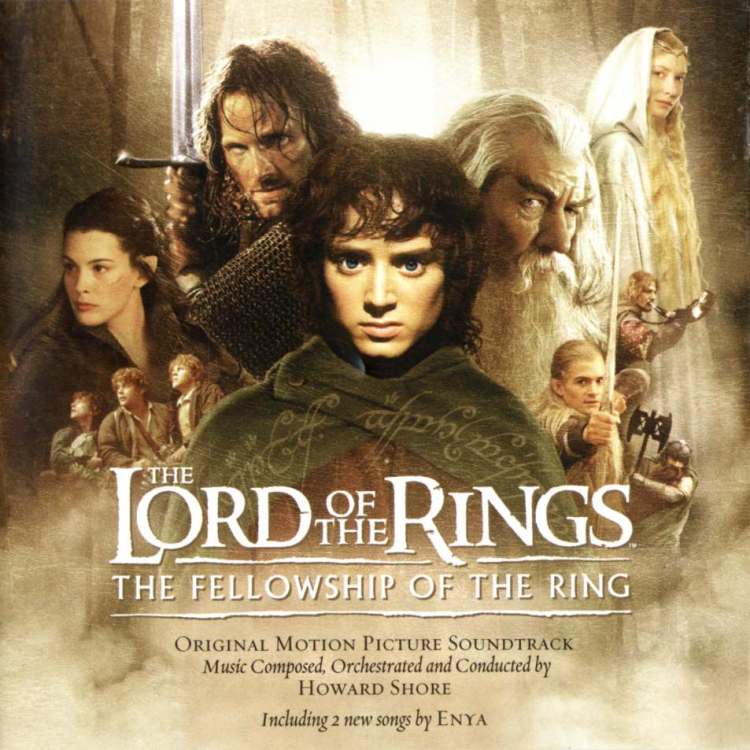
2. The Lord of the Rings: The Fellowship of the Ring by Howard Shore

FOTR_OST2

It’s one of the greatest film scoring achievements of all time.  Howard Shore’s monumental scoring of Peter Jackson’s epic Lord of the Rings trilogy combines epic themes, letmotif, Elvish choirs, unique instrumentation, and more, to add a musical score to J.R.R. Tolkien’s world of Middle Earth.  While I love all three scores, my favorite is his work on the first film in the trilogy, The Fellowship of the Ring.  Giving musical life to Bilbo, Gandalf, Frodo, and places like Rivendell, Mordor, and Moira, Shore develops a rich tapestry of music that rightfully earned him an Oscar in 2001.

There are so many wonderful themes in this score it’s hard to choose one, but here is my favorite.  Called “The Breaking of the Fellowship,” it plays as the film comes to an end, as friendship is strengthened, and companions are parted.  This alone could have won him an Oscar.

And my choice for the greatest film score of all time?  Easy.  It’s from my favorite film of all time:

1.  Pinocchio by Leigh Harline & Paul Smith

Pinocchio

After introducing the world to synchronized sound cartoons in 1928, just 12 years later Walt Disney released his greatest achievement to that date–Pinocchio.  The tale of a wooden puppet who longs to be a real boy, it’s a classic full of classic moments, incredible animation, and songs that caused no less an artist than Maurice Sendak to declare it Walt’s masterpiece.  The song “When You Wish Upon a Star” won the Oscar for Best Song in 1940, and the score, a beautiful, sometimes melancholy, often frightening, and quite lovely work by two studio composers, is one of the greatest of all time.  The themes, ranging from the extremely sad “Desolation Theme” to the happy sounds of music boxes in “Little Woodenhead” and “Turn on the Old Music Box” are all memorable.  It deservedly won the Disney studios its first of many music Oscars.  It is a timeless, still beautiful piece of work.

Here’s “Off to School,” which combines the theme for Pinocchio, Jiminy Cricket, the Fox and Cat.  It’s a wonderful piece of music.

What about you?  What are yours?

(Runners up include Glory by James Horner, Young Sherlock Holmes by Bruce Broughton, Back to the Future Part III  by Alan Silvestri, Dumbo by Leigh Harline and Paul Smith, Indiana Jones and the Temple of Doom by John Williams, The Goonies by Dave Grusin, The Hunchback of Notre Dame by Alan Menken, Cinema Paradiso by Ennio Morricone, and Henry V by Patrick Doyle.)