What Is Love? (Baby Don’t Hurt Me)

We are less than a month away from the official holiday of love. Over the next few weeks, stores will be full of heart balloons, red roses, aisles filled with cards and chocolates. Everywhere you look, you’ll see reminders to shower the world with love.

The trouble with all those candy conversation hearts and Hallmark sentiments is that love is not just a once-a-year thing. It’s not something easily captured by a corporate poet, a balloon bouquet, or even all the fresh flowers you can afford. The day after Valentine’s Day, it’s all on sale anyway and you may look at those sad discount chocolates and hearts and wonder what all the fuss was about.

There’s a song that was popular in the late 1990’s that asked the same question: “What is love?” (If you see Chris Kattan and Will Ferrell bopping their heads on Saturday Night Live, then you know exactly what I’m talking about.) The second part of the song went, “Baby, don’t hurt me.” Which may seem odd in a song asking what love is, but it’s a valid, honest question.

Because love is hard.

It’s hard to truly, really love someone. There’s a reason people fall out of love, why relationships fail, why families who were once close can fall away from each other after many years of stress and worry. Love takes work. To hold close to someone, regardless of how they treat you, regardless of how much they may annoy you at times–it’s not easy. It’s a tough, difficult choice that you have to make every day.

If you’re someone who claims to be a Christian, then love is even more difficult and more of a decision you have to make every single second of the day–which is why so many Christians struggle with it. We all know we are supposed to follow the verse from 1 John which says, “Beloved, let us love one another, for love is from God and everyone who loves is born of God and knows God.” God is love so we are supposed to love because we love God. Sounds easy, no?

It’s not. And part of that is because Jesus explained that the only way the world would know we are His followers is by how we showed love. Think about that. In John 13:35, Jesus says “Your love for one another will prove to the world that you are my disciples.” And the “one another” He means is not just the “other people who also love Jesus.” He means everyone.

Which means I have to love the guy who cut me off on the freeway.
I have to love the lady yelling at the barista who messed up her order.
I have to love the guy who is all for mask mandates.
I have to love the woman who is against vaccines.
I have to love the man who voted the opposite of me.
I have to love the person who stands for things I don’t agree with.

I have to love the angry people, the happy people, the bitter people, the sad people, the broken people, the wounded people. If I am a Christian, truly wanting to live the life God created me to live, I don’t have a choice.

Love is the very heart of everything we can do or say or live as Christians, and if we do anything that is the opposite of that, if we do anything that does not reflect what love truly is, then at the end of the day, we did it for nothing. Or, more accurately, we did it for ourselves, and not for Jesus.

Here’s how we are expected to show love to the world:

By being patient
By being kind.
By being grateful.
By being humble.
By putting others first.
By putting yourself last.
By forgiving.
By forgetting.
By being honest.
By protecting.
By trusting.
By believing the best is always possible.
By hanging in there, even when things are hard.
By never ever quitting, giving up, and throwing in the towel.

You can also put it the way the Apostle Paul did 1 Corinthians: Love is patient, love is kind. It does not envy, it does not boast, it is not proud. It does not dishonor others, it is not self-seeking, it is not easily angered, it keeps no record of wrongs. Love does not delight in evil but rejoices with the truth. It always protects, always trusts, always hopes, always perseveres. Love never fails.

“What is love?” Well, to put it plainly, love isn’t easy. And you may get hurt a bit. But it’s always worth it, and not just when it comes wrapped in red tissue paper.
Would You Win Back Time for Me?

I struggle with melancholy feelings every holiday season.

I know this comes as no surprise to anyone who has been a friend for any length of time, nor is it a surprise to my readers. I think I even coined a phrase when I was working on the second edition of Resting Merry for the feelings I get: melancholiday. (The feeling of being a little sad and blue while surrounded by the things that make you feel the happiest.)

This year is a bit more melancholiday than ever, because this is our “First Last Christmas.”

It’s been “just the six of us” for a very long time. 15 years, in fact. And in those 15 years of it being just the six of us, I’ve gotten very accustomed to our traditions and the things we do to make memories together during my favorite time of year. We have traditions we’ve been doing since Audrey was born 24 years ago, and some newer traditions we started in the last decade or so. But it’s so customary and normal for all six of us to have these times together that we are all in a bit of shock here, at Christmas 2023.

That’s because next year it will all be different. It will never be “just the six of us” during the holidays (or anywhere, for that matter). Audrey is getting married.

Don’t get me wrong. I love her fiancée and think she is 100% making the wise choice here. All six of us support the marriage and are excited to welcome Sean into our family. But with that welcoming comes some farewells, and this Christmas Robyn and I realize this the beginning of all of the “last Christmas” moments we will have with our kids. It’s our “First Last Christmas.” We’ve never had a last Christmas before–at least, not one that we knew was the last Christmas. We didn’t know our last Christmas in Washington was going to be our last Christmas at the home we built in 2004. We didn’t know the Christmas we had with Robyn’s mom was going to be our last one with her.

This one, though? We know it’s the last one. Which means every moment matters just a bit more. Every word carries more weight, every discussion of which movie to watch or what game to play becomes a bit more important.

Because time matters. I’ve said this for years, but now, when we are all about to begin the farewells that come with major life changes, I can truly feel it. I know that time is the greatest gift I can give anyone. Time, once it’s gone, never comes back. Moments and memories will outlast any present, any stocking stuffer. And in this truly memorable, wonderful season, I want to make sure I don’t dwell so much in my melancholiday that I miss out on time with the ones I love most.

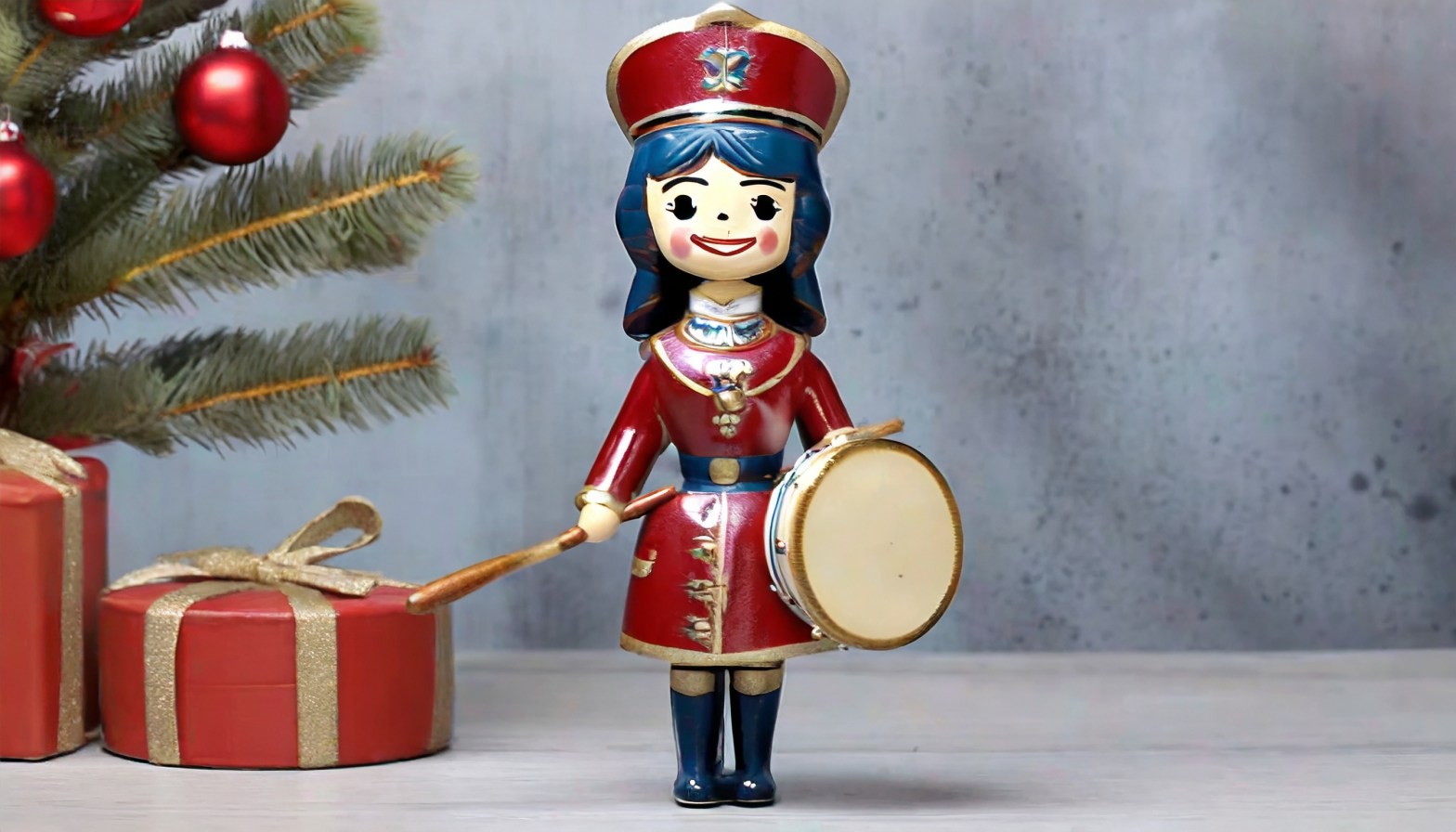
On her wonderful Christmas album, Mindy Gledhill sings a song called “Little Soldier.” I’ve loved the song since I first heard it nearly a decade ago, but the other day it came on and yes, I started crying. The song is from the viewpoint of a young woman, venturing into the next big adventure–much like Audrey is about to jump into her next step of life.

Little soldier under the tree
Play a Christmas song for me
All the house is slumbering deep
But I have secrets I must keep

Little soldier, tap, tap your beat
I will stand on Daddy’s feet
We will dance as if I were ten
Even if it’s just pretend

But it’s the chorus that gets me.

Father Time comes creeping in
We fight back but he will win
If I asked one Christmas wish, then it would be
Soldier, could you win back time for me?

On this “First Last Christmas,” I would love to win back more time. Time I wasted by being focused on the wrong thing, by giving so much of my time to audiences and congregations while my kids were little. I don’t think they resent the time we spent or think I wasn’t there enough, but I want more. I want some of that time back so I could cherish it even more. To hang on to the sounds of little voices and little giggles and all the things that they were, despite how much I love who they are.

I can’t win it back, but I can spend it wisely today. Let’s try to be less melancholiday and more in the moment. The ones we love best will appreciate it–and a year or two from now, when you look back, you will be grateful you did.

Resting Merry Isn’t Just for Christmas

The phrase “rest you merry” has nothing to do with Christmas. It dates back to Medieval England–as early as 1300, when it was used in a romantic tale called “Floris and Blauncheflur.” Of course, that was in Old English, and much harder to read today.

By 1548, English Bishop Thomas Cooper referred to it in the Latin dictionary, “Bibliotheca Eliotae,” and made clear that it was term used by the common people for “be glad or joyful.”

In 1599, Shakespeare used the expression when William says goodbye to Touchstone in Act 5. The song we know today is from the Elizabethan era, and it was a common way of greeting someone or saying farewell.

By the time the reference showed up in the Christmas carol, it had come to mean “a state of pleasant happiness.” So, when folks in the 1600’s sang the song, they were hoping the gentlemen (and women) would be kept in a state of pleasant, harmonious, joy by God as a result of all the amazing things that happened on Christmas Day.

When the song was finally written down in 1760, the phrase had fallen out of use, and the publisher made the very egregious error of misplacing the comma. What should have been a song of encouragement to find joy and happiness to a group of gentlemen instead turned into a song about hoping a group of happy gentlemen find some rest.

But the wonderful fact is that the idea of “resting merry” was never intended to be something you did for just one month of the year. It was meant to be a way of life, a wish for people you cared for. Not just at Christmas, but every single day of your life.

Everybody Needs Somebody Sometime

Everyone can help someone.

Whatever your role, you may have the relationship that helps someone else find their next right thing. Someone close to you may be looking, may be wondering who can help them discover a better opportunity or a new adventure. Even if nothing comes of it, it’s always worth making the connection and helping them have the conversation.

You didn’t get to where you are on your own. Someone spoke into you, someone advocated for you. There were people along your journey who helped pave the way, who cheered you to the next step, who helped you realize you were worth more than you thought you were.

Who can you help with that today? If you know someone who is looking for their next thing, why not ask them how you might be able to help? You never know what may happen just by asking that one small question.

It may lead to something really really big for them: a new job, a new opportunity, a new belief in themselves, a new life. And for you? You may rediscover joy, happiness, and an honest sense of gratitude for all you have accomplished–and all that may lie ahead of you as well.

So, if we’re connected and I can help you, let me know. I’m happy to make any connections I can so the next big adventure and right thing can happen for you!

I’ve Got a Dream (Or Do I?)

“I’ve got a dream!
She’s got a dream!
I’ve got a dream!
She’s got a dream!
I just want to see the floating lanterns gleam
And with every passing hour
I’m so glad I left my tower
Like all you lovely folks
I’ve got a dream!”

— Rapunzel, Tangled

Like Rapunzel and the rest of the guests in the Ugly Duckling in Disney’s Tangled, you probably have a dream. It may be big, it may simple. Maybe it’s something you’ve been thinking about for a while–maybe it’s a relatively new idea you recently thought of. But most of us, if we are honest can sing similar lyrics (or if singing’s not your thing, you could just read them).

In the movie, shortly after this big song is sung, the villain shows up and promptly does everything she can to stop these dreams from becoming reality. It’s a big part of a lot of movies and stories we experience, from Tony Stark to Pinocchio, from Harry Potter to Frodo, some of the most powerful stories we know are about people hoping to achieve something, only to be stopped by someone who does not want to see those dreams come true.

This happens in real life, too, which is why these stories are relatable. Sometimes you’ll have those moments in life when everything you are hoping for, everything you’re working and striving for and dreaming about is sidelined. You may never know why some things happen to you. You may not understand why that person stopped talking to you. You may not get why your boss decided you were wrong for the job. You may not comprehend why you were rejected by people you loved.

Neither did Joseph. His dreams got sidelined–literally. His dreams showed him as a leader, a man whose family would eventually look to him for favor. He went from favorite son to imprisoned slave in a heartbeat. From the bottom of a well, he looked up at the faces of people he’d loved and wondered, “What just happened?” As he was tied to the other slaves in the caravan heading toward Egypt, he looked back at his brothers and wondered, “What went wrong?”

He didn’t know where he was going. At that moment, he probably thought it couldn’t get worse. (Which was probably a good thing, because he didn’t know that a false accusation and a hefty prison sentence were still in his future.)

But in the end, Joseph’s long-sidelined dream became reality. In spite of all he had lost, despite how badly he’d been hurt and wronged by people he loved and trusted, it did not stay that way forever. In a pretty amazing turn of events, the prisoner is elevated to the palace, and all that he thought would happen and had hoped would happen finally did. When Joseph went from prison to palace, it’s clear that he finally realized something that I hope we can realize today, too. What others do to us–whether it’s out of spite or evil or misunderstanding or hurt feelings or something else–does not have to ruin us. Like Joseph, God may want to use that thing to put us in a different place, where He wants to use us in ways we couldn’t have understood before.

Romans 8:28 reminds us that “We know that God causes everything to work together for the good of those who love God and are called according to his purpose for them.” (NLT)

You may not have reached the palace yet.
You may still be looking from inside the prison.
But don’t give up, don’t lose hope.

You may not know why these things have happened, but you can rest knowing that God can use them for your greater, incredible, most wonderful good–to bring that dream to reality, to help you achieve that goal.

So you can sing again, “I’ve got a dream!”

See less

3 Rules Every Family Should Live By

Since our eldest was born 23 years ago, Robyn and I have realized there are many things people say children should learn, many things parents should focus on to ensure their kids turn out great, to have a happy family.  We’ve tried a few of them. Some of them have worked, but many of them have been real stinkers.

We’ve done our best.  We’ve had some highs, and we’ve had some lows.  We don’t focus a lot on grades, we don’t sign up for a lot of extracurricular activities.  We may have yelled more than we meant to, and I’m pretty sure we’ve frustrated our kids’ teachers more than once with those middle of the school year vacations.

Yet, in spite of our mistakes, I’m told quite often, “You have great kids,” or “Your family always seems to have so much fun.”  I like that.  I love it when someone compliments my children and says nice things about them.  It means a lot to me when someone notices the smiles on our faces.  As a parent, we know all the ways our kids screw up, so when someone stops and says something nice, it makes me stop.  When they compliment our family, it makes me pause and wonder–maybe we’re doing something right?

Recently, I think I discovered what weare doing right. In our flawed but fun way of doing things, I think we’ve hit on the right formula for having a great family, and some pretty good kids.  Here are our family’s three rules.  I’m hopeful these will work for you, too.

Rule #1: Create memories.  Wherever you can.  Whenever you can.

Whether it’s a National Park, a trip to Disneyland, or just dressing up like pirates for free donuts–memories are a lasting gift we can give our kids that will outlast us.  Do we go to Disneyland a lot?  Yep.  Have we worn out vehicles by driving on long road trips to National Parks across the West?  You bet.  You can save a lot of money, have a great plan for retirement, and have nicer things.  But I’d really rather have the memories, because these will stick with me–and them–for the rest of our lives.  Because of these memory-making adventures, we’ve created an incredible familial bond.  The bonus?  We actually like being together.

Rule #2: Serve others.  Individually. Collectively.

As a former pastor, my kids were always stuck at church.  A lot.  This could have been a cause of resentment, or it could turn into a way to help my kids discover ways they can make a difference in the life of someone else.  When we serve others, we get the focus off ourselves and start thinking about others.  Whether it’s leading worship, teaching preschoolers, or serving at camp, they’ve all spent a huge part of their lives serving others.  There’s nothing better than seeing them leading kids younger than themselves, and finding ways to use their talents for the good of someone else.  And to be honest, my favorite moments in ministry were those days when we all get to do it together.

Rule #3: Show honor.  At home.  At school.  Everywhere.

We are all inherently selfish people, and we all naturally think of ourselves first.  When we focus on honoring others first, in our words and actions, we remember that “It’s not all about me.”  We have used an honor chart to keep track of whether we are acting honorably or not (even the parents), and it really helps us put others first.  We try to ask–is what I’m about to do honoring? Does this response or action show that I think highly of and care for someone else? If we can teach our kids to live and act and speak honorably to others, then we will have done something good for the world.

There you have it.  Our three family rules.  If you do #2 and #3 right, go out and celebrate, which leads you back to #1.  Repeat as often as possible.

Just the Beginning

After Jesus’ death on the cross, the story of love seemed to have come to a horrific, tragic end.  To His closest friends, it seemed like the end of a dream.  They could not believe, in spite of everything Jesus had said, that there could be anything more to the story.

He was dead.  Buried.

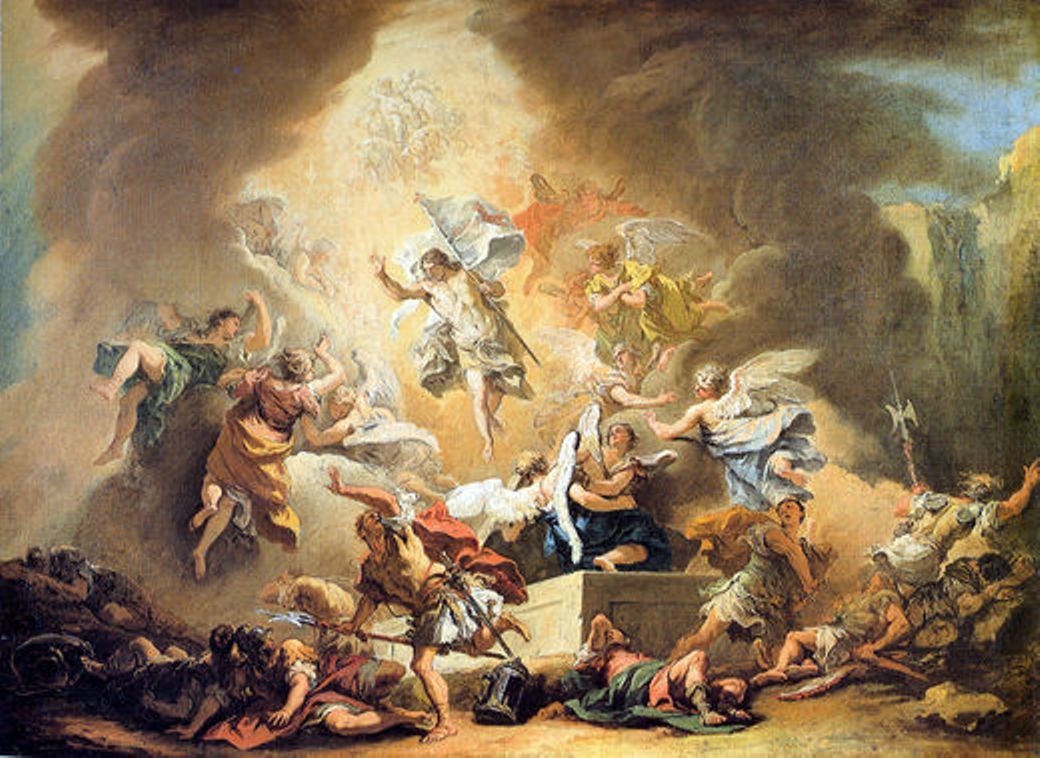
A Roman guard had been placed outside the tomb due to worries from the religious rulers and it had been sealed shut. But when some of his followers went to visit the tomb and finish the burial rites, they found something they did not expect to see.

The stone that had been so carefully placed at the entrance was rolled away.  It was open, and there was no sign of the guards.  The clothes Jesus had been buried in were folded up neatly and put aside.

And the tomb? The tomb was empty!

The story wasn’t over. It had continued in a way they could never have understood, in a way that we still struggle with today. The tomb that held God Himself burst open in the quiet of a Sunday morning, proclaiming that the promise made on the day death entered the world had come true.

He began appearing to them. On a road to Damascus. In an upper room. On a mountaintop. Over the space of several days and weeks, hundreds of His friends and followers laughed with him. They ate dinner with him. At one point He made them a feast on the seashore! And suddenly, everything He had said made sense. He was the promise, made long ago to Adam and Eve. And with His sacrifice, He had paid the price for all mankind’s choices ever since that fateful bite of forbidden fruit.

The reign of sin and death was ended. Over. The relationship between heaven and earth was restored. The Creator and His creation could once again freely laugh and cry and live together as He had always wanted. The price for our sin had been paid in a way nobody could have seen coming.

What does the story of love teach us?  It’s simple: God is not stumped by an evil world.  He doesn’t gasp in amazement at the dearth of our faith or the depth of our failures.  We can’t surprise God with our cruelties.  He knows the condition of the world—and loves it just the same.

This is the story in all its terrible beauty. He sees you and loves you in spite of everything you have ever said or thought or done. He created you to know Him and to laugh and live and love with Him. So He went to the greatest lengths possible for that to happen. He involved Himself as intimately as possible with what is wrong with this world—just so you can know Him.

It’s a story of love, told since the day of creation. The Creator made humanity for relationship with Him, to be the pinnacle of creation, made in His image. And in spite of all we have done to run from Him, He pursues us and reminds us of His great love, showing us that love in the most surprising and truly stunning ways.

For when we find a place where God would never be—like on a cross—we look again.  And there He is.  In the flesh.

My, what an ending.

Or better said, what a beginning!

It Was Anything But a “Good” Friday

The Story of Love takes a dark turn as an evening with friends becomes a night of betrayal. After taking His companions to a garden to join Him in prayer, one of His friends arrives in the company of soldiers.  With a greeting of friendship and trust, he turns Jesus over to the enemies.  It’s an incredible moment.  The Creator is suddenly at the mercy of His creation, and all of heaven is aghast.

Part Five: Cross of Love

While one friend jumps to fight, the rest scatter into the night.  His hands are bound and He is led away to the house of the accusers.  They question Him for hours, but His answers infuriate them.  When He says that He is God in the flesh, they declare His death sentence and hand Him over to the Roman governor.

Pilate is hesitant and finds Jesus to be interesting, but intriguing questions will not stop the anger that is building outside.  Already a crowd has gathered and they are yelling for Jesus’ death.  Hoping to sully their appetite for violence, Pilate orders Jesus beaten and released.  He hopes the sight of His bloodied and bruised body will put an end to the ordeal.  But the crown of thorns, the ripping of flesh, and the mocking of the Romans is not enough.

The crowd who had days before sat at Jesus’ feet and come to Him for healing turns their faces.  They cry out, demanding His death.  As they shout, “Crucify him” in the courtyard, Pilate looks at Jesus.  The man’s face is barely visible beneath the blood.  His humanity is hard to see behind the agony and the pain.  Pilate looks back to the angry mob.  “Shall I crucify your king?” he asks.

The answer is not what he expects, but the order is given.  Barely able to walk, the One who gave life to all is shortly going to lose His own.  He stumbles as He carries part of his own method of execution.  He walks through the jeering, angry mob to a place that smells of death and suffering.  And then He is nailed to a cross.

The Creator once again looks down on His creation.  This time, He sees through blood and torment.  He feels the weight of the promise on His shoulders and can scarcely breathe from the enormity of it all.  This moment is what was promised?  This is how the Creator chooses to show His love to the creation?

This is how the story of love ends on this dark Friday?

It is a day filled with bitterness.  Acrimony fills the hearts of the onlookers, and the words they hurl at the One on the cross are cruel.

“Come down from there if you are the Son of God,” yell the people looking up as He struggles for a breath.  “He saved others, but he can’t save himself,” is the contemptuous sneer of the ruling class.  “If you’re the king of the Jews, save yourself,” mock the Romans standing guard.

Sarcastic and ugly, the tone of the people on the hill matches the gathering clouds in the sky.  He was battered beyond recognition.  His blood dripped from the ribbons of flesh on His back.  And now, His lungs gasp for any bit of air, and all they can do is mock.

The Creator hangs on a cross.  The One who made the sun now watches at grows dark.  The One who created the wind feels the still of the air as He dies. The Creator is halfway between death and life, racked with pain.  Straining to hear the music of creation, all He hears are stinging words of hate.

But all Jesus says to them is, “Father, forgive them; for they do not know what they are doing.”

The story finds its greatest culmination here, in this moment of ultimate pain and rejection.  The Creator shows love beyond comprehension.  Because even as the ones He made mock His pain, He speaks on their behalf.

Perhaps He looks back and thinks of each moment that led to this one.  He may recall walking through the Red Sea with Moses.  Maybe He smiles for a moment, thinking of the songs David wrote to Him.  He weeps over the numerous times we promised to be faithful–then walked away.

But in one great moment, everything that had been promised at the beginning comes to completion.  The prelude is past, the symphony is nearly done.  Everything that was planned is now completed, and as He takes one last breath, heaven leans in to hear His triumphant, whispered words.

“It is finished.”

Dinner With Friends

The story of love brings Jesus into close confrontation with the ones who feel threatened by His presence.  None of it is accidental, because the Creator has planned this from the beginning.  He arrives in a grand parade of palm branches and Hosannas on Sunday, but by the end of the week, it’s time to be quiet.  To rest and prepare for what is to happen.

Part Four: Dinner With Friends

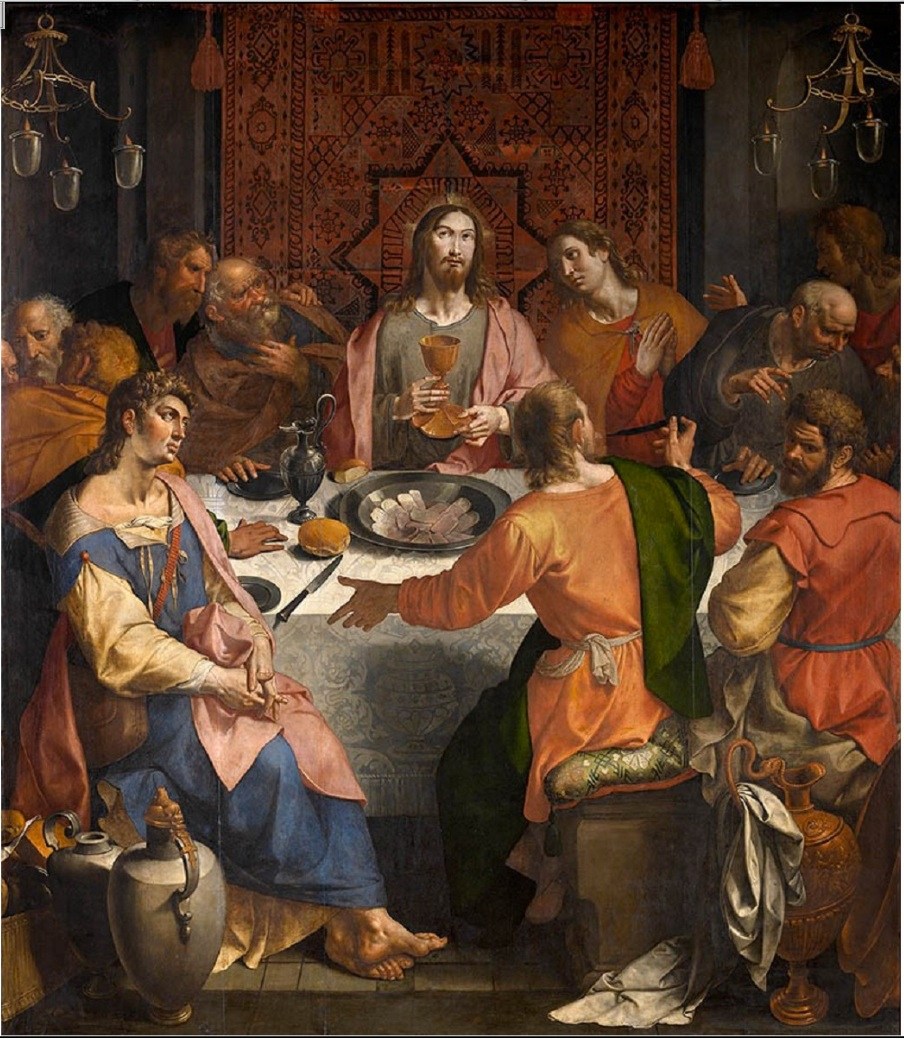
So Jesus celebrates the deliverance from Egypt, Passover, with his closest friends in a secluded room.  There, He is surrounded by the ones who know Him best.  As He watches His closest companions eating and drinking together, perhaps He wonders if they will ever truly understand.

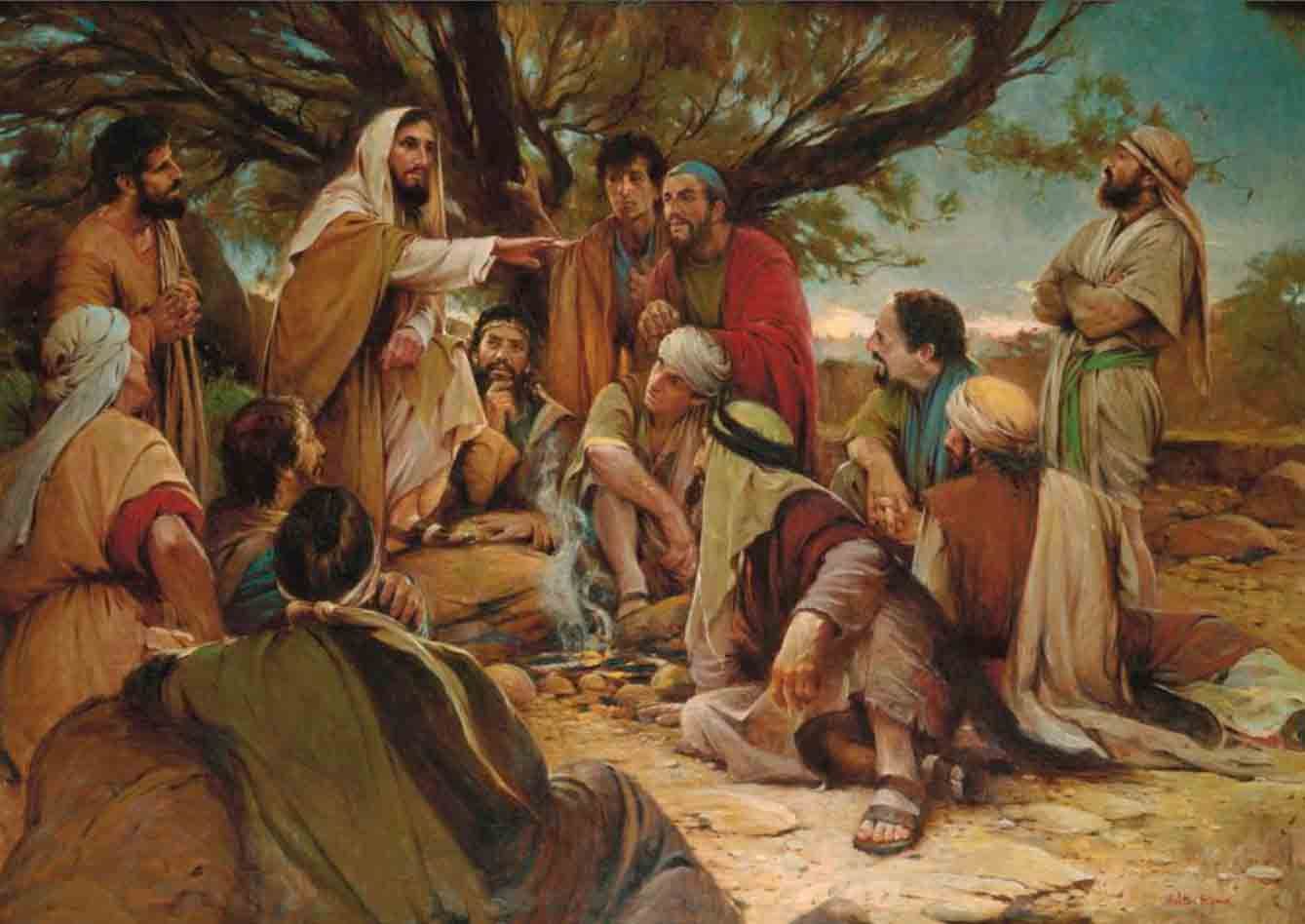
He has tried, at various times during their three years together, to reveal the truth.  He made clear that He was the promised One.  He used the same words to describe Himself as the One who had spoken to Moses in the burning bush.  He did wonders and miracles and stood up for the oppressed and the hungry, the outcast and forgotten.  He had also said, more than once, that He was going to be handed over to His enemies and killed.

But even those closest to Him could not accept Him as a man of sorrows and suffering.  And so, one last time, as the moment drew closer, He tries again to help them understand what as about to happen.

“I will be with you only a little longer,” He says. “Where I am going–you cannot come.”

When they ask where He is going, His answer is surprising.  Perhaps a smile plays on the corner of His mouth, but His heart is clearly heavy.  “Do not let your hearts be troubled.  Trust in God–trust also in me.  If I go and prepare a place for you, I will come back and take you to be with me that you may also be where I am.”

He knows they don’t understand.  He knows they can’t begin to comprehend that this is nearly the culmination of a story that began before their forefathers walked the planet.

 “Because I have said these things, you are filled with grief,” He says.  “In this world, you will have trouble,” He acknowledges.  “But take heart!  I have overcome the world.”

In this moment, He speaks profound words of comfort.  Before they are needed, He looks to their hearts and reminds them that He is, indeed, who He says He is.

“Father, the time has come,” He says.

God waited until this moment to reveal His masterpiece.  Everything that had come before was just a prelude.  Like an orchestra waiting for the conductor’s signal, all of heaven paused.

The entire cosmos holds its breath as the next act begins with a terrible night of betrayal.

Deliver Us

As The Story of Love continues, it is clear why it is the greatest story ever told. The cast of characters, the drama, the intrigue–the passion, the romance, the heartbreak–all of it combines to show the incredible lengths the Creator would go to remind His creation of His love.  His chosen people, captives and slaves to a hostile king far from their Promised Land, beg for deliverance from Egypt.

Part Three: We Need a Savior

The Creator does just as they ask, but in the most unexpected way.  He sends a murderer, a tongue-tied former prince with a story of a bush that didn’t burn up and a conversation with One who claimed He was and is and would always be.  And the story only gets better from there.

The Red Sea splits in two, the sun doesn’t set, and a man with incredible strength brings down a temple.  Jericho crumbles and three hundred men defeat thousands.  A shepherd kills a lion and a bear after writing a couple songs, but comes into his own in a confrontation with a giant. The shepherd becomes a king and his son gains a reputation as the wisest man ever known.  And with every great moment in the story, they ask, “When? Will the promise be fulfilled now?”  And God says, “Not yet.  Soon.”

But it isn’t soon enough for the impatience of humanity.  No matter how many times the Creator reveals His wonders, the creation rebels.  After a quick moment of thankfulness, the people return to wickedness and reject the very ones He sends to remind them of His goodness.  No matter how awful their rebellion, no matter how great their rejection of His love, the Creator will not stop.

His pursuit is His passion, and He will not stop until the ones He loves are free.

But, His prophets are ignored or murdered.  The people are carted off into slavery and bondage once more, and still the people cry, “When? When will the promised one come?”  Even after they return to the land of their heritage–the land given to Abraham and ruled over by David–they are captives.  This time, in their own land, the Romans rule over them.  Now, more than ever, they shout: “We need a Savior to come in glory and power! O Lord, hear our cry, because you know we need Him now!”

Now.

After thousands of years of saying “Wait,” the Creator finally looks at His creation and says, “Now.”  The relationship that was broken with a bite of fruit can be restored.  The promise given on the very day death entered the world will be fulfilled.  But it will not be what creation expects.

God becomes a man.

The Creator physically steps into creation.  You probably have heard about His birthday. He is wrapped in swaddling clothes and laid in a manger.  Angels announce His arrival, shepherds are the first visitors, and wise men bring the birthday gifts.

The baby, named Jesus, grows up.  He is raised by a carpenter and his wife in a dusty village in Judea.  In an act that is nearly unfathomable by us, the One who created us becomes one of us.  He disguises Himself in our physical attributes, with a body that grows weary, a stomach that needs to eat.  So great is His desire for us to know His love, He walks through our world nearly invisible.

He tells stories about the kingdom of heaven and points out injustice and cruelty.  The One who painted the stripes on the zebra can’t contain Himself, though, and occasionally throws out His own wonders.  He brings a dead girl back to life and tells a storm to stop.  He walks across an inland sea and uses a boy’s lunch to feed a crowd.

The savior who had been promised arrives.  The common people love him.  He treats everyone with courtesy, kindness, and compassion.  His sense of humor is infectious and He’s not above a little sarcasm to get His point across.  They follow in droves, hoping that He will indeed deliver them from the Romans, and give them back their land.

Others see Him as a threat and a bother.  As His popularity grows, so does their worry.  Whether from self-preservation or from bitterness, the ruling class decides He must be removed and begin to figure out how to do it.

What they don’t realize is this is the way the story was already written.  Because this is not a story of revenge or political intrigue.

Remember, it’s a story of love.

Terrible, incredible, beautiful, and unfailing love.